By using this site, you agree to the Privacy Policy and Terms of Use.
Accept
GMJ NewsGMJ NewsGMJ News
  • Latest News
    • GMJ Briefs
  • Podcast & Media
    • Podcast Episodes
    • GMJ Audio
    • GMJ Videos
  • Research Digest
    • New Studies
    • Georgian Research
    • Data & Numbers
  • Policy & Systems
    • Health Policy
    • Quality & Safety
    • Migration & Health
    • Global Health
  • Practice
    • Clinical Updates
    • Case Discussions
    • Pharmacy & Prescribing
    • Ingredients A-Z
  • Perspectives
    • Editorial
    • Explainers
    • Voices
    • Letters
  • Health Topics
  • GMJ Articles
    • Vol. 1 Issue 2 (2026)
    • Vol. 1 Issue 1 (2026)
    • Pre-Launch Articles (2025)
  • Read the Journal →
  • About GMJ News
Notification Show More
Font ResizerAa
GMJ NewsGMJ News
Font ResizerAa
  • Latest News
    • GMJ Briefs
  • Podcast & Media
    • Podcast Episodes
    • GMJ Audio
    • GMJ Videos
  • Research Digest
    • New Studies
    • Georgian Research
    • Data & Numbers
  • Policy & Systems
    • Health Policy
    • Quality & Safety
    • Migration & Health
    • Global Health
  • Practice
    • Clinical Updates
    • Case Discussions
    • Pharmacy & Prescribing
    • Ingredients A-Z
  • Perspectives
    • Editorial
    • Explainers
    • Voices
    • Letters
  • Health Topics
  • GMJ Articles
    • Vol. 1 Issue 2 (2026)
    • Vol. 1 Issue 1 (2026)
    • Pre-Launch Articles (2025)
  • Read the Journal →
  • About GMJ News
Follow US
GMJ News > Perspectives > Explainers > USP Standards vs USP Verified: What the Pharmacopeia Actually Tests
Explainers

USP Standards vs USP Verified: What the Pharmacopeia Actually Tests

GMJ
Last updated: 20/08/2026 05:12
By
GMJ Perspectives Desk
Share
3 Min Read
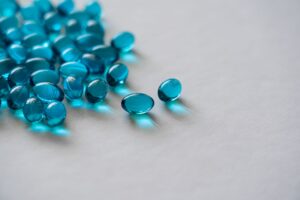
Pharmaceutical quality testing in a laboratory
SHARE
🎧 Listen to this article5:42 min · 806 words · GMJ Audio
4 min read|806 words

The United States Pharmacopeia (USP), founded in 1820, is an independent scientific organisation that publishes public quality standards for medicines, food ingredients and dietary supplements. Its standards are legally recognised in the U.S. Federal Food, Drug, and Cosmetic Act — but the phrase “USP” appears on labels in two very different ways, and the difference matters.

Contents
  • USP as a testing methodology
  • USP Verified: the certification mark
  • Why the distinction matters
  • A two-century institution: why USP exists at all
  • Anatomy of a monograph
  • USP among the world’s pharmacopeias
  • What Verified adds in practice — and what neither claim covers
  • The clinical bottom line
  • Primary sources

USP as a testing methodology

The USP–NF (USP–National Formulary) contains thousands of monographs: detailed specifications for identity, strength, purity and performance of individual ingredients, together with the exact laboratory methods used to test them. A monograph for a vitamin, for instance, defines acceptable assay ranges, limits for heavy metals and microbial contamination, and dissolution or disintegration requirements for finished dosage forms.

When a manufacturer states a product is “tested according to USP methods” or “meets USP specifications”, it means the company (or its contracted laboratory) applied those published methods and the product met the monograph’s limits. This is a meaningful, verifiable technical claim — the methods are public and reproducible by any competent laboratory — but it is self-declared: no external body has audited the claim.

USP Verified: the certification mark

The USP Verified Mark is a separate, voluntary certification programme. To display the gold USP Verified seal, a manufacturer must undergo USP’s own facility GMP audits, submit products for testing in USP laboratories, provide full documentation review, and accept ongoing surveillance testing of products purchased from the open market. USP itself — not the manufacturer — performs the verification.

Submit Your Paper
GMJ_Submit_Banner

Why the distinction matters

Both claims involve the same underlying science; the difference is who checked. “Tested to USP standards” places the burden of trust on the manufacturer’s own quality system, ideally backed by independent batch testing at an accredited third-party laboratory. “USP Verified” transfers that trust to the pharmacopeia’s own audit and surveillance programme. Neither claim speaks to whether the ingredient itself is effective — that is a clinical-evidence question, not a quality-control one.

A two-century institution: why USP exists at all

USP predates the FDA by 86 years. Eleven physicians convened in the U.S. Capitol in 1820 to solve a lethal problem: the same prescription, filled in different pharmacies, could contain different substances at different strengths. Their answer — a public book of standards defining what each medicine is and how to prove it — established the model the world still uses: quality defined not by brand promises but by published, reproducible tests anyone can run. That legal anchoring survives today in the U.S. Food, Drug, and Cosmetic Act, which makes USP–NF the official compendium: a drug labelled with a USP-monograph name that fails the monograph’s tests is, by statute, adulterated or misbranded.

Anatomy of a monograph

A typical supplement-ingredient monograph contains five families of requirements. Identification: spectroscopic or chromatographic fingerprints proving the substance is what the label says — the test that catches substitution outright. Assay: the quantitative method (usually HPLC) with acceptance range, commonly 90–110% or 95–105% of declared content. Impurities and contaminants: limits for related substances, residual solvents, and — via General Chapters / — elemental impurities with instrument-grade methods (ICP-MS) replacing the century-old wet-chemistry heavy-metals test. Performance: for finished dosage forms, disintegration or dissolution requirements ensuring the tablet actually releases its contents in physiological conditions — the failure mode behind the infamous “bedpan bullets” of poorly made supplements. Microbial limits: total counts and specified-organism absence per /. Each element cites the exact procedure, reagents and calculations, which is what makes “tested to USP” a falsifiable claim rather than a slogan.

USP among the world’s pharmacopeias

USP is one of three globally dominant compendia alongside the European Pharmacopoeia (Ph. Eur.) and the Japanese Pharmacopoeia (JP); pharmacopoeial discussion groups work to harmonise key methods among them. For supplements the practical point is simple: a serious laboratory report names its compendial method — “USP disintegration”, “Ph. Eur. 2.4.27” — and a report that names no method at all is describing an opinion, not an analysis.

What Verified adds in practice — and what neither claim covers

The Verified programme’s under-appreciated component is market surveillance: USP buys sealed product from ordinary retail and re-tests it for as long as the mark is used, closing the gap between “the samples the company submitted” and “the bottle a consumer buys.” Worth stating equally clearly: neither the monograph nor the seal evaluates clinical efficacy, optimal dosing for a given person, or interactions — those are questions for clinical evidence and, where relevant, a clinician. Quality standards guarantee the chemistry, not the outcome.

The clinical bottom line

Read “USP” claims in two layers: the monograph defines what good looks like; the verification programme defines who confirmed it. A product tested to USP methods at an independent accredited lab, with batch certificates available, offers substantially the same analytical assurance as the seal — what the seal adds is USP’s own continuing audit relationship with the manufacturer.

Primary sources

  • USP–NF: United States Pharmacopeia and National Formulary
  • USP Verified Mark programme requirements
  • NIH Office of Dietary Supplements: Dietary Supplements — What You Need to Know

Was this article helpful?

Disclaimer. This article is health journalism intended for general information and education. It is not medical advice and is not a substitute for professional diagnosis or treatment. Always consult a qualified healthcare provider about your individual circumstances. Full disclaimer →

Related Coverage

Supreme Court's Roundup ruling exposes a fundamental divide between legal and scientific causation standardsAug 21, 2026
Can laughter improve health? Researchers launch study to find outAug 21, 2026
Vegan, Gluten-Free, Cruelty-Free: What a Manufacturer's Declaration Is WorthAug 20, 2026
Astaxanthin Doses in the Clinic: What 6–12 mg Actually ShowedAug 20, 2026
Explore more on this topic:🧭 Leukaemia hub🧭 African Trypanosomiasis (Sleeping Sickness) hub🧭 Erectile Dysfunction hub
🔥 Most read this week
1High-Dose Zinc Supplements May Create Copper Deficiency, Warn Nutrition Experts
2Evidence-Based Hydration Protocol: How Much Fluid and Sodium Athletes Actually Need
3L-Theanine Improves Sleep Quality Without Drowsiness, Systematic Review Finds
4How Coffee Brewing Method Affects Cholesterol: The Science Behind Diterpenes and Filters
Related reference
  • SAMe · Ingredient
PG
Editorial oversight
Prof. Giorgi Pkhakadze, MD, MPH, PhD
Editor-in-Chief, GMJ News
Full profile →  ·  ORCID 0000-0001-7609-4515
Medical disclaimer. This article is health journalism intended for general information. It is not medical advice and is not a substitute for consultation with a qualified healthcare professional. Always seek your physician's advice regarding any medical condition.
Editorial standards. This article was produced under the GMJ News editorial process, with oversight by the GMJ Editorial Board. Our editorial process. Spotted an error? Contact the editorial team.

📬 GMJ Health Digest
Evidence-based medical news, once a week. Free, no spam, unsubscribe anytime.
Share This Article
Facebook LinkedIn Bluesky Copy Link Print
GMJ
ByGMJ Perspectives Desk
Follow:
GMJ Perspectives Desk is part of GMJ News, the newsroom of the Georgian Medical Journal (gmj.ge), published by the Public Health Institute of Georgia. Every article is editorially reviewed before publication.
Leave a Comment Leave a Comment

Leave a Reply Cancel reply

Your email address will not be published. Required fields are marked *

Submit Your Paper →

Georgia's peer-reviewed open-access medical journal. No APC until January 2027.
Submit Manuscript →
Supreme Court’s Roundup ruling exposes a fundamental divide between legal and scientific causation standards

The US Supreme Court's recent glyphosate ruling exposes a fundamental gap: courts…

AI-Assisted Clinical Decision Support Shows No Benefit Over Standard Care in Kenyan Primary Care Study

A pragmatic cluster-randomized trial in Kenya found that ChatGPT-4o-assisted clinical decision support…

Monoclonal antibody cliramitug shows sustained benefit in cardiac amyloidosis over 29 months

Long-term follow-up of the NI006-101 trial shows that cliramitug, a monoclonal antibody…

Submit Your Paper to GMJ

No APC until January 2027.
Submit Manuscript →

You Might Also Like

Microscopy image of stem cell differentiating into heart muscle cell with contractile fibersIllustrative image · Photo by Robina Weermeijer on Unsplash (Unsplash License)
ExplainersNew StudiesPerspectivesResearch Digest

How a Single Stem Cell Learns to Beat: Inside Cardiac Development

By
GMJ Perspectives Desk
07/08/2026
Illustration of bone cells (osteoblasts) releasing osteocalcin hormone into bloodstream, connecting to pancreas and skeletal muscle in a metabolic feedback loopIllustrative image · Photo by Pavel Danilyuk on Pexels (Pexels License)
ExplainersNew StudiesPerspectivesResearch Digest

Bones Are Metabolic Organs: How Mechanical Loading Regulates Blood Sugar

By
GMJ Perspectives Desk
23/07/2026
Diagram of the hypothalamic-pituitary-gonadal (HPG) axis showing GnRH, LH, FSH, and testosterone feedback loopIllustrative image · Photo by Steve A Johnson on Unsplash (Unsplash License)
ExplainersPerspectives

How testosterone is really made: the brain–gonad feedback loop explained

By
GMJ Perspectives Desk
16/08/2026
Illustration of alpha-helix and beta-sheet protein structures with molecular bondsIllustrative image · Photo by www.kaboompics.com on Pexels (Pexels License)
ExplainersPerspectives

How Protein Structure Determines Life and Disease: A Molecular Framework

By
GMJ Perspectives Desk
03/08/2026
Facebook Twitter Youtube Instagram
Company
  • Privacy Policy
  • Contact US
  • GMJ Journal
  • Submit Manuscript
  • Editorial Team
  • Register at GMJ
  • Terms of Use

Subscribe to GMJ News — Click here

Join Community
© 2026 Georgian Medical Journal (GMJ). Published by the Public Health Institute of Georgia (PHIG). All rights reserved.
Welcome Back!

Sign in to your account

Username or Email Address
Password

Lost your password?