Updated 13/09/2026
The United States Pharmacopeia (USP), founded in 1820, is an independent scientific organisation that publishes public quality standards for medicines, food ingredients and dietary supplements. Its standards are legally recognised in the U.S. Federal Food, Drug, and Cosmetic Act — but the phrase “USP” appears on labels in two very different ways, and the difference matters.
USP as a testing methodology
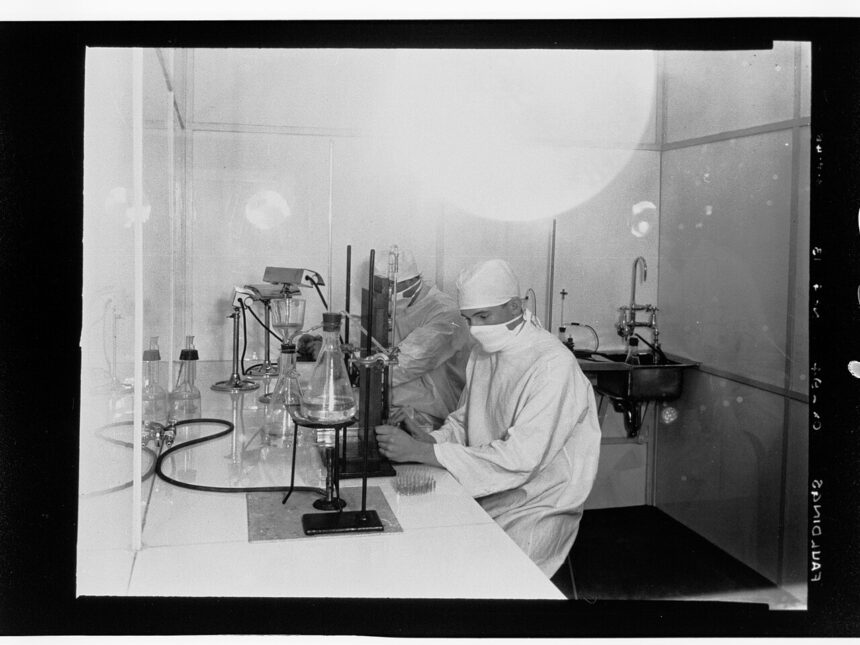
The USP–NF (USP–National Formulary) contains thousands of monographs: detailed specifications for identity, strength, purity and performance of individual ingredients, together with the exact laboratory methods used to test them. A monograph for a vitamin, for instance, defines acceptable assay ranges, limits for heavy metals and microbial contamination, and dissolution or disintegration requirements for finished dosage forms.
When a manufacturer states a product is “tested according to USP methods” or “meets USP specifications”, it means the company (or its contracted laboratory) applied those published methods and the product met the monograph’s limits. This is a meaningful, verifiable technical claim — the methods are public and reproducible by any competent laboratory — but it is self-declared: no external body has audited the claim.

USP Verified: the certification mark
The USP Verified Mark is a separate, voluntary certification programme. To display the gold USP Verified seal, a manufacturer must undergo USP’s own facility GMP audits, submit products for testing in USP laboratories, provide full documentation review, and accept ongoing surveillance testing of products purchased from the open market. USP itself — not the manufacturer — performs the verification.
Why the distinction matters
Both claims involve the same underlying science; the difference is who checked. “Tested to USP standards” places the burden of trust on the manufacturer’s own quality system, ideally backed by independent batch testing at an accredited third-party laboratory. “USP Verified” transfers that trust to the pharmacopeia’s own audit and surveillance programme. Neither claim speaks to whether the ingredient itself is effective — that is a clinical-evidence question, not a quality-control one.
A two-century institution: why USP exists at all
USP predates the FDA by 86 years. Eleven physicians convened in the U.S. Capitol in 1820 to solve a lethal problem: the same prescription, filled in different pharmacies, could contain different substances at different strengths. Their answer — a public book of standards defining what each medicine is and how to prove it — established the model the world still uses: quality defined not by brand promises but by published, reproducible tests anyone can run. That legal anchoring survives today in the U.S. Food, Drug, and Cosmetic Act, which makes USP–NF the official compendium: a drug labelled with a USP-monograph name that fails the monograph’s tests is, by statute, adulterated or misbranded.
Anatomy of a monograph
A typical supplement-ingredient monograph contains five families of requirements. Identification: spectroscopic or chromatographic fingerprints proving the substance is what the label says — the test that catches substitution outright. Assay: the quantitative method (usually HPLC) with acceptance range, commonly 90–110% or 95–105% of declared content. Impurities and contaminants: limits for related substances, residual solvents, and — via General Chapters / — elemental impurities with instrument-grade methods (ICP-MS) replacing the century-old wet-chemistry heavy-metals test. Performance: for finished dosage forms, disintegration or dissolution requirements ensuring the tablet actually releases its contents in physiological conditions — the failure mode behind the infamous “bedpan bullets” of poorly made supplements. Microbial limits: total counts and specified-organism absence per /. Each element cites the exact procedure, reagents and calculations, which is what makes “tested to USP” a falsifiable claim rather than a slogan.
USP among the world’s pharmacopeias
USP is one of three globally dominant compendia alongside the European Pharmacopoeia (Ph. Eur.) and the Japanese Pharmacopoeia (JP); pharmacopoeial discussion groups work to harmonise key methods among them. For supplements the practical point is simple: a serious laboratory report names its compendial method — “USP disintegration”, “Ph. Eur. 2.4.27” — and a report that names no method at all is describing an opinion, not an analysis.
What Verified adds in practice — and what neither claim covers
The Verified programme’s under-appreciated component is market surveillance: USP buys sealed product from ordinary retail and re-tests it for as long as the mark is used, closing the gap between “the samples the company submitted” and “the bottle a consumer buys.” Worth stating equally clearly: neither the monograph nor the seal evaluates clinical efficacy, optimal dosing for a given person, or interactions — those are questions for clinical evidence and, where relevant, a clinician. Quality standards guarantee the chemistry, not the outcome.
The clinical bottom line
Read “USP” claims in two layers: the monograph defines what good looks like; the verification programme defines who confirmed it. A product tested to USP methods at an independent accredited lab, with batch certificates available, offers substantially the same analytical assurance as the seal — what the seal adds is USP’s own continuing audit relationship with the manufacturer.
Primary sources
- USP–NF: United States Pharmacopeia and National Formulary
- USP Verified Mark programme requirements
- NIH Office of Dietary Supplements: Dietary Supplements — What You Need to Know
🗺️ Find certified Georgian healthcare providers: sheniekimi.ge — Georgia Health Map · 998 clinics · 6,600+ doctors · 2,296 pharmacies
Was this article helpful?
Disclaimer. This article is health journalism intended for general information and education. It is not medical advice and is not a substitute for professional diagnosis or treatment. Always consult a qualified healthcare provider about your individual circumstances. Full disclaimer →
Related Coverage


Editorial standards. This article was produced under the GMJ News editorial process, with oversight by the GMJ Editorial Board. Our editorial process. Spotted an error? Contact the editorial team.