Updated 13/09/2026
- The decline data
- Statins accelerate the shortfall
- Why the late-30s/40s timing convention
- One safety note that belongs everywhere CoQ10 is discussed
- The mevalonate crossroads: one pathway, two products
- Tissue by tissue: where decline hits hardest
- The statin story, told honestly
- Q-SYMBIO and KiSel-10: the cardiology evidence in brief
- The clinical bottom line
- Primary sources
Coenzyme Q10 occupies a unique double role in human biochemistry: it is the electron shuttle of the mitochondrial respiratory chain — the literal conveyor of cellular energy production — and simultaneously the body’s principal fat-soluble antioxidant made in-house. Unlike vitamins, we synthesise CoQ10 ourselves. The catch is that synthesis peaks in early adulthood and then declines for the rest of life.
The decline data
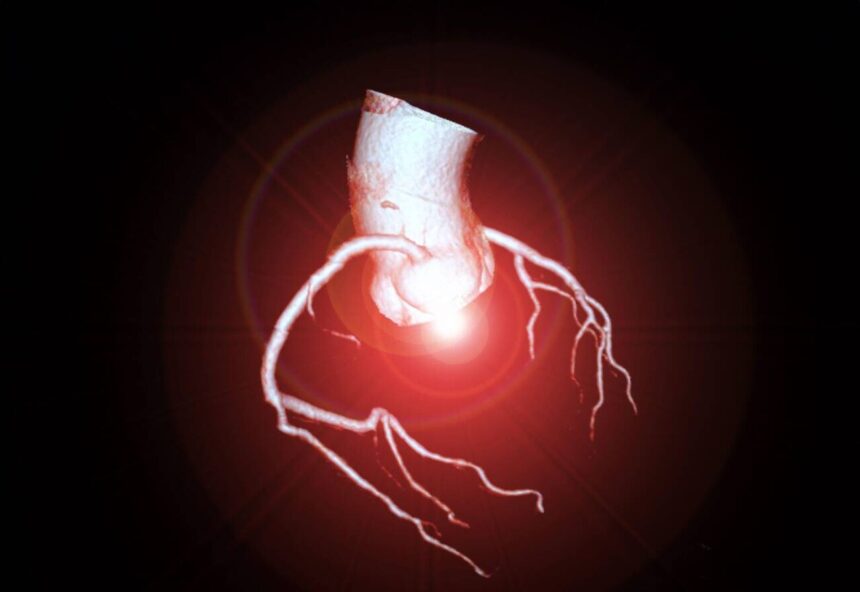
The classic tissue analyses by Kalén and colleagues measured CoQ10 across human organs by age and found the steepest losses in the highest-energy tissues: cardiac muscle CoQ10 falls progressively from around age 20, with levels in the heart roughly 40% lower by the fifth decade and beyond compared to young adults — commonly summarised as “about 40% down by around age 40–50” in the heart. Skeletal muscle, liver and skin show parallel declines. Because the heart consumes more energy per gram than almost any tissue, it is disproportionately exposed to this loss — one reason CoQ10 research has concentrated on cardiology, including the randomised Q-SYMBIO trial in chronic heart failure, which reported reduced major adverse cardiovascular events with CoQ10 as adjunctive therapy.
Statins accelerate the shortfall
The same enzymatic pathway (HMG-CoA reductase → mevalonate) produces both cholesterol and CoQ10. Statins therefore lower circulating CoQ10 by roughly 25–40% — a well-documented pharmacological effect and the main reason CoQ10 discussions routinely involve statin users. Whether supplementation relieves statin-associated muscle symptoms remains genuinely mixed in meta-analyses; the biochemical depletion itself is not disputed.

Why the late-30s/40s timing convention
The common suggestion that CoQ10 supplementation “becomes relevant from the late 30s or 40s” is not marketing arithmetic but the intersection of three curves: endogenous synthesis declining measurably by then, tissue demand remaining high, and — for the ubiquinol form specifically — the additional age-related reduction in the body’s capacity to convert oxidised ubiquinone into active ubiquinol. Younger, healthy adults synthesise enough that supplementation has little rationale outside specific medical contexts.
One safety note that belongs everywhere CoQ10 is discussed
CoQ10 is structurally related to vitamin K and can reduce the effectiveness of warfarin and related anticoagulants; case reports document INR reductions after starting CoQ10. Anyone on anticoagulant therapy should involve their physician before supplementing — this interaction is safety-critical and non-negotiable.
The mevalonate crossroads: one pathway, two products
CoQ10’s biosynthesis begins on the same assembly line as cholesterol: acetyl-CoA → HMG-CoA → (HMG-CoA reductase) → mevalonate. Downstream, the pathway forks — one branch to cholesterol, another through farnesyl pyrophosphate toward the isoprenoid tail that anchors CoQ10 in membranes. This shared upstream enzyme is the entire statin story in one diagram: inhibiting HMG-CoA reductase to cut cholesterol production necessarily throttles the mevalonate supply feeding CoQ10 synthesis. It also explains why dietary CoQ10 (3–5 mg/day from food) can never substitute for synthesis: the body normally manufactures its supply locally, in nearly every tissue, precisely because delivery of such a large lipophilic molecule from the gut is inefficient.
Tissue by tissue: where decline hits hardest
The Kalén tissue series shows the decline is not uniform — it tracks energy demand. Heart: the steepest documented fall, with levels at 77–81 years roughly 40–50% below those at 19–21. Skeletal muscle and liver: substantial parallel declines. Pancreas and adrenals: notable losses in secretory tissues. The pattern matters clinically: myocardium extracts more ATP per gram than almost any tissue and has minimal regenerative reserve, so a 40–50% cofactor decline lands exactly where energetic headroom is smallest — the biological rationale for why heart failure became CoQ10’s flagship research indication rather than, say, skin or joints.
The statin story, told honestly
Two facts coexist and should not be blurred. Fact one: statins reduce circulating CoQ10 by roughly a quarter to two-fifths — mechanistically inevitable, repeatedly measured, undisputed. Fact two: trials of CoQ10 for statin-associated muscle symptoms are genuinely mixed — some meta-analyses find moderate symptom relief, others find none, with heterogeneity in doses, forms and symptom definitions muddying the water. The defensible clinical position: CoQ10 restores a documented biochemical deficit, is safe alongside statins, does not impair LDL-lowering — and symptom relief is possible but not promised. Anyone told either “it definitely fixes statin pain” or “the interaction is a myth” is hearing marketing, from opposite directions.
Q-SYMBIO and KiSel-10: the cardiology evidence in brief
Q-SYMBIO (2014): 420 chronic heart-failure patients, 300 mg/day ubiquinone vs placebo for two years on top of standard therapy — 43% relative reduction in major adverse cardiovascular events and significant cardiovascular-mortality benefit. KiSel-10: elderly Swedish community population given CoQ10 200 mg + selenium 200 µg for four years — reduced cardiovascular mortality, with follow-up analyses reporting persistence of benefit years after supplementation ended. Both are single trials awaiting larger replication, and neither licenses CoQ10 as heart-failure treatment — but together they are why cardiology takes this molecule more seriously than the supplement aisle average, and why the age-decline data reads as clinically meaningful rather than merely curious.
The clinical bottom line
CoQ10 decline with age is measured tissue biochemistry, steepest in the heart (~40% by mid-life), compounded by statin therapy. Supplementation from the late 30s onward addresses a documented shortfall — with the warfarin interaction as the one hard safety rule.
Primary sources
- Kalén A, Appelkvist EL, Dallner G. Age-related changes in the lipid compositions of rat and human tissues (CoQ10 decline). Lipids. 1989
- Mortensen SA, et al. Q-SYMBIO: CoQ10 in chronic heart failure — randomised trial. JACC Heart Fail. 2014
- NIH ODS: Coenzyme Q10 fact sheet (incl. warfarin interaction)
🗺️ Find certified Georgian healthcare providers: sheniekimi.ge — Georgia Health Map · 998 clinics · 6,600+ doctors · 2,296 pharmacies
Was this article helpful?
Disclaimer. This article is health journalism intended for general information and education. It is not medical advice and is not a substitute for professional diagnosis or treatment. Always consult a qualified healthcare provider about your individual circumstances. Full disclaimer →
Related Coverage


Editorial standards. This article was produced under the GMJ News editorial process, with oversight by the GMJ Editorial Board. Our editorial process. Spotted an error? Contact the editorial team.