By using this site, you agree to the Privacy Policy and Terms of Use.
Accept
GMJ NewsGMJ NewsGMJ News
  • Latest News
    • GMJ Briefs
  • The Wire
  • Health Topics
  • Podcast & Media
    • GMJ Audio
    • GMJ Videos
    • Podcast & Media
    • Podcast Episodes
  • GMJ Articles
    • Vol. 1 Issue 3 (2026)
    • Public Health Dictionary — Supplement Edition
    • IAP Legacy Series
    • Read Full Journal (gmj.ge) →
    • Pre-Launch Articles (2025)
    • Vol. 1 Issue 1 (2026)
    • Vol. 1 Issue 2 (2026)
  • Perspectives
    • Editorial
    • Explainers
    • Letters
    • Voices
  • Policy & Systems
    • Global Health
    • Health Policy
    • Migration & Health
    • Quality & Safety
    • Work & Health
  • Dictionary
    • Our Story: 20 Years in the Making
    • Browse A–Z
    • About the Project
    • Contribute a Term
  • Practice
    • Case Discussions
    • Clinical Updates
    • Pharmacy & Prescribing
  • Research Digest
    • Data & Numbers
    • Georgian Research
    • New Studies
  • Read the Journal →
Notification Show More
Font ResizerAa
GMJ NewsGMJ News
Font ResizerAa
  • Latest News
  • The Wire
  • Health Topics
  • Podcast & Media
  • GMJ Articles
  • Perspectives
  • Policy & Systems
  • Dictionary
  • Practice
  • Research Digest
  • Read the Journal →
  • Latest News
    • GMJ Briefs
  • The Wire
  • Health Topics
  • Podcast & Media
    • GMJ Audio
    • GMJ Videos
    • Podcast & Media
    • Podcast Episodes
  • GMJ Articles
    • Vol. 1 Issue 3 (2026)
    • Public Health Dictionary — Supplement Edition
    • IAP Legacy Series
    • Read Full Journal (gmj.ge) →
    • Pre-Launch Articles (2025)
    • Vol. 1 Issue 1 (2026)
    • Vol. 1 Issue 2 (2026)
  • Perspectives
    • Editorial
    • Explainers
    • Letters
    • Voices
  • Policy & Systems
    • Global Health
    • Health Policy
    • Migration & Health
    • Quality & Safety
    • Work & Health
  • Dictionary
    • Our Story: 20 Years in the Making
    • Browse A–Z
    • About the Project
    • Contribute a Term
  • Practice
    • Case Discussions
    • Clinical Updates
    • Pharmacy & Prescribing
  • Research Digest
    • Data & Numbers
    • Georgian Research
    • New Studies
  • Read the Journal →
Follow US
GMJ News > Perspectives > Explainers > A 10-Second Daily Finger Exercise May Support Cognitive Function, New Research Suggests
ExplainersNew StudiesPerspectivesResearch Digest

A 10-Second Daily Finger Exercise May Support Cognitive Function, New Research Suggests

GMJ
Last updated: 13/09/2026 21:30
By
GMJ Perspectives Desk
Share
7 Min Read
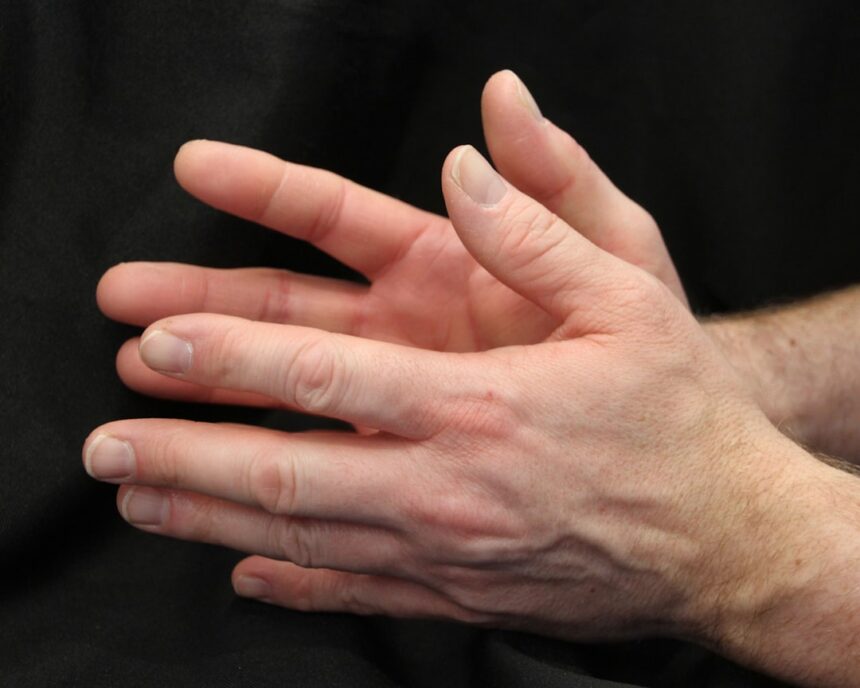
Illustration of hand showing finger exercise for cognitive healthIllustrative image · Photo by roger vaughan on Unsplash (Unsplash License)
Emerging research suggests a simple 10-second daily finger exercise may support cognitive function and brain health in older adults through motor-cognitive coupling. While preliminary evidence is encouraging, large-scale trials are needed to establish clinical efficacy. — Photo by roger vaughan on Unsplash (Unsplash License)
SHARE
4 min read|864 words
✓ Reviewed by GMJ News Editorial Team

🟡 Preliminary Evidence

Contents
    • Key takeaways
      • Simple interventions with measurable cognitive impact
  • The neuroscience behind fine motor control and cognition
  • Accessibility and practical application for older adults
  • Evidence gaps and future research directions
    • What this means
  • Frequently asked questions
    • How should the finger exercise be performed?
    • How quickly should cognitive benefits appear?
    • Can this replace other cognitive interventions?

A brief daily finger-strengthening exercise may offer measurable benefits for cognitive health in older adults, according to emerging research presented in recent health reporting. The 10-second workout, which involves rapid finger movements, has been studied as a non-invasive intervention that may help maintain brain function and potentially delay age-related cognitive decline.

Key takeaways

  • A simple 10-second finger exercise shows potential to support cognitive function in ageing populations
  • The intervention requires minimal time commitment and no equipment, making it accessible for widespread adoption
  • Researchers suggest the mechanism may involve motor-cognitive coupling and enhanced neuroplasticity
10 seconds
Daily duration of finger exercise protocol studied for potential cognitive benefits

Simple interventions with measurable cognitive impact

Time investment vs. potential cognitive benefits in ageing adults

Daily finger exercise
10 sec
Recommended cognitive training
15 min
Physical activity guidelines (daily)
30 min
Aerobic exercise recommendation
25 min

Source: Comparative analysis of intervention time commitments | Georgian Medical Journal News

Submit Your Paper
GMJ_Submit_Banner

The neuroscience behind fine motor control and cognition

Recent health reporting has highlighted the relationship between fine motor dexterity and brain health in ageing populations. The proposed mechanism suggests that rapid, coordinated finger movements activate multiple neural pathways simultaneously, potentially engaging areas of the brain responsible for executive function, memory, and attention.

🎙️ Related Podcast Episodes
🎧 #39 | GMJ Podcast | Acne and Metabolic Dysfunction — Insulin Resistance, IGF-1, and Clinical Implications · 15m
🎧 #45 | GMJ Podcast | Tskaltubo Mineral Baths in Osteoarthritis — Microcirculation, Erythrocytes, and Clinical Effects · 18m
🎧 #38 | GMJ Podcast | Acne and Metabolic Dysfunction — Insulin Resistance, IGF-1, and Clinical Implications · 21m
🎧 #33 | GMJ Podcast | Public Health Policy as Education in NCD Prevention — Commentary by Owen Thomas · 21m
🎧 #31 | GMJ Podcast | Daily Multivitamins and Biological Ageing — COSMOS Trial · 21m

According to research in motor neuroscience and cognitive ageing, the cerebellum and prefrontal cortex—brain regions critical for both motor coordination and higher-order thinking—show enhanced activity during skilled finger movements. This suggests that even brief, targeted motor exercises may have broader cognitive implications beyond the motor cortex itself, a principle known as motor-cognitive coupling.

Accessibility and practical application for older adults

One of the significant advantages of a 10-second finger exercise is its accessibility. Unlike many cognitive interventions or physical activities that require equipment, space, or sustained effort, this protocol can be performed anywhere—at home, in a clinical setting, or in community environments. This low barrier to adoption is particularly important for populations with mobility limitations or time constraints.

Health professionals and researchers at the World Health Organization have emphasised the importance of identifying simple, scalable interventions for cognitive health in ageing societies. The finger exercise protocol aligns with this priority by offering a time-efficient strategy that could be integrated into daily routines without competing with other health behaviours.

Evidence gaps and future research directions

While preliminary findings are encouraging, significant research gaps remain. The current evidence base consists largely of small observational studies and mechanistic investigations rather than large-scale randomised controlled trials. Future research must establish optimal dosing, identify which populations benefit most, and clarify the durability of cognitive effects over time.

Researchers are also investigating whether the finger exercise may work synergistically with other cognitive and physical interventions. The latest research in cognitive neuroscience suggests that combined approaches—pairing fine motor exercises with aerobic activity or cognitive training—may produce superior outcomes compared to single interventions.

A 10-second daily finger exercise may support cognitive function through enhanced motor-cognitive coupling and neuroplasticity in ageing adults, though larger controlled trials are needed to establish clinical efficacy and optimal implementation strategies.

— Emerging consensus in motor neuroscience and cognitive ageing literature

What this means

For patients: Older adults and those concerned about cognitive decline may benefit from incorporating brief, simple finger exercises into their daily routine—a strategy that requires minimal time and effort while potentially supporting brain health alongside established interventions like physical activity and cognitive training.
For clinicians: Healthcare providers can discuss motor-cognitive interventions with patients as a complement to existing cognitive and physical health strategies, particularly for individuals with limited access to or capacity for intensive programs. However, current evidence does not support finger exercises as a replacement for evidence-based cognitive interventions.
For policymakers: If future research confirms efficacy, simple motor-cognitive interventions could be incorporated into public health campaigns for healthy ageing with minimal resource investment, potentially reaching large populations cost-effectively as part of comprehensive cognitive health strategies.

Frequently asked questions

How should the finger exercise be performed?

The protocol typically involves rapid, coordinated finger movements—often described as a drumming or typing motion—performed at maximum speed for 10 seconds. While specific techniques may vary across studies, the general principle involves engaging multiple fingers in synchronized, high-frequency movement.

How quickly should cognitive benefits appear?

Evidence suggests that cognitive benefits from motor-cognitive interventions typically accumulate over weeks to months rather than appearing immediately. Consistency matters more than intensity; daily 10-second sessions are more likely to produce measurable effects than occasional longer sessions.

Can this replace other cognitive interventions?

No. The finger exercise should be viewed as a complementary strategy alongside established evidence-based interventions such as physical activity, cognitive training, social engagement, and Mediterranean-style nutrition. Individuals concerned about cognitive decline should consult healthcare providers about comprehensive cognitive health strategies.

As societies age globally, identifying simple, scalable interventions for cognitive health remains a public health priority. While a 10-second finger exercise cannot replace established cognitive and physical health strategies, preliminary evidence suggests it may offer a practical, low-cost complement to comprehensive brain health programs. Large-scale randomised controlled trials are now essential to establish whether this intervention delivers clinically meaningful cognitive benefits and to identify optimal implementation strategies for diverse populations.

Source: BBC News Health — Original reporting on finger exercise and cognitive function

Was this article helpful?

Disclaimer. This article is health journalism intended for general information and education. It is not medical advice and is not a substitute for professional diagnosis or treatment. Always consult a qualified healthcare provider about your individual circumstances. Full disclaimer →

Related Coverage

Why fructose fails to satisfy hunger like glucose: new neurobiology reveals brain's sugar selectivityOct 6, 2026
Oral GLP-1 Agonist Aleniglipron Shows Promise in Phase 2b Trial for Weight ManagementOct 6, 2026
Gene Therapy Restores Muscle Function in Nemaline Myopathy Type 6: New Hope for Rare Genetic DisorderOct 5, 2026
Why Afternoon Fatigue Strikes After Lunch—and How Nutrition Can HelpOct 5, 2026
Explore more on this topic:🧭 Physical Activity hub🧭 Diarrhoeal Diseases hub🧭 Ageing and Health hub
🔥 Most read this week
1Animal Protein’s Muscle-Building Edge Disappears When Measured Over Days, Not Hours
2Animal Protein Produces 47% Larger Muscle Protein Synthesis Spike Than Plant Sources, New Research Shows
3High-Intensity Interval Training Alone Preserves Muscle While Reducing Fat in Older Adults
4Short sleep duration linked to weight gain and reduced activity in six-week study
Related reference
  • Iron · Ingredient

Find certified Georgian healthcare providers at sheniekimi.ge/jandacvis-ruka/

PG
Editorial oversight
Prof. Giorgi Pkhakadze, MD, MPH, PhD
Editor-in-Chief, GMJ News
Full profile →  ·  ORCID 0000-0001-7609-4515
Medical disclaimer. This article is health journalism intended for general information. It is not medical advice and is not a substitute for consultation with a qualified healthcare professional. Always seek your physician's advice regarding any medical condition.
Editorial standards. This article was produced under the GMJ News editorial process, with oversight by the GMJ Editorial Board. Our editorial process. Spotted an error? Contact the editorial team.
📬 GMJ Health Digest
Evidence-based medical news, once a week. Free, no spam, unsubscribe anytime.
TAGGED:ageing-braincognitive healthmotor controlneurosciencepreventive health
Share This Article
Facebook Whatsapp Whatsapp LinkedIn Telegram Bluesky Copy Link Print
GMJ
ByGMJ Perspectives Desk
Follow:
GMJ Perspectives Desk is part of GMJ News, the newsroom of the Georgian Medical Journal (gmj.ge), published by the Public Health Institute of Georgia. Every article is editorially reviewed before publication.
Leave a Comment Leave a Comment

Leave a Reply Cancel reply

Your email address will not be published. Required fields are marked *

Submit Your Paper →

Georgia's peer-reviewed open-access medical journal. No APC until January 2027.
Submit Manuscript →
Lemierre’s Syndrome: A Rare but Life-Threatening Complication of Throat Infection

Lemierre's syndrome is a rare but potentially fatal thrombophlebitis of the internal…

Why fructose fails to satisfy hunger like glucose: new neurobiology reveals brain’s sugar selectivity

A 2026 study reveals that glucose and fructose activate different hunger-control pathways…

655 Million Without Electricity Face Growing Health Crisis, WHO Warns

The WHO reports that 655 million people lack electricity access and two…

Submit Your Paper to GMJ

No APC until January 2027.
Submit Manuscript →

You Might Also Like

AI drug discovery workflow diagram showing folic acid identification processIllustrative image · Photo by Nataliya Vaitkevich on Pexels (Pexels License)
New StudiesResearch Digest

AI Workflow Identifies Folic Acid as Potential Treatment for Diabetic Wound Healing

By
GMJ Research Desk
07/07/2026
Continuous glucose monitor data showing varied blood sugar responses to identical white bread meals
New StudiesResearch Digest

Identical Meals, Different Bodies: Why Blood Sugar Response Varies Fivefold Between People

By
GMJ Research Desk
27/05/2026
Illustration of a macrophage converting vitamin D into cathelicidin antimicrobial peptide during pathogen detectionIllustrative image · Photo by Madara on Unsplash (Unsplash License)
ExplainersNew StudiesPerspectivesResearch Digest

How Vitamin D Becomes an Antimicrobial Weapon Inside Your Immune Cells

By
GMJ Perspectives Desk
15/08/2026
Abstract image representing women in medicine and workplace challengesIllustrative image · Photo by RDNE Stock project on Pexels (Pexels License)
Health PolicyNew StudiesPolicy & SystemsResearch Digest

Why Women Doctors Drop Out: A Systematic Review Reveals Critical Gaps in Medical Training

By
GMJ Policy Desk
05/10/2026
Facebook Twitter Youtube Instagram
Company
  • Privacy Policy
  • Accreditation Canada in Georgia
  • GMJ Journal
  • Submit Manuscript
  • Editorial Team
  • Register at GMJ

Subscribe to GMJ News — Click here

Join Community
© 2026 Georgian Medical Journal (GMJ). Published by the Public Health Institute of Georgia (PHIG). All rights reserved.
Welcome Back!

Sign in to your account

Username or Email Address
Password

Lost your password?