By using this site, you agree to the Privacy Policy and Terms of Use.
Accept
GMJ NewsGMJ NewsGMJ News
  • Latest News
    • GMJ Briefs
  • Podcast & Media
    • Podcast Episodes
    • GMJ Audio
    • GMJ Videos
  • Research Digest
    • New Studies
    • Georgian Research
    • Data & Numbers
  • Policy & Systems
    • Health Policy
    • Quality & Safety
    • Migration & Health
    • Global Health
  • Practice
    • Clinical Updates
    • Case Discussions
    • Pharmacy & Prescribing
    • Ingredients A-Z
  • Perspectives
    • Editorial
    • Explainers
    • Voices
    • Letters
  • GMJ Articles
    • Vol. 1 Issue 2 (2026)
    • Vol. 1 Issue 1 (2026)
    • Pre-Launch Articles (2025)
  • Read the Journal →
  • About GMJ News
Notification Show More
Font ResizerAa
GMJ NewsGMJ News
Font ResizerAa
  • Latest News
    • GMJ Briefs
  • Podcast & Media
    • Podcast Episodes
    • GMJ Audio
    • GMJ Videos
  • Research Digest
    • New Studies
    • Georgian Research
    • Data & Numbers
  • Policy & Systems
    • Health Policy
    • Quality & Safety
    • Migration & Health
    • Global Health
  • Practice
    • Clinical Updates
    • Case Discussions
    • Pharmacy & Prescribing
    • Ingredients A-Z
  • Perspectives
    • Editorial
    • Explainers
    • Voices
    • Letters
  • GMJ Articles
    • Vol. 1 Issue 2 (2026)
    • Vol. 1 Issue 1 (2026)
    • Pre-Launch Articles (2025)
  • Read the Journal →
  • About GMJ News
Follow US
GMJ News > Policy & Systems > Global Health > Gambia Trains 25 Community Health Workers in WHO Mental Health Guidelines to Bridge Rural Care Gaps
Global HealthPolicy & Systems

Gambia Trains 25 Community Health Workers in WHO Mental Health Guidelines to Bridge Rural Care Gaps

GMJ
Last updated: 25/05/2026 15:58
By
GMJ Policy Desk
Share
7 Min Read
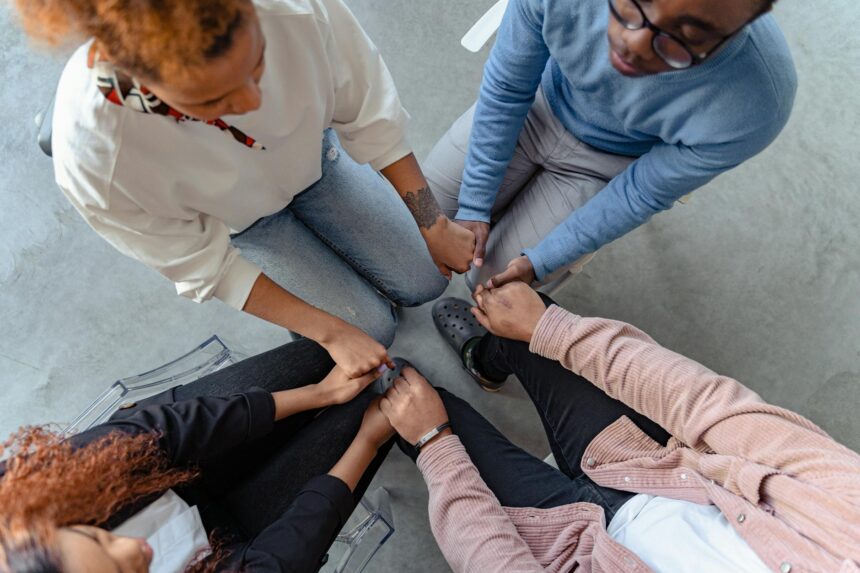
Healthcare workers participating in WHO mhGAP mental health training program in rural Gambia
The Gambia trained 25 community healthcare workers in WHO Mental Health Gap Action Programme guidelines to address critical rural mental health service gaps. The four-day program enables non-specialist providers to deliver evidence-based mental health interventions in primary care settings. — Photo: AI25.Studio Studio / Pexels
SHARE
🎧 Listen to this article6:14 min · 894 words · GMJ Audio

Updated 25/05/2026

Contents
  • Rural Communities Gain First-Line Mental Health Support
  • Evidence-Based Guidelines Bridge Specialist Care Gap
  • Healthcare Workers Report Increased Confidence
    • Key takeaways
  • Frequently asked questions
    • What is the WHO Mental Health Gap Action Programme?
    • How does community-based mental health care improve access?
    • What mental health conditions can trained community workers address?
3 min read|664 words

The Gambia has launched a comprehensive mental health training initiative targeting rural healthcare workers, addressing critical gaps in community-level mental health services. The World Health Organization collaborated with the Ministry of Health to deliver WHO Mental Health Gap Action Programme (mhGAP) 2.0 guidelines training to frontline providers in May 2026.

25 healthcare workers
trained in WHO mhGAP 2.0 guidelines during four-day intensive program in Tendaba Camp

Rural Communities Gain First-Line Mental Health Support

The four-day training program conducted from May 11-15, 2026, in Tendaba Camp brought together nurses, midwives, and community health workers from across The Gambia, according to the WHO Africa Regional Office. These frontline providers represent the first point of contact for many patients in rural areas where specialized mental health services remain scarce.

According to the WHO Africa Regional Office, mental health services in The Gambia have historically concentrated in urban centers, leaving rural communities significantly underserved. This geographic disparity means conditions including depression, anxiety, epilepsy, and substance use disorders often go undiagnosed and untreated in rural areas.

Submit Your Paper
GMJ_Submit_Banner

The training focused on practical implementation of evidence-based interventions through interactive sessions, case studies, role plays, and group discussions. Participants learned to recognize, manage, and appropriately refer common mental health conditions within primary healthcare settings. For more context on global mental health initiatives, see our comprehensive coverage.

🎙️ Related Podcast Episodes
🎧 #29 | GMJ Podcast | GMJ Research: From Manuscript to Publication – How Medical Evidence Becomes Scientific Knowledge · 15m
🎧 #25 | WHO Warns: Childhood Hearing Loss Must Be Addressed Early · 19m
🎧 #54 | GMJ Podcast | The Blueprint of a Medical Journal: Designing an Open-Access Scientific Platform · 19m
🎧 #53 | GMJ Podcast | Palliative Care in Georgia — Health System Gaps, Access Barriers, and Policy Implications · 16m
🎧 #52 | GMJ Podcast | Health and Migration Knowledge Hub — A Global Resource for Evidence-Based Practice · 17m

Evidence-Based Guidelines Bridge Specialist Care Gap

The WHO Mental Health Gap Action Programme (mhGAP) 2.0 guidelines represent a systematic approach to integrating mental health care into primary healthcare systems. These evidence-based protocols enable non-specialist providers to deliver standardized mental health interventions in resource-limited settings.

The National Mental Health Programme collaborated closely with WHO to adapt the training content to local contexts and healthcare delivery patterns, according to the WHO Africa Regional Office. This partnership ensures that newly trained healthcare workers can immediately apply their skills within existing community health infrastructure.

Healthcare Workers Report Increased Confidence

Training participants expressed notable improvements in their understanding and approach to mental health conditions. Healthcare workers emphasized their enhanced confidence in identifying patients requiring mental health support and providing compassionate, evidence-based care.

The program addressed critical knowledge gaps among frontline providers who previously lacked formal training in mental health assessment and intervention. Community health workers play increasingly vital roles in mental health service delivery, particularly in rural areas where traditional healthcare infrastructure remains limited.

This training has changed how I understand and approach mental health conditions. I now feel more confident identifying patients who need support and providing care with empathy.

— Participating nurse, WHO mhGAP 2.0 Training Program (WHO Africa Regional Office, 2026)

Key takeaways

  • 25 healthcare workers from rural Gambian communities completed WHO mhGAP 2.0 guidelines training from May 11-15, 2026
  • Training addresses critical gaps in mental health service access, particularly affecting rural populations
  • Evidence-based protocols enable non-specialist providers to deliver standardized mental health interventions
  • WHO collaborated with the Ministry of Health and National Mental Health Programme to deliver the training

Frequently asked questions

What is the WHO Mental Health Gap Action Programme?

The mhGAP 2.0 guidelines provide evidence-based protocols that enable non-specialist healthcare providers to recognize, treat, and refer common mental health conditions within primary care settings. These guidelines specifically target resource-limited environments where specialist mental health services are scarce.

How does community-based mental health care improve access?

Community-based models eliminate many barriers to mental health care, including long travel distances, high costs, and stigma associated with seeking specialized services. Training local healthcare workers creates sustainable, culturally appropriate care delivery within existing community health infrastructure.

What mental health conditions can trained community workers address?

Healthcare workers trained in mhGAP 2.0 guidelines can identify and provide initial interventions for depression, anxiety disorders, epilepsy, substance use disorders, and other common mental health conditions. They also learn appropriate referral protocols for cases requiring specialist care.

The Gambia’s investment in community-based mental health training represents a model for addressing mental health service gaps. As trained healthcare workers begin implementing these evidence-based interventions in their communities, the program’s impact on rural mental health access will be monitored.

Source: The Gambia brings mental health care closer to communities through front line training

Was this article helpful?

Disclaimer. This article is health journalism intended for general information and education. It is not medical advice and is not a substitute for professional diagnosis or treatment. Always consult a qualified healthcare provider about your individual circumstances. Full disclaimer →

Related Coverage

The Hidden Cost of Secrecy: How Missing Research Data Undermines Clinical GuidanceJul 9, 2026
Silent spread of chronic wasting disease raises cross-species transmission concernsJul 9, 2026
New AI Model Strips Personal Data From ECGs While Preserving Heart Risk InformationJul 9, 2026
Bidi Smoking Linked to Elevated Cancer Risk in Large Indian StudyJul 9, 2026
Related reference
  • Epilepsy · Condition
  • Iron · Ingredient
PG
Written by
Prof. Giorgi Pkhakadze, MD, MPH, PhD
Editor-in-Chief, GMJ News
Full profile →  ·  ORCID 0000-0001-7609-4515
Medical disclaimer. This article is health journalism intended for general information. It is not medical advice and is not a substitute for consultation with a qualified healthcare professional. Always seek your physician's advice regarding any medical condition.
Medically reviewed by Prof. Giorgi Pkhakadze, MD, MPH, PhD. Spotted an error? Contact the editorial team.

Get the GMJ News digest
Evidence-based health journalism in your inbox. No spam; unsubscribe anytime.
TAGGED:community health workersMental Healthprimary carerural healthcareWHO guidelines
Share This Article
Facebook LinkedIn Bluesky Copy Link Print
GMJ
ByGMJ Policy Desk
Follow:
GMJ Policy Desk is part of GMJ News, the newsroom of the Georgian Medical Journal (gmj.ge), published by the Public Health Institute of Georgia. Every article is editorially reviewed before publication.
Leave a Comment Leave a Comment

Leave a Reply Cancel reply

Your email address will not be published. Required fields are marked *

Submit Your Paper →

Georgia's peer-reviewed open-access medical journal. No APC until January 2027.
Submit Manuscript →
US Infant Mortality Reaches Historic Low, Yet Lags Peer Nations

The United States achieved an all-time low in infant mortality in 2025…

AI-Driven Depression Treatment Platform Neumora Halts Clinical Development

Neumora, an AI-focused depression treatment platform backed by venture capital firm ARCH,…

How one biotech startup transformed clinical trial failure into an AI-powered health technology breakthrough

A biotech startup has converted data from a failed clinical trial into…

Submit Your Paper to GMJ

No APC until January 2027.
Submit Manuscript →

You Might Also Like

Global Antimicrobial Resistance Investment Falls Short of UN Commitments

By
GMJ Policy Desk
28/05/2026
School building with vaccine safety information overlay showing scientific evidenceIllustrative image · Gov. Wolf Visits Drive-Thru Mass Vaccination Clinic, Discusses Vaccine Success - 50999745804.jpg by governortomwolf / CC BY 2.0 via Wikimedia Commons (CC BY 2.0)
Health PolicyPolicy & Systems

Pennsylvania Schools Distribute Debunked Vaccine Misinformation to Thousands of Parents

By
GMJ Policy Desk
18/06/2026
Microscopic image of Echinococcus multilocularis tapeworm parasiteIllustrative image · Photo by fr0ggy5 on Unsplash (Unsplash License)
Clinical UpdatesGlobal HealthNew StudiesPolicy & SystemsPracticeResearch Digest

Fatal Tapeworm Disease Spreads to Pacific Northwest Wild Animals for First Time

By
GMJ Practice Desk
07/07/2026
Climate change and health risks infographic showing temperature trendsIllustrative image · Photo by Feyza Daştan on Pexels (Pexels License)
Global HealthPolicy & Systems

Global Temperatures Likely to Set Records Over Next Five Years, WMO Warns

By
GMJ Policy Desk
16/06/2026
Facebook Twitter Youtube Instagram
Company
  • Privacy Policy
  • Contact US
  • GMJ Journal
  • Submit Manuscript
  • Editorial Team
  • Register at GMJ
  • Terms of Use

Subscribe to GMJ News — Click here

Join Community
© 2026 Georgian Medical Journal (GMJ). Published by the Public Health Institute of Georgia (PHIG). All rights reserved.
Welcome Back!

Sign in to your account

Username or Email Address
Password

Lost your password?

Not a member? Sign Up