By using this site, you agree to the Privacy Policy and Terms of Use.
Accept
GMJ NewsGMJ NewsGMJ News
  • Latest News
  • GMJ Briefs
  • Research Digest
    • New Studies
    • Georgian Research
    • Data & Numbers
  • Policy & Systems
    • Health Policy
    • Quality & Safety
    • Migration & Health
    • Global Health
  • Practice
    • Clinical Updates
    • Case Discussions
    • Pharmacy & Prescribing
  • Perspectives
    • Editorial
    • Explainers
    • Voices
    • Letters
  • Podcast & Media
    • Podcast Episodes
    • Video
    • Infographics
  • GMJ Articles
    • Vol. 1 Issue 2 (2026)
    • Vol. 1 Issue 1 (2026)
    • Pre-Launch Articles (2025)
  • Read the Journal →
Notification Show More
Font ResizerAa
GMJ NewsGMJ News
Font ResizerAa
  • Latest News
  • GMJ Briefs
  • Research Digest
    • New Studies
    • Georgian Research
    • Data & Numbers
  • Policy & Systems
    • Health Policy
    • Quality & Safety
    • Migration & Health
    • Global Health
  • Practice
    • Clinical Updates
    • Case Discussions
    • Pharmacy & Prescribing
  • Perspectives
    • Editorial
    • Explainers
    • Voices
    • Letters
  • Podcast & Media
    • Podcast Episodes
    • Video
    • Infographics
  • GMJ Articles
    • Vol. 1 Issue 2 (2026)
    • Vol. 1 Issue 1 (2026)
    • Pre-Launch Articles (2025)
  • Read the Journal →
Follow US
GMJ News > GMJ Briefs > Training Break Study Quantifies Actual Fitness Loss at Just 10-15%

Training Break Study Quantifies Actual Fitness Loss at Just 10-15%

GMJ
Last updated: 05/24/2026 15:46
By
GMJ News Desk
Share
1 Min Read
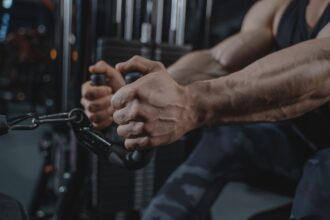
Athlete resting during training break with fitness retention data visualization
Three recent studies reveal that training breaks cause far less fitness loss than athletes fear. Genetic factors protect against rapid decline, with most people retaining 70-85% of peak fitness even after extended breaks. — Photo: ShotPot / Pexels
SHARE

A comprehensive analysis of detraining effects has produced concrete data that may surprise fitness enthusiasts: athletes lose only 10-15% of their fitness capacity after 2-4 weeks away from training, according to new research published in Sports Medicine journals.

The studies reveal that genetic adaptations and protective mechanisms remain active even during rest periods, helping preserve training gains. These molecular changes, known as epigenetic modifications, create a biological memory that maintains much of the fitness foundation built through previous training. The research shows that cardiovascular fitness typically shows the most rapid decline, with 6-20% reductions in VO2 max, while strength metrics prove more resilient, with only 8-12% losses in maximum strength after four weeks of inactivity.

Read the full article on GMJ Newsroom.

GMJ Brief · Key Finding

📰 Read the full article: Training Breaks Cost Less Than Athletes Think, New Studies Show →

Share This Article
Facebook Copy Link Print

Submit Your Paper →

Georgia's peer-reviewed open-access medical journal. No APC until January 2027.
Submit Manuscript →
How Georgia Outpaced Global Supply Chain Chaos During the 2026 Nestlé Infant Formula Crisis

Georgia's National Food Agency responded faster than many larger nations to the…

New Framework Protects Critically Ill Patients in Clinical Research: International Standards Meet Georgian Law

A new ethical and legal framework published in the Georgian Medical Journal…

Severe Infant Symptoms Paradoxically Reduce Healthcare Seeking in Sub-Saharan Africa

New research reveals severely ill neonates received formal healthcare in only 8.4%-41.8%…

Submit Your Paper to GMJ

No APC until January 2027.
Submit Manuscript →

You Might Also Like

Laboratory testing omega-3 supplement capsules for oxidation levels

85% of Omega-3 Supplements Fail Lab Tests, Yet Show Minimal Human Health Impact

By
GMJ News Desk
Athlete resting during training break with fitness retention data visualization

Fear of Training Loss May Be Worse Than Reality, Studies Suggest

By
GMJ News Desk
Scientific illustration of protein wave patterns sweeping across fertilized egg surface

What Medical Professionals Should Know About Cellular Wave Discovery

By
GMJ News Desk
Infographic showing zinc and copper supplement bottles with ratio measurements

Three Essential Facts Every Zinc Supplement User Must Know

By
GMJ News Desk
Facebook Twitter Youtube Instagram
Company
  • Privacy Policy
  • Contact US
  • GMJ Journal
  • Submit Manuscript
  • Editorial Team
  • Register at GMJ
  • Terms of Use

Sign Up For Free

Subscribe to our newsletter and don't miss out on our programs, webinars and trainings.

[mc4wp_form]

Join Community
Made by ThemeRuby using the Foxiz theme. Powered by WordPress
© 2026 Georgian Medical Journal (GMJ). Published by the Public Health Institute of Georgia (PHIG). All rights reserved.
Welcome Back!

Sign in to your account

Username or Email Address
Password

Lost your password?

Not a member? Sign Up