By using this site, you agree to the Privacy Policy and Terms of Use.
Accept
GMJ NewsGMJ NewsGMJ News
  • Latest News
  • GMJ Briefs
  • Research Digest
    • New Studies
    • Georgian Research
    • Data & Numbers
  • Policy & Systems
    • Health Policy
    • Quality & Safety
    • Migration & Health
    • Global Health
  • Practice
    • Clinical Updates
    • Case Discussions
    • Pharmacy & Prescribing
  • Perspectives
    • Editorial
    • Explainers
    • Voices
    • Letters
  • Podcast & Media
    • Podcast Episodes
    • Video
    • Infographics
  • GMJ Articles
    • Vol. 1 Issue 2 (2026)
    • Vol. 1 Issue 1 (2026)
    • Pre-Launch Articles (2025)
  • Read the Journal →
Notification Show More
Font ResizerAa
GMJ NewsGMJ News
Font ResizerAa
  • Latest News
  • GMJ Briefs
  • Research Digest
    • New Studies
    • Georgian Research
    • Data & Numbers
  • Policy & Systems
    • Health Policy
    • Quality & Safety
    • Migration & Health
    • Global Health
  • Practice
    • Clinical Updates
    • Case Discussions
    • Pharmacy & Prescribing
  • Perspectives
    • Editorial
    • Explainers
    • Voices
    • Letters
  • Podcast & Media
    • Podcast Episodes
    • Video
    • Infographics
  • GMJ Articles
    • Vol. 1 Issue 2 (2026)
    • Vol. 1 Issue 1 (2026)
    • Pre-Launch Articles (2025)
  • Read the Journal →
Follow US
GMJ News > GMJ Briefs > 85% of Omega-3 Supplements Fail Lab Tests, Yet Show Minimal Human Health Impact

85% of Omega-3 Supplements Fail Lab Tests, Yet Show Minimal Human Health Impact

GMJ
Last updated: 05/24/2026 15:49
By
GMJ News Desk
Share
1 Min Read
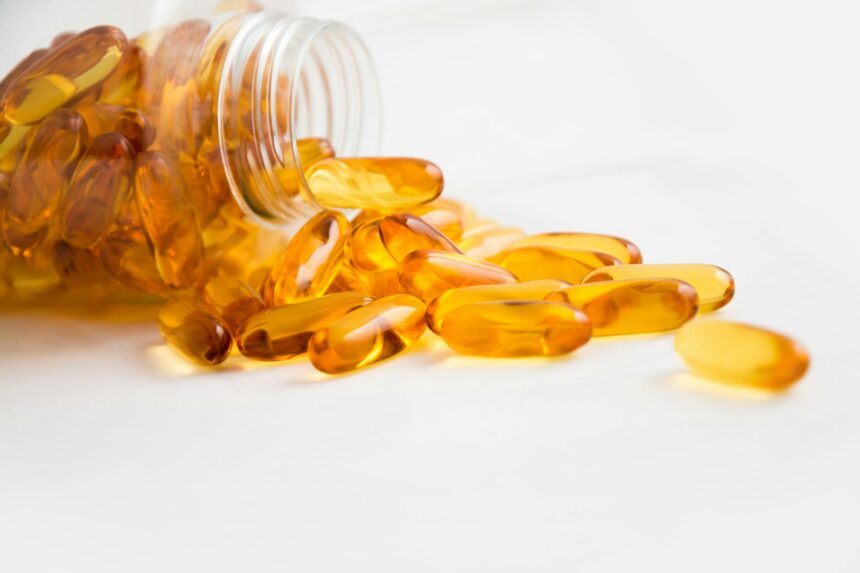
Laboratory testing omega-3 supplement capsules for oxidation levels
New research challenges concerns about omega-3 supplement oxidation, revealing a significant gap between laboratory measurements and actual health risks in human studies. Despite 85% of supplements exceeding oxidation thresholds, clinical trials show minimal adverse effects. — Photo: Pixabay / Pexels
SHARE

A comprehensive analysis reveals that 85% of commercially available omega-3 supplements exceed recommended oxidation safety thresholds when subjected to standard laboratory testing, yet human studies demonstrate minimal adverse health effects from these same products. The data shows concerning laboratory results across multiple oxidation measures: 73% exceed anisidine value thresholds and 68% surpass total oxidation limits.

However, only 12% of human studies using oxidized omega-3 supplements have shown demonstrable harm, creating a striking disconnect between chemical measurements and clinical outcomes. This gap suggests that traditional laboratory markers may not accurately predict biological activity in the human digestive system.

Research from Progress in Lipid Research indicates that the human digestive process, including stomach acid and enzymatic activity, fundamentally alters the oxidative state of consumed omega-3 fatty acids, potentially explaining why laboratory concerns don’t translate to real-world health risks.

Read the full article on GMJ Newsroom.

Submit Your Paper
GMJ_Submit_Banner

GMJ Brief · Key Finding

📰 Read the full article: Omega-3 Supplement Oxidation: New Research Challenges Safety Concerns →

Share This Article
Facebook Copy Link Print

Submit Your Paper →

Georgia's peer-reviewed open-access medical journal. No APC until January 2027.
Submit Manuscript →
New Framework Protects Critically Ill Patients in Clinical Research: International Standards Meet Georgian Law

A new ethical and legal framework published in the Georgian Medical Journal…

Severe Infant Symptoms Paradoxically Reduce Healthcare Seeking in Sub-Saharan Africa

New research reveals severely ill neonates received formal healthcare in only 8.4%-41.8%…

Severe Infant Symptoms Paradoxically Reduce Healthcare Seeking in Sub-Saharan Africa

New research reveals severely ill neonates received formal healthcare in only 8.4%-41.8%…

Submit Your Paper to GMJ

No APC until January 2027.
Submit Manuscript →

You Might Also Like

Infographic showing zinc and copper supplement bottles with ratio measurements

High-Dose Zinc Supplements Trigger Copper Deficiency Within Weeks

By
GMJ News Desk
Brain neurotransmitter diagram showing chemical signaling pathways

Brain’s Chemical Messengers Drive Daily Mental Performance

By
GMJ News Desk
Laboratory testing omega-3 supplement capsules for oxidation levels

Laboratory Tests May Not Predict Real-World Omega-3 Safety Risks

By
GMJ News Desk
Laboratory blood test tubes with magnesium deficiency diagnostic chart

48% of Adults May Have Hidden Magnesium Deficiency Despite Normal Blood Tests

By
GMJ News Desk
Facebook Twitter Youtube Instagram
Company
  • Privacy Policy
  • Contact US
  • GMJ Journal
  • Submit Manuscript
  • Editorial Team
  • Register at GMJ
  • Terms of Use

Sign Up For Free

Subscribe to our newsletter and don't miss out on our programs, webinars and trainings.

[mc4wp_form]

Join Community
Made by ThemeRuby using the Foxiz theme. Powered by WordPress
© 2026 Georgian Medical Journal (GMJ). Published by the Public Health Institute of Georgia (PHIG). All rights reserved.
Welcome Back!

Sign in to your account

Username or Email Address
Password

Lost your password?

Not a member? Sign Up