By using this site, you agree to the Privacy Policy and Terms of Use.
Accept
GMJ NewsGMJ NewsGMJ News
  • Latest News
    • GMJ Briefs
  • Podcast & Media
    • Podcast Episodes
    • GMJ Audio
    • GMJ Videos
  • Research Digest
    • New Studies
    • Georgian Research
    • Data & Numbers
  • Policy & Systems
    • Health Policy
    • Quality & Safety
    • Migration & Health
    • Global Health
  • Practice
    • Clinical Updates
    • Case Discussions
    • Pharmacy & Prescribing
    • Ingredients A-Z
  • Perspectives
    • Editorial
    • Explainers
    • Voices
    • Letters
  • GMJ Articles
    • Vol. 1 Issue 2 (2026)
    • Vol. 1 Issue 1 (2026)
    • Pre-Launch Articles (2025)
  • Read the Journal →
  • About GMJ News
Notification Show More
Font ResizerAa
GMJ NewsGMJ News
Font ResizerAa
  • Latest News
    • GMJ Briefs
  • Podcast & Media
    • Podcast Episodes
    • GMJ Audio
    • GMJ Videos
  • Research Digest
    • New Studies
    • Georgian Research
    • Data & Numbers
  • Policy & Systems
    • Health Policy
    • Quality & Safety
    • Migration & Health
    • Global Health
  • Practice
    • Clinical Updates
    • Case Discussions
    • Pharmacy & Prescribing
    • Ingredients A-Z
  • Perspectives
    • Editorial
    • Explainers
    • Voices
    • Letters
  • GMJ Articles
    • Vol. 1 Issue 2 (2026)
    • Vol. 1 Issue 1 (2026)
    • Pre-Launch Articles (2025)
  • Read the Journal →
  • About GMJ News
Follow US
GMJ News > GMJ Briefs > Paradox in Sub-Saharan Africa: Why Sicker Babies Receive Less Healthcare

Paradox in Sub-Saharan Africa: Why Sicker Babies Receive Less Healthcare

GMJ
Last updated: 31/05/2026 17:52
By
GMJ News Desk
Share
1 Min Read
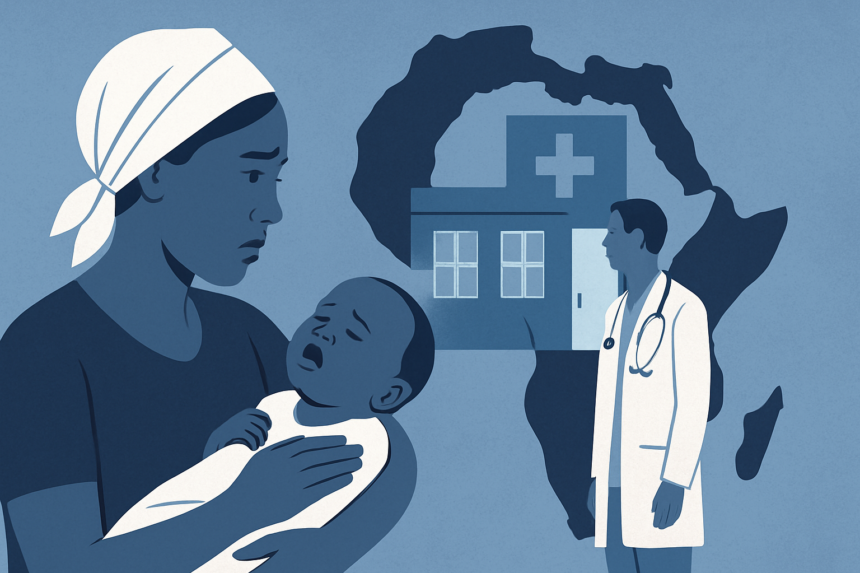
Healthcare worker examining infant in African clinic setting
New research reveals parents seek medical care for severely ill infants only 8.4%-41.8% of the time, compared to 66.7% for mild illness. Johns Hopkins study develops simple two-sign assessment tool for identifying illness severity.
SHARE
1 min read|140 words

A groundbreaking seven-country study has uncovered a troubling paradox in healthcare-seeking behavior across sub-Saharan Africa and Pakistan: families are significantly less likely to seek formal medical care when their infants show severe symptoms compared to mild illness.

Researchers from Johns Hopkins Bloomberg School of Public Health analyzed data from 5,003 infant deaths, revealing that only 8.4% to 41.8% of severely ill neonates received formal healthcare, compared to 15.0% to 66.7% in mild illness cases. This counterintuitive pattern challenges conventional assumptions about parental behavior during health crises.

The study, published in PLOS Global Public Health, employed a novel two-sign assessment method focusing on activity level and feeding behavior. These findings carry critical implications for designing child survival programs that address the complex socioeconomic, cultural, and logistical barriers preventing families from accessing emergency care when their infants need it most.

Read the full article on GMJ Newsroom.

Submit Your Paper
GMJ_Submit_Banner

Was this article helpful?

GMJ Brief · Announcement

📰 Read the full article: Severe Infant Symptoms Paradoxically Reduce Healthcare Seeking in Sub-Saharan Africa →

Share This Article
Facebook LinkedIn Bluesky Copy Link Print

Submit Your Paper →

Georgia's peer-reviewed open-access medical journal. No APC until January 2027.
Submit Manuscript →
Women’s Empowerment Programs in Poor Countries Lack Clear Measurement Standards

A comprehensive scoping review reveals significant gaps in how women's empowerment programs…

Brown Dog Tick Linked to Fatal SFTS Case with Multiorgan Failure in Thailand

Thai researchers document first confirmed case of SFTS virus transmission by brown…

New Antiviral Drug Shows Promise Against COVID-19 in Clinical Research

New research examines inosine pranobex, an established antiviral drug, as a potential…

Submit Your Paper to GMJ

No APC until January 2027.
Submit Manuscript →

You Might Also Like

Global HealthPolicy & Systems

WHO Declares Public Health Emergency as Ebola Outbreak Crosses DRC-Uganda Border

By
GMJ News Desk
31/05/2026

🚨 🧠 URGENT: Cross-Border Ebola Outbreak – DRC to Uganda – PHEIC Declared

By
GMJ News Desk
31/05/2026

🚨 🧠 PHEIC Declaration: Cross-Border Ebola Transmission DRC-Uganda

By
GMJ News Desk
31/05/2026
Medical illustration showing hepatitis B virus and treatment breakthrough concept

GSK’s Experimental Hepatitis B Drug Shows Promise in Phase 2 Trials

By
GMJ News Desk
04/06/2026
Facebook Twitter Youtube Instagram
Company
  • Privacy Policy
  • Contact US
  • GMJ Journal
  • Submit Manuscript
  • Editorial Team
  • Register at GMJ
  • Terms of Use

Subscribe to GMJ News — Click here

Join Community
© 2026 Georgian Medical Journal (GMJ). Published by the Public Health Institute of Georgia (PHIG). All rights reserved.
Welcome Back!

Sign in to your account

Username or Email Address
Password

Lost your password?

Not a member? Sign Up