
By using this site, you agree to the Privacy Policy and Terms of Use.
Accept
GMJ NewsGMJ NewsGMJ News
  • Latest News
    • GMJ Briefs
  • The Wire
  • Health Topics
  • Podcast & Media
    • GMJ Audio
    • GMJ Videos
    • Podcast & Media
    • Podcast Episodes
  • GMJ Articles
    • Vol. 1 Issue 3 (2026)
    • Public Health Dictionary — Supplement Edition
    • IAP Legacy Series
    • Read Full Journal (gmj.ge) →
    • Pre-Launch Articles (2025)
    • Vol. 1 Issue 1 (2026)
    • Vol. 1 Issue 2 (2026)
  • Perspectives
    • Editorial
    • Explainers
    • Letters
    • Voices
  • Policy & Systems
    • Global Health
    • Health Policy
    • Migration & Health
    • Quality & Safety
    • Work & Health
  • Dictionary
    • Our Story: 20 Years in the Making
    • Browse A–Z
    • About the Project
    • Contribute a Term
  • Practice
    • Case Discussions
    • Clinical Updates
    • Pharmacy & Prescribing
  • Research Digest
    • Data & Numbers
    • Georgian Research
    • New Studies
  • Read the Journal →
Notification Show More
Font ResizerAa
GMJ NewsGMJ News
Font ResizerAa
  • Latest News
  • The Wire
  • Health Topics
  • Podcast & Media
  • GMJ Articles
  • Perspectives
  • Policy & Systems
  • Dictionary
  • Practice
  • Research Digest
  • Read the Journal →
  • Latest News
    • GMJ Briefs
  • The Wire
  • Health Topics
  • Podcast & Media
    • GMJ Audio
    • GMJ Videos
    • Podcast & Media
    • Podcast Episodes
  • GMJ Articles
    • Vol. 1 Issue 3 (2026)
    • Public Health Dictionary — Supplement Edition
    • IAP Legacy Series
    • Read Full Journal (gmj.ge) →
    • Pre-Launch Articles (2025)
    • Vol. 1 Issue 1 (2026)
    • Vol. 1 Issue 2 (2026)
  • Perspectives
    • Editorial
    • Explainers
    • Letters
    • Voices
  • Policy & Systems
    • Global Health
    • Health Policy
    • Migration & Health
    • Quality & Safety
    • Work & Health
  • Dictionary
    • Our Story: 20 Years in the Making
    • Browse A–Z
    • About the Project
    • Contribute a Term
  • Practice
    • Case Discussions
    • Clinical Updates
    • Pharmacy & Prescribing
  • Research Digest
    • Data & Numbers
    • Georgian Research
    • New Studies
  • Read the Journal →
Follow US
GMJ News > GMJ Briefs > Honey’s Hidden Potential: Laboratory Evidence Emerges for Natural UV Protection

Honey’s Hidden Potential: Laboratory Evidence Emerges for Natural UV Protection

GMJ
Last updated: 03/10/2026 15:26
By
Prof. Giorgi Pkhakadze, MD, MPH, PhD
Share
1 Min Read
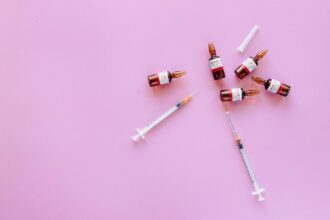
Microscopic image of human skin cells with honey extract treatment under UV light exposure
Laboratory research indicates multifloral honey may protect human skin cells from UV damage through antioxidant mechanisms, with potential future applications in dermatology and cosmetics. However, human clinical trials remain essential before therapeutic recommendations can be established. — Photo by Ionela Mat on Unsplash (Unsplash License)
SHARE
1 min read|138 words

Researchers are investigating multifloral honey as a potential natural defense against ultraviolet radiation damage to human skin cells. Recent laboratory studies demonstrate that honey extracts reduce cellular damage markers when applied to skin cell cultures exposed to UV radiation, suggesting protective mechanisms rooted in the substance’s rich bioactive compound profile.

The protective effects appear linked to honey’s polyphenol and flavonoid content, which function as natural antioxidants within skin cells. These findings open intriguing possibilities for future dermatological and cosmetic applications. However, researchers emphasize that while laboratory results are encouraging, the transition from controlled in vitro studies to human clinical efficacy requires rigorous clinical trials to establish safety, dosage, and real-world effectiveness in living patients.

The work addresses a pressing public health concern: UV-induced skin damage accelerates aging and increases disease risk. Read the full article on GMJ Newsroom.

Was this article helpful?
GMJ Brief · Announcement

📰 Read the full article: Multifloral honey shows promise in protecting skin cells from UV damage, study finds →

Share This Article
Facebook Whatsapp Whatsapp LinkedIn Telegram Bluesky Copy Link Print
GMJ
ByProf. Giorgi Pkhakadze, MD, MPH, PhD
Follow:
MD, MPH, PhD. Editor-in-Chief, Georgian Medical Journal (GMJ). Professor and Head, School of Public Health, David Tvildiani Medical University (DTMU), Tbilisi, Georgia. Chair, Public Health Institute of Georgia (PHIG). President, Accréditation Sans Frontières (ASF), Paris. Secretary/Treasurer, UEMS Section of Public Health. WHO Consultant, Health and Migration, Geneva. Former Member, UN Secretary-General's Independent Accountability Panel for Every Woman, Every Child, Every Adolescent (IAP-EWEC, 2016–2021). ORCID: 0000-0001-7609-4515.

Submit Your Paper →

Georgia's peer-reviewed open-access medical journal. No APC until January 2027.
Submit Manuscript →
Yale researchers identify protein pathways driving Parkinson’s disease spread in the brain

Yale researchers have identified two neuron surface proteins that mediate the spread…

When Geopolitical Fragmentation Becomes Epidemiological Catastrophe: Lessons from Congo’s Ebola Crisis

Congo's unprecedented Ebola outbreak exceeds 4,000 deaths, driven not merely by viral…

Serotonin and Heart Valve Disease: Columbia Study Links SSRIs to Accelerated Mitral Regurgitation

Columbia University researchers have identified a potentially significant interaction between selective serotonin…

Submit Your Paper to GMJ

No APC until January 2027.
Submit Manuscript →

You Might Also Like

Medical illustration showing leukemia cells being targeted by combination drug therapy

Two-Drug Combination Offers New Treatment Path for Aggressive Leukemia

By
Prof. Giorgi Pkhakadze, MD, MPH, PhD
02/06/2026

🚨 WHO adds first diagnostic test for Ebola Bundibugyo virus to its Emergency Use Listing

By
Prof. Giorgi Pkhakadze, MD, MPH, PhD
03/07/2026
Diagram showing hematopoietic stem cell differentiation into various blood cell types

100 Billion Daily: The Staggering Scale of Your Blood Cell Production

By
Prof. Giorgi Pkhakadze, MD, MPH, PhD
10/06/2026
Illustration of hippocampus brain region showing volume preservation through aerobic exercise in older adults

Takeaway: Aerobic Exercise Reverses Age-Related Hippocampal Shrinkage in Older Adults

By
Prof. Giorgi Pkhakadze, MD, MPH, PhD
16/08/2026
Facebook Twitter Youtube Instagram
Company
  • Privacy Policy
  • Accreditation Canada in Georgia
  • GMJ Journal
  • Submit Manuscript
  • Editorial Team
  • Register at GMJ

Subscribe to GMJ News — Click here

Join Community
© 2026 Georgian Medical Journal (GMJ). Published by the Public Health Institute of Georgia (PHIG). All rights reserved.
Welcome Back!

Sign in to your account

Username or Email Address
Password

Lost your password?