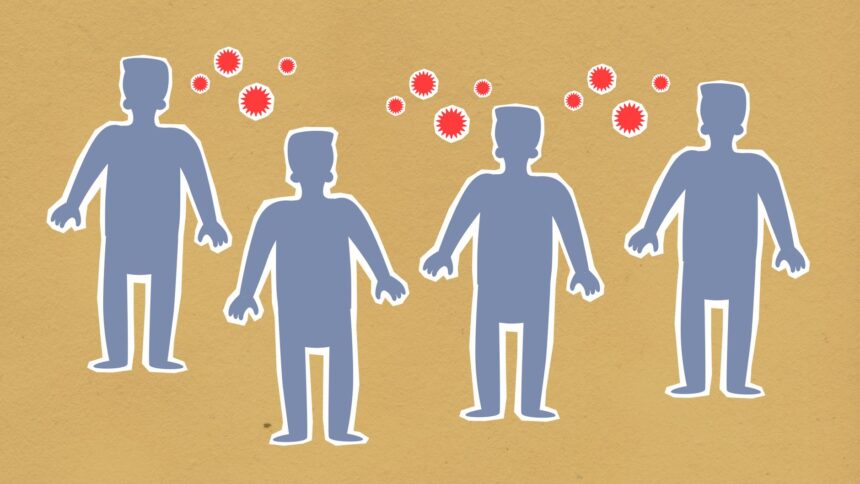
A new mathematical modelling study published in the Proceedings of the National Academy of Sciences offers a novel epidemiological explanation for why cannibalism taboos emerged across human societies. Rather than arising from innate biological instinct, researchers from the University of Wroclaw and Charles University in Prague propose that these prohibitions developed as rational cultural responses to infection risk.
The computational model demonstrates that sustained cannibalism would accelerate pathogen transmission exponentially, destabilizing entire populations. By integrating epidemiological principles with cultural evolution theory, the study suggests that societies independently discovered—through accumulated experience—that consuming human tissue dramatically increased disease burden and population mortality.
These findings reframe cultural norms as adaptive mechanisms shaped by disease pressure rather than moral absolutes, offering insights into how epidemiological constraints drive social organization and survival strategies. Read the full article on GMJ Newsroom.
Was this article helpful?