By using this site, you agree to the Privacy Policy and Terms of Use.
Accept
GMJ NewsGMJ NewsGMJ News
  • Latest News
    • GMJ Briefs
  • Podcast & Media
    • Podcast Episodes
    • GMJ Audio
    • GMJ Videos
  • Research Digest
    • New Studies
    • Georgian Research
    • Data & Numbers
  • Policy & Systems
    • Health Policy
    • Quality & Safety
    • Migration & Health
    • Global Health
  • Practice
    • Clinical Updates
    • Case Discussions
    • Pharmacy & Prescribing
    • Ingredients A-Z
  • Perspectives
    • Editorial
    • Explainers
    • Voices
    • Letters
  • GMJ Articles
    • Vol. 1 Issue 2 (2026)
    • Vol. 1 Issue 1 (2026)
    • Pre-Launch Articles (2025)
  • Read the Journal →
  • About GMJ News
Notification Show More
Font ResizerAa
GMJ NewsGMJ News
Font ResizerAa
  • Latest News
    • GMJ Briefs
  • Podcast & Media
    • Podcast Episodes
    • GMJ Audio
    • GMJ Videos
  • Research Digest
    • New Studies
    • Georgian Research
    • Data & Numbers
  • Policy & Systems
    • Health Policy
    • Quality & Safety
    • Migration & Health
    • Global Health
  • Practice
    • Clinical Updates
    • Case Discussions
    • Pharmacy & Prescribing
    • Ingredients A-Z
  • Perspectives
    • Editorial
    • Explainers
    • Voices
    • Letters
  • GMJ Articles
    • Vol. 1 Issue 2 (2026)
    • Vol. 1 Issue 1 (2026)
    • Pre-Launch Articles (2025)
  • Read the Journal →
  • About GMJ News
Follow US
GMJ News > GMJ Briefs > What You Need to Know About Cardiac Patch Therapy: Three Key Advances Reshaping Heart Repair

What You Need to Know About Cardiac Patch Therapy: Three Key Advances Reshaping Heart Repair

GMJ
Last updated: 28/06/2026 20:10
By
Prof. Giorgi Pkhakadze
Share
1 Min Read
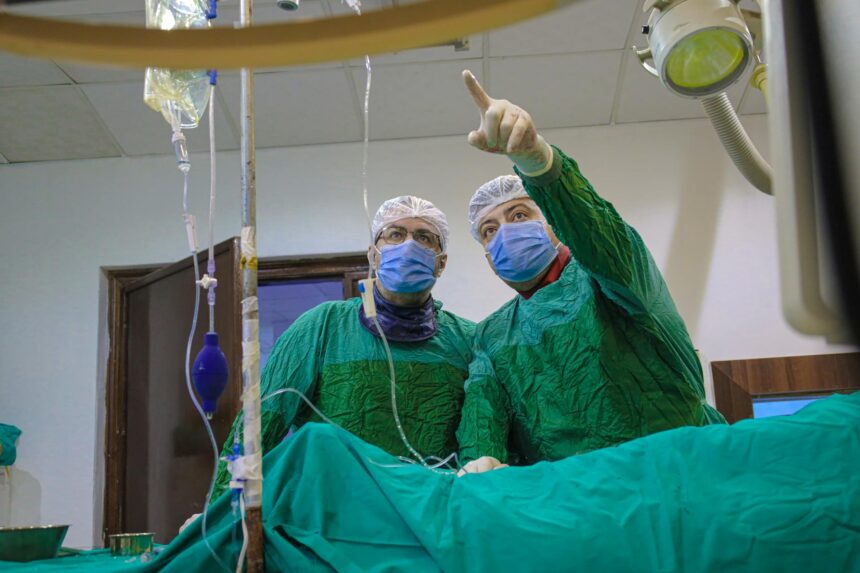
Medical illustration showing cardiac patch therapy on damaged heart tissue
New editorial in NEJM explores cardiac patch therapy as a revolutionary approach to heart repair. These innovative treatments could restore damaged heart tissue rather than just managing symptoms. — Photo: محمد عزام الشيخ يوسف / Pexels
SHARE
1 min read|137 words

Cardiac patch therapy represents three critical advances in how physicians may soon treat damaged heart tissue. First, these bioengineered patches are designed to integrate seamlessly with existing cardiac tissue, actively promoting regeneration and healing rather than merely providing structural support. Second, researchers are exploring multiple therapeutic approaches using stem cells, bioengineered scaffolds, and other cellular components to enhance the heart’s inherent—but limited—self-repair capacity.

Third, personalized patches created from a patient’s own cells could significantly reduce immune rejection risks, making treatment safer and more effective. Together, these advances suggest a future where heart damage following myocardial infarction may be reversible through regenerative approaches rather than permanent.

For patients with heart failure and clinicians seeking alternatives to traditional symptom management, these developments offer tangible hope and warrant close clinical monitoring.

Read the full article on GMJ Newsroom.

Submit Your Paper
GMJ_Submit_Banner

Was this article helpful?

GMJ Brief · Takeaway

📰 Read the full article: Heart patch therapy shows promise for repairing damaged cardiac tissue →

Related reference
  • Heart Failure · Condition
Share This Article
Facebook LinkedIn Bluesky Copy Link Print
GMJ
ByProf. Giorgi Pkhakadze
Follow:
Prof. Giorgi Pkhakadze, MD, MPH, PhD, is Editor-in-Chief of the Georgian Medical Journal and Chair of the Public Health Institute of Georgia (PHIG). He is Professor and Head of the Department of Social and Behavioural Sciences at David Tvildiani Medical University, and Secretary/Treasurer of the UEMS Section of Public Health. ORCID: 0000-0001-7609-4515.

Submit Your Paper →

Georgia's peer-reviewed open-access medical journal. No APC until January 2027.
Submit Manuscript →
Sugar-free diets may worsen blood glucose control, new study finds

New research in mice suggests complete sugar elimination may worsen blood glucose…

Scientists Discover Hidden Mechanism in Brain Ion Channels That Could Transform Neurological Treatment

Scientists discover that brain glutamate receptors need only 2 of 4 subunits…

California Hospital Groups Launch Competing Ballot Initiatives on Healthcare Worker Wages

California's healthcare sector faces competing ballot initiatives from worker unions and hospital…

Submit Your Paper to GMJ

No APC until January 2027.
Submit Manuscript →

You Might Also Like

Healthcare worker examining infant in African clinic setting

Paradox in Sub-Saharan Africa: Why Sicker Babies Receive Less Healthcare

By
Prof. Giorgi Pkhakadze
31/05/2026
Paralympic guide runner training session with visually impaired athlete

Specialized Guide Runner Training Reduces Injury Risk by 73 Percent

By
Prof. Giorgi Pkhakadze
25/06/2026
Global HealthNew StudiesPolicy & SystemsResearch Digest

Single amino acid change may enable viruses to jump from bats to humans, study suggests

By
Prof. Giorgi Pkhakadze
22/06/2026

EBOLA OUTBREAK – DRC/UGANDA CROSS-BORDER TRANSMISSION CONFIRMED

By
Prof. Giorgi Pkhakadze
31/05/2026
Facebook Twitter Youtube Instagram
Company
  • Privacy Policy
  • Contact US
  • GMJ Journal
  • Submit Manuscript
  • Editorial Team
  • Register at GMJ
  • Terms of Use

Subscribe to GMJ News — Click here

Join Community
© 2026 Georgian Medical Journal (GMJ). Published by the Public Health Institute of Georgia (PHIG). All rights reserved.
Welcome Back!

Sign in to your account

Username or Email Address
Password

Lost your password?

Not a member? Sign Up