By using this site, you agree to the Privacy Policy and Terms of Use.
Accept
GMJ NewsGMJ NewsGMJ News
  • Latest News
    • GMJ Briefs
  • Podcast & Media
    • Podcast Episodes
    • GMJ Audio
    • GMJ Videos
  • Research Digest
    • New Studies
    • Georgian Research
    • Data & Numbers
  • Policy & Systems
    • Health Policy
    • Quality & Safety
    • Migration & Health
    • Global Health
  • Practice
    • Clinical Updates
    • Case Discussions
    • Pharmacy & Prescribing
    • Ingredients A-Z
  • Perspectives
    • Editorial
    • Explainers
    • Voices
    • Letters
  • GMJ Articles
    • Vol. 1 Issue 2 (2026)
    • Vol. 1 Issue 1 (2026)
    • Pre-Launch Articles (2025)
  • Read the Journal →
  • About GMJ News
Notification Show More
Font ResizerAa
GMJ NewsGMJ News
Font ResizerAa
  • Latest News
    • GMJ Briefs
  • Podcast & Media
    • Podcast Episodes
    • GMJ Audio
    • GMJ Videos
  • Research Digest
    • New Studies
    • Georgian Research
    • Data & Numbers
  • Policy & Systems
    • Health Policy
    • Quality & Safety
    • Migration & Health
    • Global Health
  • Practice
    • Clinical Updates
    • Case Discussions
    • Pharmacy & Prescribing
    • Ingredients A-Z
  • Perspectives
    • Editorial
    • Explainers
    • Voices
    • Letters
  • GMJ Articles
    • Vol. 1 Issue 2 (2026)
    • Vol. 1 Issue 1 (2026)
    • Pre-Launch Articles (2025)
  • Read the Journal →
  • About GMJ News
Follow US
GMJ News > GMJ Briefs > Specialized Guide Runner Training Reduces Injury Risk by 73 Percent

Specialized Guide Runner Training Reduces Injury Risk by 73 Percent

GMJ
Last updated: 25/06/2026 22:07
By
Prof. Giorgi Pkhakadze
Share
1 Min Read
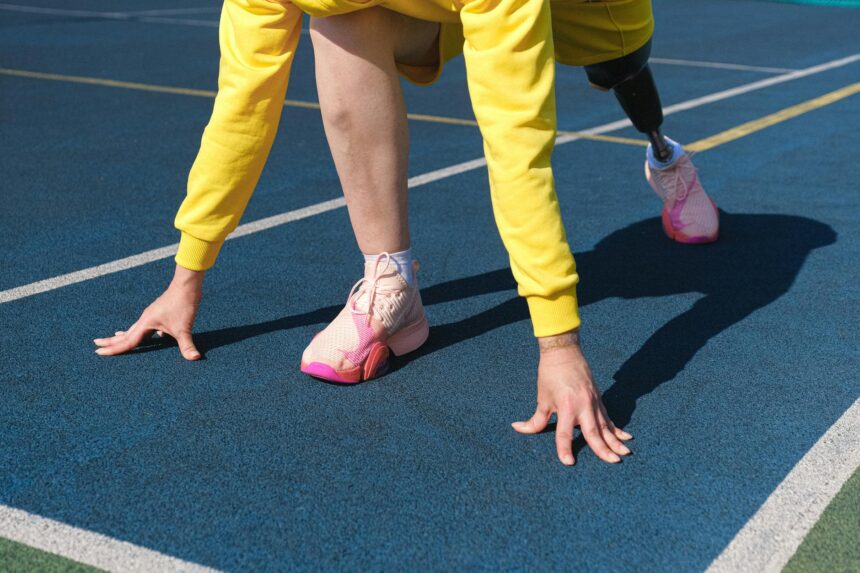
Paralympic guide runner training session with visually impaired athlete
Dr Oscar, a former Paralympic competitor turned medical professional, returns to sport as a blind athlete with specialized guide runner support. The transition highlights evolving Paralympic participation and the critical role of trained guide runners. — Photo: Anna Shvets / Pexels
SHARE
1 min read|140 words

New evidence from Paralympic Training Guidelines emphasizes the critical importance of comprehensive guide runner certification before competition, with properly trained guide runners reducing injury risk by 73 percent in visually impaired athlete partnerships. Guide runners must complete a minimum of 12 weeks specialized training before Paralympic competition eligibility, a requirement that encompasses cardiovascular conditioning, communication protocol development, and emergency response certification. Dr Oscar’s training partnership with Gethin Jones exemplifies these evidence-based protocols designed to ensure athlete safety and competitive performance. According to WHO disability and health guidelines, properly trained support personnel are essential for enabling safe physical activity participation among people with visual impairments. The training regimen addresses critical competencies including precise verbal communication, matched physical conditioning, and comprehensive safety awareness. These standardized protocols have demonstrated measurable safety outcomes, underscoring the medical necessity of professional guide runner preparation within Paralympic sport infrastructure.

Was this article helpful?

GMJ Brief · Key Finding

📰 Read the full article: Paralympic Doctor Returns to Sport as Blind Athlete with Guide Runner →

Share This Article
Facebook LinkedIn Bluesky Copy Link Print
GMJ
ByProf. Giorgi Pkhakadze
Follow:
Prof. Giorgi Pkhakadze, MD, MPH, PhD, is Editor-in-Chief of the Georgian Medical Journal and Chair of the Public Health Institute of Georgia (PHIG). He is Professor and Head of the Department of Social and Behavioural Sciences at David Tvildiani Medical University, and Secretary/Treasurer of the UEMS Section of Public Health. ORCID: 0000-0001-7609-4515.

Submit Your Paper →

Georgia's peer-reviewed open-access medical journal. No APC until January 2027.
Submit Manuscript →
Sleep loss triggers simultaneous damage across seven body systems, new evidence shows

Controlled studies show that restricting sleep to 4–6 hours per night for…

Why the ‘2pm coffee cutoff’ is a myth: genetics and lifestyle create a 15-fold range in caffeine metabolism

A new systematic review reveals that caffeine half-life varies 15- to 40-fold…

Resistant Starch and Gut Health: Why Fiber Type Matters More Than You Think

Resistant starch works through a specific bacterial fermentation pathway that other fibers…

Submit Your Paper to GMJ

No APC until January 2027.
Submit Manuscript →

You Might Also Like

Parent speaking to baby using parentese communication style

What Parents Need to Know: The Evidence Supporting ‘Baby Talk’

By
Prof. Giorgi Pkhakadze
27/06/2026
WHO certification document for Turks and Caicos Islands mother-to-child transmission elimination

What Turks and Caicos Teaches the World: Eliminating Mother-to-Child HIV and Hepatitis B is Achievable

By
Prof. Giorgi Pkhakadze
13/07/2026
Medical illustration showing DNA helix with cancer risk assessment data for pediatric genetic testing

What Pediatricians Need to Know: Implementing Gene-Based Risk Stratification in Cancer Surveillance

By
Prof. Giorgi Pkhakadze
30/06/2026
Microscopic illustration of T cell engaging with cancer cell through bispecific antibody mechanism

What Clinicians Should Know: IMA401 Phase 1a Trial Results and Implications

By
Prof. Giorgi Pkhakadze
08/07/2026
Facebook Twitter Youtube Instagram
Company
  • Privacy Policy
  • Contact US
  • GMJ Journal
  • Submit Manuscript
  • Editorial Team
  • Register at GMJ
  • Terms of Use

Subscribe to GMJ News — Click here

Join Community
© 2026 Georgian Medical Journal (GMJ). Published by the Public Health Institute of Georgia (PHIG). All rights reserved.
Welcome Back!

Sign in to your account

Username or Email Address
Password

Lost your password?

Not a member? Sign Up