By using this site, you agree to the Privacy Policy and Terms of Use.
Accept
GMJ NewsGMJ NewsGMJ News
  • Latest News
    • GMJ Briefs
  • Podcast & Media
    • Podcast Episodes
    • GMJ Audio
    • GMJ Videos
  • Research Digest
    • New Studies
    • Georgian Research
    • Data & Numbers
  • Policy & Systems
    • Health Policy
    • Quality & Safety
    • Migration & Health
    • Global Health
  • Practice
    • Clinical Updates
    • Case Discussions
    • Pharmacy & Prescribing
    • Ingredients A-Z
  • Perspectives
    • Editorial
    • Explainers
    • Voices
    • Letters
  • GMJ Articles
    • Vol. 1 Issue 2 (2026)
    • Vol. 1 Issue 1 (2026)
    • Pre-Launch Articles (2025)
  • Read the Journal →
  • About GMJ News
Notification Show More
Font ResizerAa
GMJ NewsGMJ News
Font ResizerAa
  • Latest News
    • GMJ Briefs
  • Podcast & Media
    • Podcast Episodes
    • GMJ Audio
    • GMJ Videos
  • Research Digest
    • New Studies
    • Georgian Research
    • Data & Numbers
  • Policy & Systems
    • Health Policy
    • Quality & Safety
    • Migration & Health
    • Global Health
  • Practice
    • Clinical Updates
    • Case Discussions
    • Pharmacy & Prescribing
    • Ingredients A-Z
  • Perspectives
    • Editorial
    • Explainers
    • Voices
    • Letters
  • GMJ Articles
    • Vol. 1 Issue 2 (2026)
    • Vol. 1 Issue 1 (2026)
    • Pre-Launch Articles (2025)
  • Read the Journal →
  • About GMJ News
Follow US
GMJ News > GMJ Briefs > What Practitioners Need to Know About the New Grid-Based Prosthetic Assessment System

What Practitioners Need to Know About the New Grid-Based Prosthetic Assessment System

GMJ
Last updated: 01/07/2026 13:07
By
Prof. Giorgi Pkhakadze
Share
1 Min Read
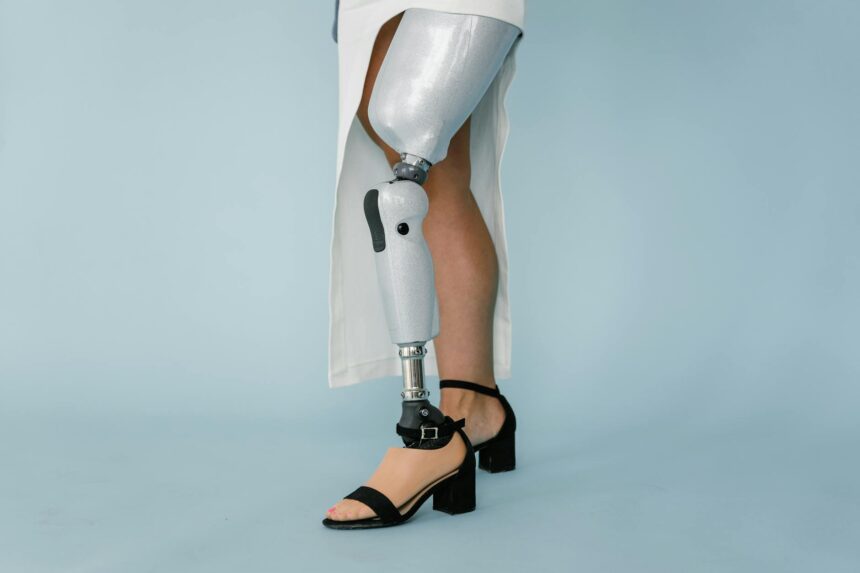
Medical researcher examining prosthetic foot with grid overlay assessment method
New grid-based visual scoring system achieves 0.88 inter-observer reliability for assessing prosthetic foot wear. Method requires only basic photography, making systematic monitoring accessible in resource-limited settings. — Photo: MART PRODUCTION / Pexels
SHARE
1 min read|145 words

A newly validated grid-based assessment method offers clinicians and prosthetists in resource-limited settings a practical, evidence-based tool for monitoring prosthetic foot deterioration. The system requires only basic photography equipment and trained personnel, making systematic device assessment achievable without laboratory infrastructure.

Key practical findings include: the method achieves 88% inter-observer reliability with three trained raters, eliminating the need for expensive standardized testing; it demonstrates exceptional accuracy (92% agreement) in central foot regions where early wear detection is clinically important; and it enables objective documentation of wear patterns for improved clinical decision-making regarding device replacement or repair.

This innovation directly addresses the assessment gap affecting millions of prosthetic users in developing nations. Practitioners can now implement reliable, reproducible wear monitoring protocols that standardize care quality and enhance patient outcomes. The method’s simplicity and effectiveness make it immediately applicable in clinical settings globally. Read the full article on GMJ Newsroom.

Was this article helpful?

GMJ Brief · Takeaway

📰 Read the full article: New grid-based method improves prosthetic foot wear assessment in resource-limited settings →

Share This Article
Facebook LinkedIn Bluesky Copy Link Print
GMJ
ByProf. Giorgi Pkhakadze
Follow:
Prof. Giorgi Pkhakadze, MD, MPH, PhD, is Editor-in-Chief of the Georgian Medical Journal and Chair of the Public Health Institute of Georgia (PHIG). He is Professor and Head of the Department of Social and Behavioural Sciences at David Tvildiani Medical University, and Secretary/Treasurer of the UEMS Section of Public Health. ORCID: 0000-0001-7609-4515.

Submit Your Paper →

Georgia's peer-reviewed open-access medical journal. No APC until January 2027.
Submit Manuscript →
Semaglutide Linked to Fewer Bone Fractures Despite Greater Weight Loss in Type 2 Diabetes

A real-world analysis of 60,000 adults with type 2 diabetes shows semaglutide…

Silent spread of chronic wasting disease raises cross-species transmission concerns

Researchers have found that chronic wasting disease can spread silently through asymptomatic…

New AI Model Strips Personal Data From ECGs While Preserving Heart Risk Information

Artificial intelligence can extract age, sex, race, and individual identity from standard…

Submit Your Paper to GMJ

No APC until January 2027.
Submit Manuscript →

You Might Also Like

Medical illustration showing hepatitis delta virus structure and liver cells

New Data Highlights Global Burden of Hepatitis Delta as First Treatment Emerges

By
Prof. Giorgi Pkhakadze
30/06/2026
Researchers presenting longevity science concepts at public festival event

First Major Bay Area Longevity Festival Signals Industry Growth and Maturation

By
Prof. Giorgi Pkhakadze
28/06/2026
Medical researcher monitoring steam therapy equipment for diabetes treatment clinical trial

Arizona Researchers Launch First U.S. Clinical Trial of Steam Therapy for Type 2 Diabetes

By
Prof. Giorgi Pkhakadze
03/06/2026
Medical professionals reviewing air quality data and wood stove health impact research

Announcement: Edinburgh Physicians Challenge Wood Burning Industry’s Health Claims After Lobbying Investigation

By
Prof. Giorgi Pkhakadze
29/06/2026
Facebook Twitter Youtube Instagram
Company
  • Privacy Policy
  • Contact US
  • GMJ Journal
  • Submit Manuscript
  • Editorial Team
  • Register at GMJ
  • Terms of Use

Subscribe to GMJ News — Click here

Join Community
© 2026 Georgian Medical Journal (GMJ). Published by the Public Health Institute of Georgia (PHIG). All rights reserved.
Welcome Back!

Sign in to your account

Username or Email Address
Password

Lost your password?

Not a member? Sign Up