By using this site, you agree to the Privacy Policy and Terms of Use.
Accept
GMJ NewsGMJ NewsGMJ News
  • Latest News
    • GMJ Briefs
  • Podcast & Media
    • Podcast Episodes
    • GMJ Audio
    • GMJ Videos
  • Research Digest
    • New Studies
    • Georgian Research
    • Data & Numbers
  • Policy & Systems
    • Health Policy
    • Quality & Safety
    • Migration & Health
    • Global Health
  • Practice
    • Clinical Updates
    • Case Discussions
    • Pharmacy & Prescribing
    • Ingredients A-Z
  • Perspectives
    • Editorial
    • Explainers
    • Voices
    • Letters
  • GMJ Articles
    • Vol. 1 Issue 2 (2026)
    • Vol. 1 Issue 1 (2026)
    • Pre-Launch Articles (2025)
  • Read the Journal →
  • About GMJ News
Notification Show More
Font ResizerAa
GMJ NewsGMJ News
Font ResizerAa
  • Latest News
    • GMJ Briefs
  • Podcast & Media
    • Podcast Episodes
    • GMJ Audio
    • GMJ Videos
  • Research Digest
    • New Studies
    • Georgian Research
    • Data & Numbers
  • Policy & Systems
    • Health Policy
    • Quality & Safety
    • Migration & Health
    • Global Health
  • Practice
    • Clinical Updates
    • Case Discussions
    • Pharmacy & Prescribing
    • Ingredients A-Z
  • Perspectives
    • Editorial
    • Explainers
    • Voices
    • Letters
  • GMJ Articles
    • Vol. 1 Issue 2 (2026)
    • Vol. 1 Issue 1 (2026)
    • Pre-Launch Articles (2025)
  • Read the Journal →
  • About GMJ News
Follow US
GMJ News > GMJ Briefs > Three Critical Lessons on TB Financing Sustainability and Global Health Equity

Three Critical Lessons on TB Financing Sustainability and Global Health Equity

GMJ
Last updated: 01/07/2026 15:28
By
Prof. Giorgi Pkhakadze
Share
1 Min Read
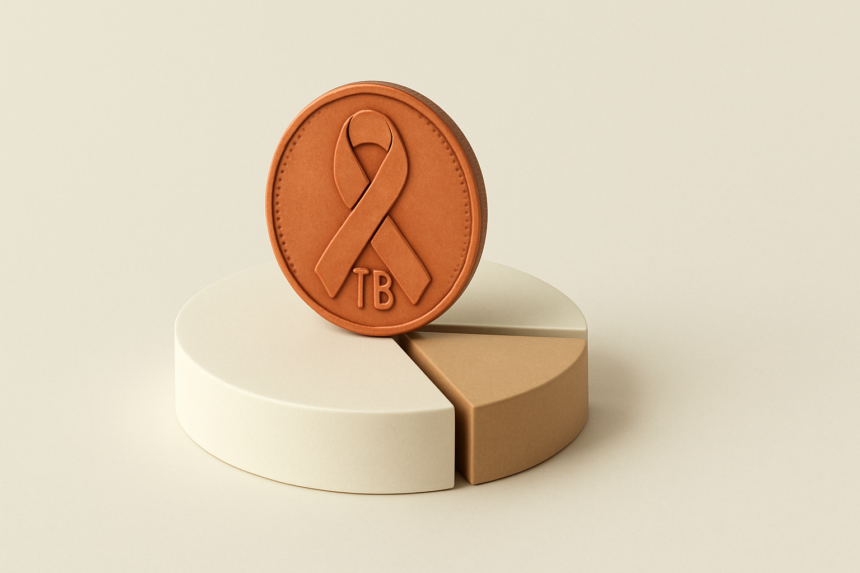
Chart showing TB financing capacity across different country income levels
New research shows 74% of high TB burden countries could self-finance programs through strategic budget reallocations, challenging current donor-dependent models. However, low-income nations and marginalized populations remain at risk.
SHARE
1 min read|133 words

Recent research on TB program financing yields three essential insights for policymakers and health leaders. First, three-quarters of high-burden countries possess demonstrable financial capacity to self-sustain TB responses, making domestic resource mobilization a viable strategy rather than an unrealistic aspiration.

Second, current donor-dependent models have created structural inefficiencies by circumventing national budget processes, weakening local capacity and accountability. This finding suggests that transitioning to domestic financing—where feasible—strengthens system resilience and improves coordination between TB programs and broader health budgets.

Third, low-income countries require continued targeted international support, as only 31% can achieve financial self-sufficiency. Rather than uniform donor withdrawal, countries should pursue income-adjusted strategies: upper-middle and lower-middle income nations can prioritize domestic reallocation, while low-income countries need sustained, predictable international partnerships paired with capacity-building assistance.

Read the full article on GMJ Newsroom.

Submit Your Paper
GMJ_Submit_Banner

Was this article helpful?

GMJ Brief · Takeaway

📰 Read the full article: Three-Quarters of High-Burden Countries Could Self-Fund TB Programs Without Donor Support →

Share This Article
Facebook LinkedIn Bluesky Copy Link Print
GMJ
ByProf. Giorgi Pkhakadze
Follow:
Prof. Giorgi Pkhakadze, MD, MPH, PhD, is Editor-in-Chief of the Georgian Medical Journal and Chair of the Public Health Institute of Georgia (PHIG). He is Professor and Head of the Department of Social and Behavioural Sciences at David Tvildiani Medical University, and Secretary/Treasurer of the UEMS Section of Public Health. ORCID: 0000-0001-7609-4515.

Submit Your Paper →

Georgia's peer-reviewed open-access medical journal. No APC until January 2027.
Submit Manuscript →
Obinutuzumab Outperforms Tacrolimus for Primary Membranous Nephropathy

Landmark NEJM trial shows obinutuzumab achieves 60% higher remission rates than tacrolimus…

Peer Support Group Addresses Rising Loneliness Crisis Among Young Adults Following Suicide Death

A national support group launched to combat loneliness among young adults following…

Trump Administration Removes Job Protections for Thousands of Federal Health Workers

Thousands of federal health workers at HHS agencies including CDC, FDA, and…

Submit Your Paper to GMJ

No APC until January 2027.
Submit Manuscript →

You Might Also Like

Global HealthPolicy & Systems

WHO Declares International Emergency as Ebola Outbreak Exceeds 900 Cases and Crosses DRC-Uganda Border

By
Prof. Giorgi Pkhakadze
31/05/2026
Medical professionals discussing community health and reconciliation approaches

Healthcare Systems Expand Focus Beyond Clinical Care to Support Community Reconciliation

By
Prof. Giorgi Pkhakadze
24/06/2026
Brain diagram showing stroke-related inflammation crossing between hemispheres causing bilateral pain

Only 3% of Stroke Patients Develop Mirror-Image Pain—But New Research May Change Treatment Approaches

By
Prof. Giorgi Pkhakadze
24/06/2026

EBOLA OUTBREAK – CROSS-BORDER TRANSMISSION DRC-UGANDA

By
Prof. Giorgi Pkhakadze
31/05/2026
Facebook Twitter Youtube Instagram
Company
  • Privacy Policy
  • Contact US
  • GMJ Journal
  • Submit Manuscript
  • Editorial Team
  • Register at GMJ
  • Terms of Use

Subscribe to GMJ News — Click here

Join Community
© 2026 Georgian Medical Journal (GMJ). Published by the Public Health Institute of Georgia (PHIG). All rights reserved.
Welcome Back!

Sign in to your account

Username or Email Address
Password

Lost your password?

Not a member? Sign Up