By using this site, you agree to the Privacy Policy and Terms of Use.
Accept
GMJ NewsGMJ NewsGMJ News
  • Latest News
    • GMJ Briefs
  • Podcast & Media
    • Podcast Episodes
    • GMJ Audio
    • GMJ Videos
  • Research Digest
    • New Studies
    • Georgian Research
    • Data & Numbers
  • Policy & Systems
    • Health Policy
    • Quality & Safety
    • Migration & Health
    • Global Health
  • Practice
    • Clinical Updates
    • Case Discussions
    • Pharmacy & Prescribing
    • Ingredients A-Z
  • Perspectives
    • Editorial
    • Explainers
    • Voices
    • Letters
  • GMJ Articles
    • Vol. 1 Issue 2 (2026)
    • Vol. 1 Issue 1 (2026)
    • Pre-Launch Articles (2025)
  • Read the Journal →
  • About GMJ News
Notification Show More
Font ResizerAa
GMJ NewsGMJ News
Font ResizerAa
  • Latest News
    • GMJ Briefs
  • Podcast & Media
    • Podcast Episodes
    • GMJ Audio
    • GMJ Videos
  • Research Digest
    • New Studies
    • Georgian Research
    • Data & Numbers
  • Policy & Systems
    • Health Policy
    • Quality & Safety
    • Migration & Health
    • Global Health
  • Practice
    • Clinical Updates
    • Case Discussions
    • Pharmacy & Prescribing
    • Ingredients A-Z
  • Perspectives
    • Editorial
    • Explainers
    • Voices
    • Letters
  • GMJ Articles
    • Vol. 1 Issue 2 (2026)
    • Vol. 1 Issue 1 (2026)
    • Pre-Launch Articles (2025)
  • Read the Journal →
  • About GMJ News
Follow US
GMJ News > GMJ Briefs > Only 3% of Stroke Patients Develop Mirror-Image Pain—But New Research May Change Treatment Approaches

Only 3% of Stroke Patients Develop Mirror-Image Pain—But New Research May Change Treatment Approaches

GMJ
Last updated: 24/06/2026 02:07
By
Prof. Giorgi Pkhakadze
Share
1 Min Read
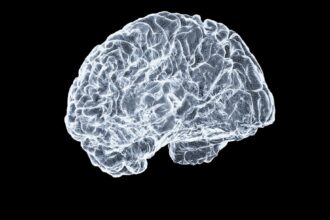
Brain diagram showing stroke-related inflammation crossing between hemispheres causing bilateral pain
New research reveals that rare bilateral pain after stroke may result from LPA-driven inflammation crossing between brain hemispheres. Understanding this mechanism could lead to targeted treatments for mirror-image post-stroke pain. — Photo: AI25.Studio AI GENERATIVE / Pexels
SHARE
1 min read|104 words

While mirror-image pain affects only 3 percent of stroke patients, recent findings highlight why this rare complication deserves clinical attention. New research demonstrates that bilateral pain may result from inflammation driven by lysophosphatidic acid (LPA) that crosses between brain hemispheres via the corpus callosum. In contrast, the majority of stroke patients experience unilateral pain (85%), with some experiencing no significant pain at all (12%). Understanding the inflammatory mechanisms underlying this atypical presentation is crucial for clinicians managing complex post-stroke cases. The identification of LPA as a key mediator suggests that anti-inflammatory interventions targeting this pathway could offer relief to the small but vulnerable population experiencing bilateral symptoms.

Was this article helpful?

GMJ Brief · Key Finding

📰 Read the full article: Mirror-image pain after stroke linked to LPA-driven inflammation crossing brain hemispheres →

Related reference
  • Stroke · Condition
Share This Article
Facebook LinkedIn Bluesky Copy Link Print
GMJ
ByProf. Giorgi Pkhakadze
Follow:
Prof. Giorgi Pkhakadze, MD, MPH, PhD, is Editor-in-Chief of the Georgian Medical Journal and Chair of the Public Health Institute of Georgia (PHIG). He is Professor and Head of the Department of Social and Behavioural Sciences at David Tvildiani Medical University, and Secretary/Treasurer of the UEMS Section of Public Health. ORCID: 0000-0001-7609-4515.

Submit Your Paper →

Georgia's peer-reviewed open-access medical journal. No APC until January 2027.
Submit Manuscript →
Rare Lymphatic-Urinary Fistula Causes Milky Urine in NEJM Case Report

A rare case of chyluria caused by a lymphatic-urinary fistula demonstrates how…

Gene Therapy Shows Promise for Inherited Cholesterol Disorder in First-in-Human Trial

First-in-human gene therapy trial shows preliminary safety and efficacy for treating homozygous…

Teen Drug Use and Binge Drinking Linked to Severe Mental Health Crisis

UCLA research reveals dangerous links between teen substance use and mental health…

Submit Your Paper to GMJ

No APC until January 2027.
Submit Manuscript →

You Might Also Like

Scientific illustration showing multiple treatment pathways being tested simultaneously in platform trials

What Healthcare Professionals Should Know About Platform Trials in Neurology

By
Prof. Giorgi Pkhakadze
01/07/2026
Laboratory blood test tubes with magnesium deficiency diagnostic chart

Groundbreaking Study Questions Reliability of Standard Magnesium Blood Tests

By
Prof. Giorgi Pkhakadze
24/05/2026
Medical chart showing STI prevalence rates among HIV-positive patients in China

Syphilis Dominates HIV Co-infection Landscape: 45% Prevalence in Major Chinese Cohort

By
Prof. Giorgi Pkhakadze
07/06/2026
Medical illustration showing DNA helix with cancer risk assessment data for pediatric genetic testing

What Pediatricians Need to Know: Implementing Gene-Based Risk Stratification in Cancer Surveillance

By
Prof. Giorgi Pkhakadze
30/06/2026
Facebook Twitter Youtube Instagram
Company
  • Privacy Policy
  • Contact US
  • GMJ Journal
  • Submit Manuscript
  • Editorial Team
  • Register at GMJ
  • Terms of Use

Subscribe to GMJ News — Click here

Join Community
© 2026 Georgian Medical Journal (GMJ). Published by the Public Health Institute of Georgia (PHIG). All rights reserved.
Welcome Back!

Sign in to your account

Username or Email Address
Password

Lost your password?

Not a member? Sign Up