By using this site, you agree to the Privacy Policy and Terms of Use.
Accept
GMJ NewsGMJ NewsGMJ News
  • Latest News
    • GMJ Briefs
  • Podcast & Media
    • Podcast Episodes
    • GMJ Audio
    • GMJ Videos
  • Research Digest
    • New Studies
    • Georgian Research
    • Data & Numbers
  • Policy & Systems
    • Health Policy
    • Quality & Safety
    • Migration & Health
    • Global Health
  • Practice
    • Clinical Updates
    • Case Discussions
    • Pharmacy & Prescribing
    • Ingredients A-Z
  • Perspectives
    • Editorial
    • Explainers
    • Voices
    • Letters
  • GMJ Articles
    • Vol. 1 Issue 2 (2026)
    • Vol. 1 Issue 1 (2026)
    • Pre-Launch Articles (2025)
  • Read the Journal →
  • About GMJ News
Notification Show More
Font ResizerAa
GMJ NewsGMJ News
Font ResizerAa
  • Latest News
    • GMJ Briefs
  • Podcast & Media
    • Podcast Episodes
    • GMJ Audio
    • GMJ Videos
  • Research Digest
    • New Studies
    • Georgian Research
    • Data & Numbers
  • Policy & Systems
    • Health Policy
    • Quality & Safety
    • Migration & Health
    • Global Health
  • Practice
    • Clinical Updates
    • Case Discussions
    • Pharmacy & Prescribing
    • Ingredients A-Z
  • Perspectives
    • Editorial
    • Explainers
    • Voices
    • Letters
  • GMJ Articles
    • Vol. 1 Issue 2 (2026)
    • Vol. 1 Issue 1 (2026)
    • Pre-Launch Articles (2025)
  • Read the Journal →
  • About GMJ News
Follow US
GMJ News > GMJ Briefs > 1,500 Gaza Children With Severe Skin Diseases Highlight Treatment Gaps in Humanitarian Crisis

1,500 Gaza Children With Severe Skin Diseases Highlight Treatment Gaps in Humanitarian Crisis

GMJ
Last updated: 14/06/2026 00:28
By
Prof. Giorgi Pkhakadze
Share
1 Min Read
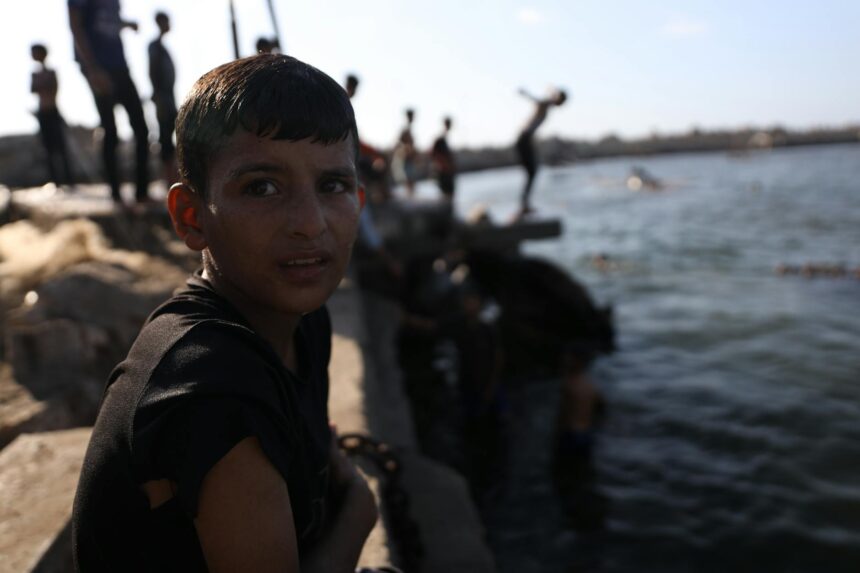
Children receiving medical care in Gaza humanitarian crisis
At least 1,500 children in Gaza suffer from severe skin diseases as deteriorating living conditions create preventable health crises. UNICEF reports document how limited access to clean water and medical supplies compounds what would be easily treatable conditions under normal circumstances. — Photo: itz.alawii / Pexels
SHARE
1 min read|144 words

Data from UNICEF reveals that 1,500 children in Gaza are currently suffering from severe skin diseases—conditions that would typically resolve quickly with standard medical care in normal circumstances. The statistic underscores a critical disparity: preventable illnesses are becoming serious health threats due to systemic barriers in resource access.

The health gap stems from multiple compounding factors documented by the World Health Organization and field medical personnel. Limited access to clean water prevents basic hygiene practices essential for skin health. Simultaneously, critical shortages of antiseptics, antibiotics, and dermatological medications prevent early intervention. Healthcare facilities report managing complicated infections that should never have progressed beyond simple treatment stages. The data illustrates how humanitarian emergencies don’t simply create new diseases—they transform manageable health conditions into major clinical challenges by removing the basic resources that prevention and early treatment require.

Read the full article on GMJ Newsroom.

Was this article helpful?

GMJ Brief · Key Finding

📰 Read the full article: Gaza’s Child Health Crisis: 1,500 Children Suffering Severe Skin Diseases Amid Humanitarian Collapse →

Share This Article
Facebook LinkedIn Bluesky Copy Link Print
GMJ
ByProf. Giorgi Pkhakadze
Follow:
Prof. Giorgi Pkhakadze, MD, MPH, PhD, is Editor-in-Chief of the Georgian Medical Journal and Chair of the Public Health Institute of Georgia (PHIG). He is Professor and Head of the Department of Social and Behavioural Sciences at David Tvildiani Medical University, and Secretary/Treasurer of the UEMS Section of Public Health. ORCID: 0000-0001-7609-4515.

Submit Your Paper →

Georgia's peer-reviewed open-access medical journal. No APC until January 2027.
Submit Manuscript →
Continued smoking before lung cancer surgery increases pulmonary complications but not short-term mortality

New research from University of Cincinnati shows lung cancer patients who continue…

International Study Links Restrained Sitting to Reduced Physical Activity in Preschool Children

International study involving 32 countries reveals that prolonged restrained sitting significantly impacts…

NHS Satisfaction Rises to 26% After Historic Low Despite Persistent Public Concerns

NHS satisfaction rose 6% to 26% in 2024 after historic lows, but…

Submit Your Paper to GMJ

No APC until January 2027.
Submit Manuscript →

You Might Also Like

SITUATION BRIEF: Ebola Outbreak – Democratic Republic of Congo with Cross-Border Transmission to Uganda

By
Prof. Giorgi Pkhakadze
31/05/2026
Healthcare worker examining infant in African clinic setting

New Data: Severe Infant Illness Associated with Lower Healthcare Seeking Rates

By
Prof. Giorgi Pkhakadze
07/06/2026
Global HealthPolicy & Systems

WHO Declares International Emergency as Ebola Outbreak Spreads from DRC to Uganda

By
Prof. Giorgi Pkhakadze
31/05/2026

EBOLA OUTBREAK – DRC/UGANDA CROSS-BORDER TRANSMISSION WITH WHO PHEIC DECLARATION

By
Prof. Giorgi Pkhakadze
31/05/2026
Facebook Twitter Youtube Instagram
Company
  • Privacy Policy
  • Contact US
  • GMJ Journal
  • Submit Manuscript
  • Editorial Team
  • Register at GMJ
  • Terms of Use

Subscribe to GMJ News — Click here

Join Community
© 2026 Georgian Medical Journal (GMJ). Published by the Public Health Institute of Georgia (PHIG). All rights reserved.
Welcome Back!

Sign in to your account

Username or Email Address
Password

Lost your password?

Not a member? Sign Up