By using this site, you agree to the Privacy Policy and Terms of Use.
Accept
GMJ NewsGMJ NewsGMJ News
  • Latest News
    • GMJ Briefs
  • Podcast & Media
    • Podcast Episodes
    • GMJ Audio
    • GMJ Videos
  • Research Digest
    • New Studies
    • Georgian Research
    • Data & Numbers
  • Policy & Systems
    • Health Policy
    • Quality & Safety
    • Migration & Health
    • Global Health
  • Practice
    • Clinical Updates
    • Case Discussions
    • Pharmacy & Prescribing
    • Ingredients A-Z
  • Perspectives
    • Editorial
    • Explainers
    • Voices
    • Letters
  • GMJ Articles
    • Vol. 1 Issue 2 (2026)
    • Vol. 1 Issue 1 (2026)
    • Pre-Launch Articles (2025)
  • Read the Journal →
  • About GMJ News
Notification Show More
Font ResizerAa
GMJ NewsGMJ News
Font ResizerAa
  • Latest News
    • GMJ Briefs
  • Podcast & Media
    • Podcast Episodes
    • GMJ Audio
    • GMJ Videos
  • Research Digest
    • New Studies
    • Georgian Research
    • Data & Numbers
  • Policy & Systems
    • Health Policy
    • Quality & Safety
    • Migration & Health
    • Global Health
  • Practice
    • Clinical Updates
    • Case Discussions
    • Pharmacy & Prescribing
    • Ingredients A-Z
  • Perspectives
    • Editorial
    • Explainers
    • Voices
    • Letters
  • GMJ Articles
    • Vol. 1 Issue 2 (2026)
    • Vol. 1 Issue 1 (2026)
    • Pre-Launch Articles (2025)
  • Read the Journal →
  • About GMJ News
Follow US
GMJ News > Research Digest > New Studies > Continued smoking before lung cancer surgery increases pulmonary complications but not short-term mortality
New StudiesResearch Digest

Continued smoking before lung cancer surgery increases pulmonary complications but not short-term mortality

GMJ
Last updated: 13/06/2026 10:46
By
GMJ Research Desk
Share
5 Min Read
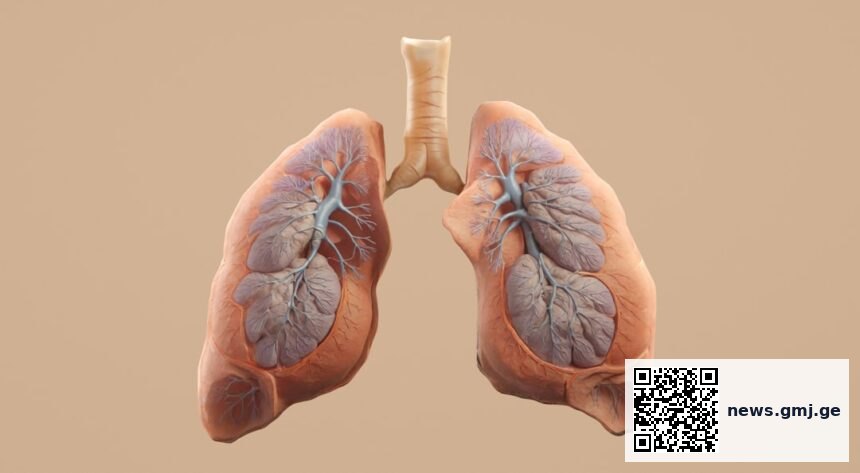
Medical illustration showing lung surgery outcomes comparison between smoking and non-smoking patientsIllustrative image · Photo by Aakash Dhage on Unsplash (Unsplash License)
New research from University of Cincinnati shows lung cancer patients who continue smoking before surgery have higher pulmonary complications but similar short-term mortality rates to those who quit. The findings may influence surgical decision-making for patients unable to stop smoking. — Photo by Aakash Dhage on Unsplash (Unsplash License)
SHARE
🎧 Listen to this article4:55 min · 688 words · GMJ Audio
3 min read|688 words

Lung cancer patients who continue smoking before surgery face higher pulmonary complications but show similar short-term survival rates to those who quit, according to new research from the University of Cincinnati College of Medicine. The findings challenge assumptions about surgical outcomes for patients unable to quit smoking before their procedure.

Contents
      • Pulmonary complications by smoking status in lung cancer surgery
  • Study challenges smoking cessation requirements
  • Pulmonary complications show clear difference
  • Implications for surgical decision-making
    • Key takeaways
  • Frequently asked questions
    • Should lung cancer patients delay surgery to quit smoking?
    • What specific complications are more common in smoking patients?
    • How should surgeons counsel patients who cannot quit smoking?
Similar mortality rates
between smoking and non-smoking lung cancer surgery patients in short-term outcomes

Pulmonary complications by smoking status in lung cancer surgery

Risk comparison between current smokers and former smokers undergoing resection

Higher
pulmonary
complications
Similar
short-term
mortality
Unchanged
surgical
candidacy

Source: University of Cincinnati College of Medicine, 2026 | Georgian Medical Journal News

Study challenges smoking cessation requirements

The University of Cincinnati research examined outcomes for lung cancer patients who underwent surgical resection, comparing those who continued smoking with patients who had stopped before their procedure. The study found that while pulmonary complications occurred more frequently in current smokers, the short-term mortality rates remained statistically similar between groups.

Submit Your Paper
GMJ_Submit_Banner

This finding has implications for surgical decision-making, as some centers require smoking cessation before proceeding with lung cancer surgery. The research suggests that continued smoking, while increasing certain risks, should not automatically disqualify patients from potentially life-saving surgery.

🎙️ Related Podcast Episodes
🎬 GMJ Video Series | Rare Case: Lung Cancer & Tuberculosis Coexistence
🎧 #46 | GMJ Podcast | Angioplasty of Saphenous Vein Grafts — Risks, Outcomes, and Clinical Strategies · 21m
🎧 #17 | WHO: Global Population Requiring Trachoma Interventions Falls Below 100 Million · 16m

Pulmonary complications show clear difference

The study documented significantly higher rates of pulmonary complications among patients who continued smoking compared to former smokers. These complications included pneumonia, prolonged air leaks, and respiratory failure requiring extended mechanical ventilation.

Despite the increased pulmonary complications, researchers found no statistically significant difference in short-term mortality between the smoking groups. This suggests that while smoking increases procedural risks, it does not necessarily translate to higher death rates in the immediate post-operative period, according to clinical outcomes data.

Implications for surgical decision-making

The findings may influence how thoracic surgeons approach patients who are unable or unwilling to quit smoking before lung cancer surgery. Current guidelines often emphasize smoking cessation as a prerequisite for optimal surgical outcomes, but this research provides nuanced data about actual mortality risks.

The research team noted that while smoking cessation remains the ideal scenario for any lung cancer patient, the similar mortality outcomes suggest that surgery should not be delayed indefinitely for patients struggling with tobacco dependence. Early surgical intervention may be more beneficial than postponing treatment while attempting smoking cessation, particularly for aggressive cancer types requiring prompt intervention.

Patients who continue smoking before lung cancer surgery have higher pulmonary complication rates but similar short-term mortality compared to former smokers

— University of Cincinnati College of Medicine researchers (Medical Xpress, 2026)

Key takeaways

  • Short-term mortality rates are similar between current smokers and former smokers undergoing lung cancer surgery
  • Pulmonary complications occur more frequently in patients who continue smoking before surgery
  • Continued smoking may not warrant automatic disqualification from surgical treatment
  • Timing of surgical intervention should balance smoking status with cancer progression risks

Frequently asked questions

Should lung cancer patients delay surgery to quit smoking?

The research suggests that while smoking cessation is beneficial, delaying surgery indefinitely may not be warranted given similar mortality outcomes. The decision should balance individual cancer characteristics with the patient’s ability to quit smoking.

What specific complications are more common in smoking patients?

Current smokers face higher risks of pneumonia, prolonged air leaks, and respiratory failure requiring mechanical ventilation. However, these complications did not translate to higher short-term death rates in this study.

How should surgeons counsel patients who cannot quit smoking?

Surgeons should provide clear information about increased complication risks while reassuring patients that similar mortality outcomes support proceeding with necessary cancer treatment. Smoking cessation support should continue throughout the treatment process.

The University of Cincinnati findings contribute important nuance to lung cancer surgery guidelines, suggesting that surgical candidacy decisions should consider the full spectrum of risks and benefits rather than focusing solely on smoking status. As lung cancer treatment continues to evolve, this research supports individualized treatment approaches that prioritize timely intervention while managing known risk factors. The study reinforces that smoking cessation remains important for overall health outcomes, but should not become a barrier to essential cancer treatment when patients are unable to quit before surgery.

Source: Lung cancer patients who smoke and don’t quit before surgery still have positive outcomes, says study

Was this article helpful?

Disclaimer. This article is health journalism intended for general information and education. It is not medical advice and is not a substitute for professional diagnosis or treatment. Always consult a qualified healthcare provider about your individual circumstances. Full disclaimer →

Related Coverage

Frozen and Canned Produce Offer Similar Nutritional Value to Fresh, Research ShowsJul 30, 2026
Even Light Smoking Raises Heart Disease Risk by 50–60%, Study Shows—and Quitting Doesn't Fully Reverse ItJul 30, 2026
Daily Peanut Consumption Reverses a Decade of Age-Related Brain Blood Flow DeclineJul 30, 2026
Cancer Burden from Preventable Risk Factors Quantified in Landmark Global StudyJul 29, 2026
Related reference
  • Lung Cancer · Condition
  • Pneumonia · Condition
PG
Written by
Prof. Giorgi Pkhakadze, MD, MPH, PhD
Editor-in-Chief, GMJ News
Full profile →  ·  ORCID 0000-0001-7609-4515
Medical disclaimer. This article is health journalism intended for general information. It is not medical advice and is not a substitute for consultation with a qualified healthcare professional. Always seek your physician's advice regarding any medical condition.
Medically reviewed by Prof. Giorgi Pkhakadze, MD, MPH, PhD. Spotted an error? Contact the editorial team.

Get the GMJ News digest
Evidence-based health journalism in your inbox. No spam; unsubscribe anytime.
TAGGED:lung cancermortality ratespulmonary complicationssmoking cessationsurgical outcomes
Share This Article
Facebook LinkedIn Bluesky Copy Link Print
GMJ
ByGMJ Research Desk
Follow:
GMJ Research Desk is part of GMJ News, the newsroom of the Georgian Medical Journal (gmj.ge), published by the Public Health Institute of Georgia. Every article is editorially reviewed before publication.
Leave a Comment Leave a Comment

Leave a Reply Cancel reply

Your email address will not be published. Required fields are marked *

Submit Your Paper →

Georgia's peer-reviewed open-access medical journal. No APC until January 2027.
Submit Manuscript →
Frozen and Canned Produce Offer Similar Nutritional Value to Fresh, Research Shows

Frozen and canned fruits and vegetables retain nutritional quality comparable to fresh…

Even Light Smoking Raises Heart Disease Risk by 50–60%, Study Shows—and Quitting Doesn’t Fully Reverse It

A pooled analysis of 302,522 adults in PLOS Medicine found that smoking…

Daily Peanut Consumption Reverses a Decade of Age-Related Brain Blood Flow Decline

Consuming 60 grams of skin-roasted peanuts daily improved cerebral blood flow by…

Submit Your Paper to GMJ

No APC until January 2027.
Submit Manuscript →

You Might Also Like

Diagram of insulin receptor signalling pathway highlighting magnesium's role as essential cofactor in kinase activationIllustrative image · Photo by Leeloo The First on Pexels (Pexels License)
Clinical UpdatesNew StudiesPracticeResearch Digest

Magnesium’s Hidden Role in Insulin Signalling: Why the Mineral Matters More Than We Thought

By
GMJ Practice Desk
19/07/2026
Medical infusion setup representing obinutuzumab treatment for membranous nephropathyIllustrative image · Photo by Monstera Production on Pexels (Pexels License)
Clinical UpdatesNew StudiesPracticeResearch Digest

Obinutuzumab Outperforms Tacrolimus for Primary Membranous Nephropathy

By
GMJ Practice Desk
09/07/2026
Medical illustration showing heart ventricles during cardiac arrest and defibrillation
New StudiesResearch Digest

Left and Right Ventricles Show Different Vulnerability During Cardiac Arrest

By
GMJ Research Desk
30/05/2026
Brain tissue analysis showing microglial patterns around amyloid plaques in Alzheimer's diseaseIllustrative image · Photo by Anna Shvets on Pexels (Pexels License)
New StudiesResearch Digest

Brain Study Reveals Why Some People Resist Alzheimer’s Dementia Despite Disease Pathology

By
GMJ Research Desk
03/07/2026
Facebook Twitter Youtube Instagram
Company
  • Privacy Policy
  • Contact US
  • GMJ Journal
  • Submit Manuscript
  • Editorial Team
  • Register at GMJ
  • Terms of Use

Subscribe to GMJ News — Click here

Join Community
© 2026 Georgian Medical Journal (GMJ). Published by the Public Health Institute of Georgia (PHIG). All rights reserved.
Welcome Back!

Sign in to your account

Username or Email Address
Password

Lost your password?

Not a member? Sign Up