


By using this site, you agree to the Privacy Policy and Terms of Use.
Accept
GMJ NewsGMJ NewsGMJ News
  • Latest News
    • GMJ Briefs
  • Podcast & Media
    • Podcast Episodes
    • GMJ Audio
    • GMJ Videos
  • Research Digest
    • New Studies
    • Georgian Research
    • Data & Numbers
  • Policy & Systems
    • Health Policy
    • Quality & Safety
    • Migration & Health
    • Global Health
  • Practice
    • Clinical Updates
    • Case Discussions
    • Pharmacy & Prescribing
    • Ingredients A-Z
  • Dictionary
    • Browse A–Z
    • About the Project
    • Contribute a Term
  • Perspectives
    • Editorial
    • Explainers
    • Voices
    • Letters
  • Health Topics
  • GMJ Articles
    • Vol. 1 Issue 2 (2026)
    • Vol. 1 Issue 1 (2026)
    • Pre-Launch Articles (2025)
  • Read the Journal →
  • About GMJ News
Notification Show More
Font ResizerAa
GMJ NewsGMJ News
Font ResizerAa
  • Latest News
    • GMJ Briefs
  • Podcast & Media
    • Podcast Episodes
    • GMJ Audio
    • GMJ Videos
  • Research Digest
    • New Studies
    • Georgian Research
    • Data & Numbers
  • Policy & Systems
    • Health Policy
    • Quality & Safety
    • Migration & Health
    • Global Health
  • Practice
    • Clinical Updates
    • Case Discussions
    • Pharmacy & Prescribing
    • Ingredients A-Z
  • Dictionary
    • Browse A–Z
    • About the Project
    • Contribute a Term
  • Perspectives
    • Editorial
    • Explainers
    • Voices
    • Letters
  • Health Topics
  • GMJ Articles
    • Vol. 1 Issue 2 (2026)
    • Vol. 1 Issue 1 (2026)
    • Pre-Launch Articles (2025)
  • Read the Journal →
  • About GMJ News
Follow US
GMJ News > GMJ Briefs > 24-hour discharge: How intraoperative neuromonitoring is redefining pelvic tumour surgery outcomes

24-hour discharge: How intraoperative neuromonitoring is redefining pelvic tumour surgery outcomes

GMJ
Last updated: 25/08/2026 03:29
By
Prof. Giorgi Pkhakadze
Share
1 Min Read
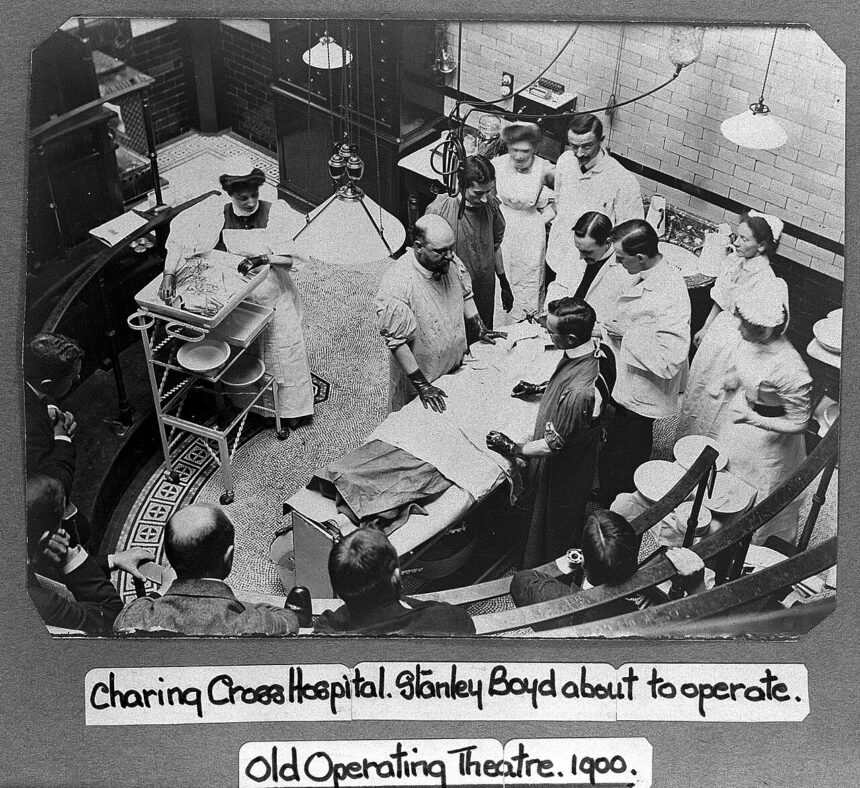
Operating theatre with neuromonitoring equipment during minimally invasive pelvic tumour surgery
A young woman regained full mobility within 24 hours following laparoscopic removal of a rare benign pelvic nerve tumour (schwannoma) at Semmelweis University in Budapest, supported by intraoperative electrophysiological monitoring and multidisciplinary surgical collaboration. — Charing Cross Hospital; Stanley Boyd in the old operating th Wellcome L0013050.jpg by Wikimedia Commons contributor / CC BY 4.0 via Wikimedia Commons (CC BY 4.0)
SHARE
1 min read|129 words

One patient. One laparoscopic procedure. Full neurological recovery and hospital discharge within 24 hours. This outcome, achieved at Semmelweis University, illustrates the transformative impact of intraoperative electrophysiological monitoring in specialist pelvic surgery.

The rapid recovery timeline reflects the dual advantages of minimally invasive laparoscopic technique combined with real-time nerve mapping technology. By identifying and preserving neural structures during tumour removal, surgeons eliminated the neurological complications that traditionally extended hospital stays and rehabilitation periods. The patient regained full mobility immediately postoperatively.

This case provides compelling evidence that investment in specialized neuromonitoring infrastructure delivers measurable improvements in patient outcomes. As pelvic schwannomas remain rare and technically challenging, centres equipped with both expertise and advanced monitoring capabilities are establishing new benchmarks for surgical excellence and efficiency.

Read the full article on GMJ Newsroom.

Submit Your Paper
GMJ_Submit_Banner

Was this article helpful?

GMJ Brief · Key Finding

📰 Read the full article: Rare pelvic tumour safely removed through interdepartmental collaboration at Hungarian teaching hospital →

Share This Article
Facebook LinkedIn Bluesky Copy Link Print
GMJ
ByProf. Giorgi Pkhakadze
Follow:
Prof. Giorgi Pkhakadze, MD, MPH, PhD, is Editor-in-Chief of the Georgian Medical Journal and Chair of the Public Health Institute of Georgia (PHIG). He is Professor and Head of the Department of Social and Behavioural Sciences at David Tvildiani Medical University, and Secretary/Treasurer of the UEMS Section of Public Health. ORCID: 0000-0001-7609-4515.

Submit Your Paper →

Georgia's peer-reviewed open-access medical journal. No APC until January 2027.
Submit Manuscript →
Ethiopia Study Reveals Stakeholder Concerns Over Novel Malaria Treatments

A qualitative study in Ethiopia reveals that health workers and patients view…

Sitafloxacin monotherapy matches doxycycline-rifampicin for brucellosis treatment in landmark trial

A multicenter randomized trial in The Lancet Regional Health – Western Pacific…

Ultra-processed foods linked to higher kidney cancer risk in large US study

A prospective analysis of over 300,000 US adults found that higher consumption…

Submit Your Paper to GMJ

No APC until January 2027.
Submit Manuscript →

You Might Also Like

Clinical UpdatesPractice

CDC Warns of Listeria Outbreak Linked to Requesón Soft Ricotta Cheese

By
Prof. Giorgi Pkhakadze
07/06/2026
Global HealthPolicy & SystemsQuality & Safety

Ebola Bundibugyo Cases Rise in DRC as Outbreak Spreads to New Provinces

By
Prof. Giorgi Pkhakadze
19/07/2026
New StudiesResearch Digest

Reduced Radiation Shows Promise for Older Lung Cancer Patients in Clinical Trial

By
Prof. Giorgi Pkhakadze
28/05/2026
Clinical UpdatesGlobal HealthPolicy & SystemsPractice

Bundibugyo Ebola Cases Rise Despite Scaled Response in DRC and Uganda

By
Prof. Giorgi Pkhakadze
22/06/2026
Facebook Twitter Youtube Instagram
Company
  • Privacy Policy
  • Contact US
  • GMJ Journal
  • Submit Manuscript
  • Editorial Team
  • Register at GMJ
  • Terms of Use

Subscribe to GMJ News — Click here

Join Community
© 2026 Georgian Medical Journal (GMJ). Published by the Public Health Institute of Georgia (PHIG). All rights reserved.
Welcome Back!

Sign in to your account

Username or Email Address
Password

Lost your password?
