By using this site, you agree to the Privacy Policy and Terms of Use.
Accept
GMJ NewsGMJ NewsGMJ News
  • Latest News
    • GMJ Briefs
  • Podcast & Media
    • Podcast Episodes
    • GMJ Audio
    • GMJ Videos
  • Research Digest
    • New Studies
    • Georgian Research
    • Data & Numbers
  • Policy & Systems
    • Health Policy
    • Quality & Safety
    • Migration & Health
    • Global Health
  • Practice
    • Clinical Updates
    • Case Discussions
    • Pharmacy & Prescribing
    • Ingredients A-Z
  • Perspectives
    • Editorial
    • Explainers
    • Voices
    • Letters
  • GMJ Articles
    • Vol. 1 Issue 2 (2026)
    • Vol. 1 Issue 1 (2026)
    • Pre-Launch Articles (2025)
  • Read the Journal →
  • About GMJ News
Notification Show More
Font ResizerAa
GMJ NewsGMJ News
Font ResizerAa
  • Latest News
    • GMJ Briefs
  • Podcast & Media
    • Podcast Episodes
    • GMJ Audio
    • GMJ Videos
  • Research Digest
    • New Studies
    • Georgian Research
    • Data & Numbers
  • Policy & Systems
    • Health Policy
    • Quality & Safety
    • Migration & Health
    • Global Health
  • Practice
    • Clinical Updates
    • Case Discussions
    • Pharmacy & Prescribing
    • Ingredients A-Z
  • Perspectives
    • Editorial
    • Explainers
    • Voices
    • Letters
  • GMJ Articles
    • Vol. 1 Issue 2 (2026)
    • Vol. 1 Issue 1 (2026)
    • Pre-Launch Articles (2025)
  • Read the Journal →
  • About GMJ News
Follow US
GMJ News > GMJ Briefs > 42% of Perimenopausal Women Experience Significant Cognitive Decline Impacting Work

42% of Perimenopausal Women Experience Significant Cognitive Decline Impacting Work

GMJ
Last updated: 03/07/2026 02:26
By
Prof. Giorgi Pkhakadze
Share
1 Min Read
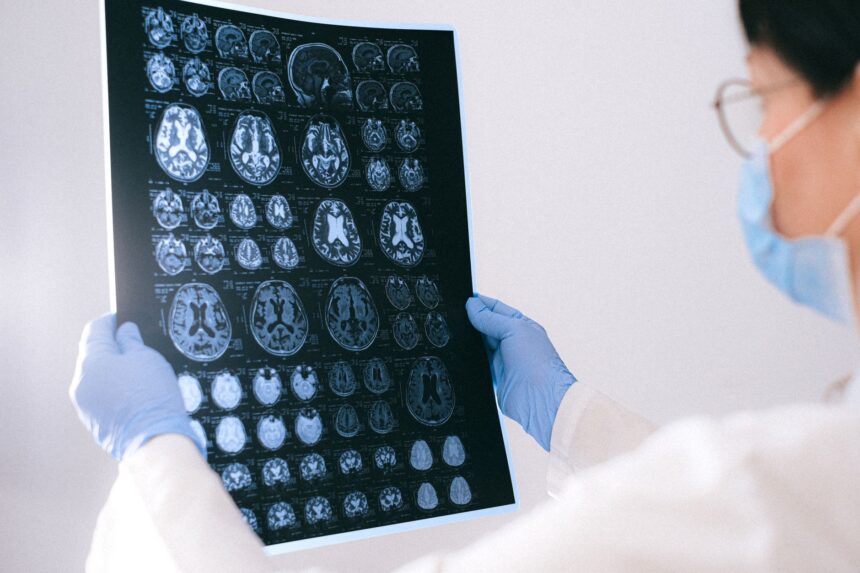
Brain scan images showing cognitive changes during perimenopause transition
New clinical research quantifies cognitive decline during perimenopause, showing measurable impacts on memory and executive function. Studies reveal 42% of perimenopausal women experience significant cognitive difficulties affecting daily functioning. — Photo by Anna Shvets on Pexels (Pexels License)
SHARE
1 min read|121 words

A striking 42 percent of perimenopausal women report significant cognitive difficulties that directly affect their work performance and daily functioning, according to clinical studies conducted between 2020 and 2024. This substantial prevalence challenges long-standing assumptions that cognitive symptoms during the menopausal transition are primarily psychological in origin. Standardized neuropsychological assessments validate these subjective reports, documenting objective deficits in verbal memory, working memory, and processing speed. Among perimenopausal women, 85 percent experience memory problems, 78 percent report concentration difficulties, and 67 percent struggle with word-finding issues. These measurable cognitive changes correlate with estradiol fluctuations affecting the hippocampus and prefrontal cortex. The clinical validation of these symptoms underscores the need for recognition, support, and evidence-based treatment approaches in workplace and clinical settings. Read the full article on GMJ Newsroom.

Was this article helpful?

GMJ Brief · Key Finding

📰 Read the full article: Clinical Evidence Links Perimenopause Brain Fog to Measurable Cognitive Decline →

Share This Article
Facebook LinkedIn Bluesky Copy Link Print
GMJ
ByProf. Giorgi Pkhakadze
Follow:
Prof. Giorgi Pkhakadze, MD, MPH, PhD, is Editor-in-Chief of the Georgian Medical Journal and Chair of the Public Health Institute of Georgia (PHIG). He is Professor and Head of the Department of Social and Behavioural Sciences at David Tvildiani Medical University, and Secretary/Treasurer of the UEMS Section of Public Health. ORCID: 0000-0001-7609-4515.

Submit Your Paper →

Georgia's peer-reviewed open-access medical journal. No APC until January 2027.
Submit Manuscript →
Rare Lymphatic-Urinary Fistula Causes Milky Urine in NEJM Case Report

A rare case of chyluria caused by a lymphatic-urinary fistula demonstrates how…

Gene Therapy Shows Promise for Inherited Cholesterol Disorder in First-in-Human Trial

First-in-human gene therapy trial shows preliminary safety and efficacy for treating homozygous…

Teen Drug Use and Binge Drinking Linked to Severe Mental Health Crisis

UCLA research reveals dangerous links between teen substance use and mental health…

Submit Your Paper to GMJ

No APC until January 2027.
Submit Manuscript →

You Might Also Like

Global HealthPolicy & Systems

WHO Declares International Emergency as Ebola Outbreak Crosses Congo-Uganda Border

By
Prof. Giorgi Pkhakadze
31/05/2026
Scientific comparison chart showing magnesium supplement absorption rates across different formulations

Announcement: Popular Magnesium Absorption Charts May Overstate Supplement Differences, New Research Shows

By
Prof. Giorgi Pkhakadze
02/06/2026
Chart showing vitamin B12 absorption rates at different dosage levels

Dual Absorption Pathways Explain Why High-Dose B12 Supplements Deliver Results

By
Prof. Giorgi Pkhakadze
03/06/2026
Medical illustration showing osteomyelitis bone infection with diagnostic imaging

Nature Reviews Analysis Synthesizes Latest Evidence on Osteomyelitis Diagnosis and Management

By
Prof. Giorgi Pkhakadze
05/06/2026
Facebook Twitter Youtube Instagram
Company
  • Privacy Policy
  • Contact US
  • GMJ Journal
  • Submit Manuscript
  • Editorial Team
  • Register at GMJ
  • Terms of Use

Subscribe to GMJ News — Click here

Join Community
© 2026 Georgian Medical Journal (GMJ). Published by the Public Health Institute of Georgia (PHIG). All rights reserved.
Welcome Back!

Sign in to your account

Username or Email Address
Password

Lost your password?

Not a member? Sign Up