By using this site, you agree to the Privacy Policy and Terms of Use.
Accept
GMJ NewsGMJ NewsGMJ News
  • Latest News
    • GMJ Briefs
  • Podcast & Media
    • Podcast Episodes
    • GMJ Audio
    • GMJ Videos
  • Research Digest
    • New Studies
    • Georgian Research
    • Data & Numbers
  • Policy & Systems
    • Health Policy
    • Quality & Safety
    • Migration & Health
    • Global Health
  • Practice
    • Clinical Updates
    • Case Discussions
    • Pharmacy & Prescribing
    • Ingredients A-Z
  • Perspectives
    • Editorial
    • Explainers
    • Voices
    • Letters
  • Health Topics
  • GMJ Articles
    • Vol. 1 Issue 2 (2026)
    • Vol. 1 Issue 1 (2026)
    • Pre-Launch Articles (2025)
  • Read the Journal →
  • About GMJ News
Notification Show More
Font ResizerAa
GMJ NewsGMJ News
Font ResizerAa
  • Latest News
    • GMJ Briefs
  • Podcast & Media
    • Podcast Episodes
    • GMJ Audio
    • GMJ Videos
  • Research Digest
    • New Studies
    • Georgian Research
    • Data & Numbers
  • Policy & Systems
    • Health Policy
    • Quality & Safety
    • Migration & Health
    • Global Health
  • Practice
    • Clinical Updates
    • Case Discussions
    • Pharmacy & Prescribing
    • Ingredients A-Z
  • Perspectives
    • Editorial
    • Explainers
    • Voices
    • Letters
  • Health Topics
  • GMJ Articles
    • Vol. 1 Issue 2 (2026)
    • Vol. 1 Issue 1 (2026)
    • Pre-Launch Articles (2025)
  • Read the Journal →
  • About GMJ News
Follow US
GMJ News > GMJ Briefs > 500 mg Daily: What Taurine Safety Data Actually Reveals

500 mg Daily: What Taurine Safety Data Actually Reveals

GMJ
Last updated: 09/08/2026 21:30
By
Prof. Giorgi Pkhakadze
Share
1 Min Read
Molecular structure and cellular metabolism illustration showing taurine function
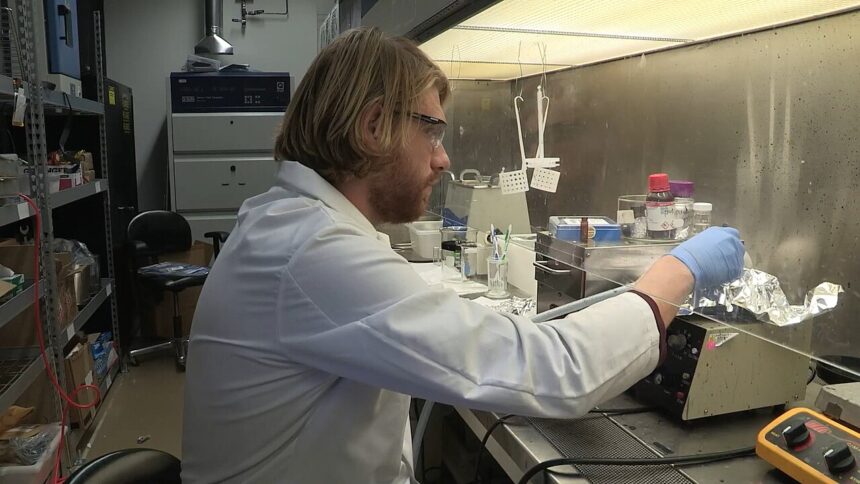
Recent headlines claimed taurine fuels cancer, but a Nature study of leukemia cells in mice was misrepresented. Taurine was not shown to cause cancer; rather, existing cancer cells can use it as a metabolic substrate—a mechanism distinct from dietary risk. — A scientist working in a laboratory.jpg by Stanford ENERGY, Video by Mark Shwartz / CC BY 2.5 via Wikimedia Commons (CC BY 2.5)
SHARE
1 min read|125 words

The typical daily intake of taurine from diet and supplements in clinical practice stands at approximately 500 mg—a figure supported by decades of human safety data showing no established link to cancer risk. Taurine is a conditionally essential amino-acid-like molecule synthesized naturally by the body and obtained from common foods including meat, fish, and eggs. Despite widespread consumption and extensive research into its physiological roles, epidemiological evidence does not support claims that dietary taurine increases cancer incidence. The recent laboratory findings regarding cancer cell metabolism should not overshadow the substantial body of human safety evidence accumulated over decades. Health professionals and patients should critically evaluate whether sensational headlines align with the long-term safety profile demonstrated in clinical populations. Read the full article on GMJ Newsroom.

Was this article helpful?

GMJ Brief · Key Finding

📰 Read the full article: Taurine and Cancer: Separating Laboratory Findings from Dietary Risk →

Related reference
  • Taurine · Ingredient
Share This Article
Facebook LinkedIn Bluesky Copy Link Print
GMJ
ByProf. Giorgi Pkhakadze
Follow:
Prof. Giorgi Pkhakadze, MD, MPH, PhD, is Editor-in-Chief of the Georgian Medical Journal and Chair of the Public Health Institute of Georgia (PHIG). He is Professor and Head of the Department of Social and Behavioural Sciences at David Tvildiani Medical University, and Secretary/Treasurer of the UEMS Section of Public Health. ORCID: 0000-0001-7609-4515.

Submit Your Paper →

Georgia's peer-reviewed open-access medical journal. No APC until January 2027.
Submit Manuscript →
New optical imaging technique could improve donor liver assessment before transplantation

Researchers have developed polarization-sensitive optical coherence tomography (PS-OCT) to assess donor liver…

AI-designed ‘master key’ vaccine could target entire virus families, not individual strains

Artificial intelligence is enabling vaccine designers to target conserved viral proteins shared…

Immune ‘Peacemakers’ May Unlock Long-Term Disease Remission in Autoimmune Conditions

Regulatory immune cells that suppress harmful inflammation could unlock long-term disease remission…

Submit Your Paper to GMJ

No APC until January 2027.
Submit Manuscript →

You Might Also Like

UK mortality surveillance data showing below-expected death rates for England

8.7% Reduction: England’s Latest Mortality Data Reflects Positive Population Health Trend

By
Prof. Giorgi Pkhakadze
17/06/2026
Infographic showing malnutrition statistics among Ecuadorian children by ethnicity

Indigenous Children in Ecuador Face Stunting Rates 2.4 Times Higher Than Peers

By
Prof. Giorgi Pkhakadze
14/06/2026
Medical professional using AI technology with legal scales representing liability concerns

What Physicians Must Know About the AI Liability Crisis in Healthcare

By
Prof. Giorgi Pkhakadze
06/08/2026
Medical illustration of egg nutrients and brain health: choline, lutein, DHA; Alzheimer's protection concept

Landmark 15-Year Study Reveals Eggs as Protective Factor Against Alzheimer’s Disease

By
Prof. Giorgi Pkhakadze
23/07/2026
Facebook Twitter Youtube Instagram
Company
  • Privacy Policy
  • Contact US
  • GMJ Journal
  • Submit Manuscript
  • Editorial Team
  • Register at GMJ
  • Terms of Use

Subscribe to GMJ News — Click here

Join Community
© 2026 Georgian Medical Journal (GMJ). Published by the Public Health Institute of Georgia (PHIG). All rights reserved.
Welcome Back!

Sign in to your account

Username or Email Address
Password

Lost your password?

Not a member? Sign Up