By using this site, you agree to the Privacy Policy and Terms of Use.
Accept
GMJ NewsGMJ NewsGMJ News
  • Latest News
    • GMJ Briefs
  • Podcast & Media
    • Podcast Episodes
    • GMJ Audio
    • GMJ Videos
  • Research Digest
    • New Studies
    • Georgian Research
    • Data & Numbers
  • Policy & Systems
    • Health Policy
    • Quality & Safety
    • Migration & Health
    • Global Health
  • Practice
    • Clinical Updates
    • Case Discussions
    • Pharmacy & Prescribing
    • Ingredients A-Z
  • Perspectives
    • Editorial
    • Explainers
    • Voices
    • Letters
  • GMJ Articles
    • Vol. 1 Issue 2 (2026)
    • Vol. 1 Issue 1 (2026)
    • Pre-Launch Articles (2025)
  • Read the Journal →
  • About GMJ News
Notification Show More
Font ResizerAa
GMJ NewsGMJ News
Font ResizerAa
  • Latest News
    • GMJ Briefs
  • Podcast & Media
    • Podcast Episodes
    • GMJ Audio
    • GMJ Videos
  • Research Digest
    • New Studies
    • Georgian Research
    • Data & Numbers
  • Policy & Systems
    • Health Policy
    • Quality & Safety
    • Migration & Health
    • Global Health
  • Practice
    • Clinical Updates
    • Case Discussions
    • Pharmacy & Prescribing
    • Ingredients A-Z
  • Perspectives
    • Editorial
    • Explainers
    • Voices
    • Letters
  • GMJ Articles
    • Vol. 1 Issue 2 (2026)
    • Vol. 1 Issue 1 (2026)
    • Pre-Launch Articles (2025)
  • Read the Journal →
  • About GMJ News
Follow US
GMJ News > GMJ Briefs > 70% of Advanced Cancers Employ Immune Evasion Strategy with Hidden Weakness

70% of Advanced Cancers Employ Immune Evasion Strategy with Hidden Weakness

GMJ
Last updated: 25/06/2026 08:07
By
Prof. Giorgi Pkhakadze
Share
1 Min Read
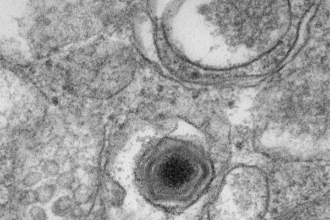
Scientific illustration showing CD4+ T cells attacking MHC I-deficient cancer cells
Groundbreaking research reveals that cancer cells' common strategy to evade immune detection actually makes them more vulnerable to a different type of immune attack. This discovery could revolutionize treatment approaches for therapy-resistant cancers. — Photo: Trnava University / Pexels
SHARE
1 min read|148 words

Approximately 70 percent of advanced cancers downregulate MHC Class I molecules as an immune evasion strategy—yet emerging research reveals this widespread approach paradoxically creates new therapeutic opportunities. The statistic underscores the prevalence of this escape mechanism, making the newly discovered vulnerability potentially applicable to a substantial proportion of therapy-resistant malignancies.

This significant finding demonstrates that MHC Class I downregulation, long considered an effective immune evasion tactic, activates alternative CD4+ helper T cell recognition pathways. The discovery suggests that what appears as a successful tumor strategy actually triggers secondary immune mechanisms capable of directly eliminating cancer cells. Understanding this immunological paradox could transform treatment approaches for the majority of advanced cancers employing this common evasion mechanism.

International research teams have documented this phenomenon across multiple cancer models, establishing robust evidence for CD4+ T cell-mediated killing of MHC I-deficient tumors through novel pathways.

Read the full article on GMJ Newsroom.

Submit Your Paper
GMJ_Submit_Banner

Was this article helpful?

GMJ Brief · Key Finding

📰 Read the full article: Cancer’s Stealth Strategy Backfires, Creating New Therapeutic Target →

Share This Article
Facebook LinkedIn Bluesky Copy Link Print
GMJ
ByProf. Giorgi Pkhakadze
Follow:
Prof. Giorgi Pkhakadze, MD, MPH, PhD, is Editor-in-Chief of the Georgian Medical Journal and Chair of the Public Health Institute of Georgia (PHIG). He is Professor and Head of the Department of Social and Behavioural Sciences at David Tvildiani Medical University, and Secretary/Treasurer of the UEMS Section of Public Health. ORCID: 0000-0001-7609-4515.

Submit Your Paper →

Georgia's peer-reviewed open-access medical journal. No APC until January 2027.
Submit Manuscript →
NHS workforce planning faces strategic uncertainty as UK prioritises domestic medical graduates

NHS workforce planning faces uncertainty as new legislation prioritises UK medical graduates…

Maternal mortality crisis deepens for Sudanese refugee women in Central African Republic

Pregnant Sudanese refugee women in Central African Republic face 138 times higher…

Home Exercise Program Reduces Cognitive Decline During Cancer Chemotherapy

New trial shows home-based exercise significantly improved attention and reduced cognitive problems…

Submit Your Paper to GMJ

No APC until January 2027.
Submit Manuscript →

You Might Also Like

Global HealthPolicy & Systems

UNICEF Scales Emergency Response for Children Affected by Ebola Outbreaks in DRC and Uganda

By
Prof. Giorgi Pkhakadze
11/06/2026
Data & NumbersResearch Digest

UK Emergency Department Visits Reach Record Highs in Early 2026

By
Prof. Giorgi Pkhakadze
30/05/2026
Medical stethoscope over legal documents representing healthcare lawsuits in immigration detention

By the Numbers: Federal Litigation Reveals Scale of Immigration Detention Healthcare Crisis

By
Prof. Giorgi Pkhakadze
16/06/2026
New StudiesResearch Digest

First Real-World RSV Vaccine Study Shows Strong Protection Against Severe Disease

By
Prof. Giorgi Pkhakadze
28/05/2026
Facebook Twitter Youtube Instagram
Company
  • Privacy Policy
  • Contact US
  • GMJ Journal
  • Submit Manuscript
  • Editorial Team
  • Register at GMJ
  • Terms of Use

Subscribe to GMJ News — Click here

Join Community
© 2026 Georgian Medical Journal (GMJ). Published by the Public Health Institute of Georgia (PHIG). All rights reserved.
Welcome Back!

Sign in to your account

Username or Email Address
Password

Lost your password?

Not a member? Sign Up