By using this site, you agree to the Privacy Policy and Terms of Use.
Accept
GMJ NewsGMJ NewsGMJ News
  • Latest News
    • GMJ Briefs
  • Podcast & Media
    • Podcast Episodes
    • GMJ Audio
    • GMJ Videos
  • Research Digest
    • New Studies
    • Georgian Research
    • Data & Numbers
  • Policy & Systems
    • Health Policy
    • Quality & Safety
    • Migration & Health
    • Global Health
  • Practice
    • Clinical Updates
    • Case Discussions
    • Pharmacy & Prescribing
    • Ingredients A-Z
  • Perspectives
    • Editorial
    • Explainers
    • Voices
    • Letters
  • GMJ Articles
    • Vol. 1 Issue 2 (2026)
    • Vol. 1 Issue 1 (2026)
    • Pre-Launch Articles (2025)
  • Read the Journal →
  • About GMJ News
Notification Show More
Font ResizerAa
GMJ NewsGMJ News
Font ResizerAa
  • Latest News
    • GMJ Briefs
  • Podcast & Media
    • Podcast Episodes
    • GMJ Audio
    • GMJ Videos
  • Research Digest
    • New Studies
    • Georgian Research
    • Data & Numbers
  • Policy & Systems
    • Health Policy
    • Quality & Safety
    • Migration & Health
    • Global Health
  • Practice
    • Clinical Updates
    • Case Discussions
    • Pharmacy & Prescribing
    • Ingredients A-Z
  • Perspectives
    • Editorial
    • Explainers
    • Voices
    • Letters
  • GMJ Articles
    • Vol. 1 Issue 2 (2026)
    • Vol. 1 Issue 1 (2026)
    • Pre-Launch Articles (2025)
  • Read the Journal →
  • About GMJ News
Follow US
GMJ News > GMJ Briefs > Skin-Roasted Peanuts Show Promise for Cerebral Perfusion in Older Adults

Skin-Roasted Peanuts Show Promise for Cerebral Perfusion in Older Adults

GMJ
Last updated: 05/08/2026 05:29
By
Prof. Giorgi Pkhakadze
Share
1 Min Read
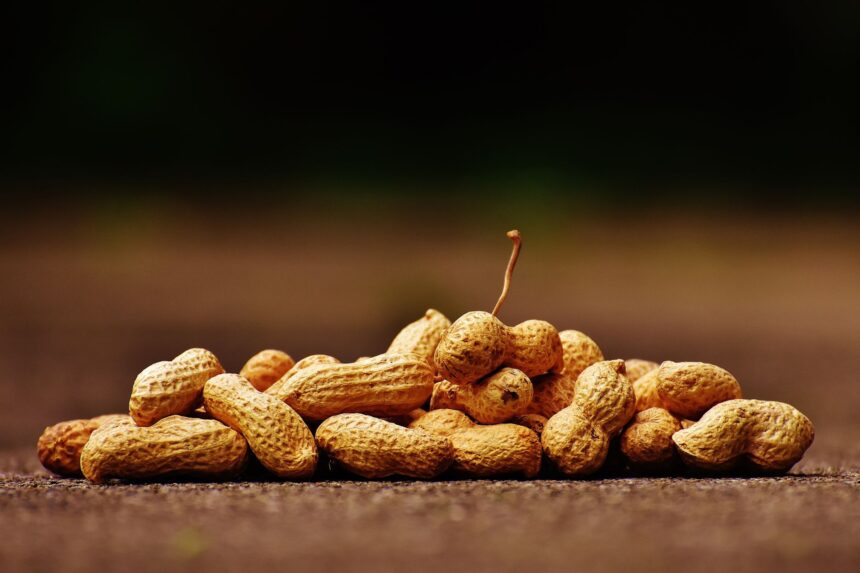
Infographic showing 4% improvement in cerebral blood flow from daily peanut consumption compared to 10-year aging decline
A new study in Clinical Nutrition (2025) found that consuming 60 grams of skin-roasted peanuts daily improved global brain blood flow by 4% in older adults—equivalent to reversing 10 years of age-related cognitive decline. The effect appears mediated by arginine, an amino acid that enhances nitric-oxide–driven vascular dilation. — Photo by Pixabay on Pexels (Pexels License)
SHARE
1 min read|130 words

A clinical intervention study published in Clinical Nutrition (2025) has identified a simple dietary strategy for supporting brain health in aging populations. Researchers found that consuming 60 grams of skin-roasted peanuts daily improved global cerebral blood flow by approximately 4% in older adult participants. This modest but meaningful improvement is physiologically equivalent to reversing roughly 10 years of age-related cognitive decline in cerebral perfusion.

The mechanism underlying this benefit appears to centre on arginine, a semi-essential amino acid present in peanuts at concentrations of 1.8–2.0 grams per serving. Arginine serves as a substrate for nitric oxide synthesis, triggering vasodilation in cerebral vessels and enhancing oxygen delivery to brain tissue. The findings suggest that targeted dietary interventions may offer a practical, evidence-based approach to maintaining cognitive function during aging.

Read the full article on GMJ Newsroom.

Was this article helpful?

GMJ Brief · Announcement

📰 Read the full article: Daily Peanut Consumption Linked to 4% Improvement in Brain Blood Flow in Older Adults →

Share This Article
Facebook LinkedIn Bluesky Copy Link Print
GMJ
ByProf. Giorgi Pkhakadze
Follow:
Prof. Giorgi Pkhakadze, MD, MPH, PhD, is Editor-in-Chief of the Georgian Medical Journal and Chair of the Public Health Institute of Georgia (PHIG). He is Professor and Head of the Department of Social and Behavioural Sciences at David Tvildiani Medical University, and Secretary/Treasurer of the UEMS Section of Public Health. ORCID: 0000-0001-7609-4515.

Submit Your Paper →

Georgia's peer-reviewed open-access medical journal. No APC until January 2027.
Submit Manuscript →
Purple Urine Bag Syndrome: A Rare but Treatable Condition in Long-Term Care

Purple urine bag syndrome is a rare but benign condition affecting catheterised…

Cancer Survivors in Their Teens and Twenties Face Unique Long-Term Health Risks

Adolescents and young adults surviving cancer face distinct long-term complications and psychosocial…

Indiana Enacts Hospital Price Caps as States Challenge Healthcare Cost Growth

Indiana has enacted direct price caps on hospital charges to employers, becoming…

Submit Your Paper to GMJ

No APC until January 2027.
Submit Manuscript →

You Might Also Like

Chart showing divergent STI trends in England with herpes cases rising

Data Alert: Genital Herpes Cases Climbing While Other STIs Fall in England

By
Prof. Giorgi Pkhakadze
16/06/2026
Colorful array of whole plant foods including vegetables, fruits, nuts and grains representing healthful plant-based diet

13% Mortality Reduction Achieved Through Quality Plant-Based Eating

By
Prof. Giorgi Pkhakadze
16/07/2026
Medical facility in Lebanon showing impact of healthcare disruptions during conflict

WHO Confirms Investigation Into Tyre Hospital Strikes Amid Escalating Lebanese Healthcare Crisis

By
Prof. Giorgi Pkhakadze
10/06/2026
Microscopic image of microglia brain immune cells responding to amyloid and tau proteins

Critical Juncture: Microglial Transitions Determine Dementia vs. Cognitive Resilience

By
Prof. Giorgi Pkhakadze
26/06/2026
Facebook Twitter Youtube Instagram
Company
  • Privacy Policy
  • Contact US
  • GMJ Journal
  • Submit Manuscript
  • Editorial Team
  • Register at GMJ
  • Terms of Use

Subscribe to GMJ News — Click here

Join Community
© 2026 Georgian Medical Journal (GMJ). Published by the Public Health Institute of Georgia (PHIG). All rights reserved.
Welcome Back!

Sign in to your account

Username or Email Address
Password

Lost your password?

Not a member? Sign Up