By using this site, you agree to the Privacy Policy and Terms of Use.
Accept
GMJ NewsGMJ NewsGMJ News
  • Latest News
    • GMJ Briefs
  • Podcast & Media
    • Podcast Episodes
    • GMJ Audio
    • GMJ Videos
  • Research Digest
    • New Studies
    • Georgian Research
    • Data & Numbers
  • Policy & Systems
    • Health Policy
    • Quality & Safety
    • Migration & Health
    • Global Health
  • Practice
    • Clinical Updates
    • Case Discussions
    • Pharmacy & Prescribing
    • Ingredients A-Z
  • Perspectives
    • Editorial
    • Explainers
    • Voices
    • Letters
  • GMJ Articles
    • Vol. 1 Issue 2 (2026)
    • Vol. 1 Issue 1 (2026)
    • Pre-Launch Articles (2025)
  • Read the Journal →
  • About GMJ News
Notification Show More
Font ResizerAa
GMJ NewsGMJ News
Font ResizerAa
  • Latest News
    • GMJ Briefs
  • Podcast & Media
    • Podcast Episodes
    • GMJ Audio
    • GMJ Videos
  • Research Digest
    • New Studies
    • Georgian Research
    • Data & Numbers
  • Policy & Systems
    • Health Policy
    • Quality & Safety
    • Migration & Health
    • Global Health
  • Practice
    • Clinical Updates
    • Case Discussions
    • Pharmacy & Prescribing
    • Ingredients A-Z
  • Perspectives
    • Editorial
    • Explainers
    • Voices
    • Letters
  • GMJ Articles
    • Vol. 1 Issue 2 (2026)
    • Vol. 1 Issue 1 (2026)
    • Pre-Launch Articles (2025)
  • Read the Journal →
  • About GMJ News
Follow US
GMJ News > GMJ Briefs > 75% Reduction in Treatment Sessions: The Numbers Behind Precision Prostate Cancer Radiotherapy

75% Reduction in Treatment Sessions: The Numbers Behind Precision Prostate Cancer Radiotherapy

GMJ
Last updated: 09/07/2026 22:43
By
Prof. Giorgi Pkhakadze
Share
1 Min Read
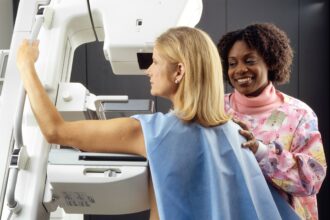
Medical illustration showing focused radiation beams targeting prostate tumor with precision radiotherapy technology
NHS England announces expansion of precision radiotherapy (SABR) for prostate cancer patients, reducing treatment sessions from 20 to 5 while maintaining effectiveness. The targeted approach delivers focused radiation to tumors while better protecting healthy tissue. — Photo by Leeloo The First on Pexels (Pexels License)
SHARE
1 min read|128 words

New data from NHS England highlights the transformative impact of stereotactic ablative radiotherapy on prostate cancer treatment efficiency. Precision radiotherapy reduces the number of required treatment sessions from 20 to just 5, representing a remarkable 75% decrease in hospital visits for eligible patients.

This dramatic reduction in treatment frequency translates to substantial benefits for both patients and healthcare infrastructure. Fewer hospital visits mean reduced travel burden, improved quality of life during active treatment, and decreased strain on clinical resources. Importantly, this efficiency gain does not compromise therapeutic outcomes; clinical trials validate that SABR maintains or improves cancer control rates compared to conventional external beam radiotherapy.

The focused beam technology delivers concentrated radiation doses to tumors while protecting adjacent healthy tissues, thereby reducing long-term side effects that commonly accompany prolonged radiotherapy courses.

Was this article helpful?
GMJ Brief · Key Finding

📰 Read the full article: NHS England Expands Precision Radiotherapy Access to Reduce Prostate Cancer Treatment Sessions from 20 to 5 →

Related reference
  • Prostate Cancer · Condition
Share This Article
Facebook LinkedIn Bluesky Copy Link Print
GMJ
ByProf. Giorgi Pkhakadze
Follow:
Prof. Giorgi Pkhakadze, MD, MPH, PhD, is Editor-in-Chief of the Georgian Medical Journal and Chair of the Public Health Institute of Georgia (PHIG). He is Professor and Head of the Department of Social and Behavioural Sciences at David Tvildiani Medical University, and Secretary/Treasurer of the UEMS Section of Public Health. ORCID: 0000-0001-7609-4515.

Submit Your Paper →

Georgia's peer-reviewed open-access medical journal. No APC until January 2027.
Submit Manuscript →
Brain’s Support Cells Hold Key to Mental Health: How Astrocytes, Microglia, and Oligodendrocytes Shape Resilience

The human brain is far more than neurons alone. Astrocytes, microglia, and…

Apigenin Shows Promise in Lab Studies, But Human Evidence Remains Elusive

Apigenin, a plant compound featured in sleep and longevity supplements, has demonstrated…

Light roast coffee retains highest chlorogenic acid levels, study shows

Light roast coffee preserves 8.0 mg/g of chlorogenic acids compared to 4.35…

Submit Your Paper to GMJ

No APC until January 2027.
Submit Manuscript →

You Might Also Like

Medical illustration showing dual PET imaging technology monitoring both cancer tumors and heart inflammation

New Dual-Target PET Imaging Reduces Cardiac Complications in Cancer Patients

By
Prof. Giorgi Pkhakadze
15/06/2026
Medical illustration showing Schwann cells surrounding nerve fibers with GDNF protein signaling pathways

Cellular Dysfunction, Not Tumors Alone, Drives NF1 Pain, Cincinnati Study Reveals

By
Prof. Giorgi Pkhakadze
29/06/2026
Medical stethoscope over legal documents representing healthcare lawsuits in immigration detention

What Immigration Detention Medical Failures Mean for Healthcare Policy and Accountability

By
Prof. Giorgi Pkhakadze
02/07/2026
WHO World Health Assembly meeting hall during historic fatty liver disease resolution vote

One in Five Adults Affected: The Staggering Global Burden of Fatty Liver Disease

By
Prof. Giorgi Pkhakadze
30/06/2026
Facebook Twitter Youtube Instagram
Company
  • Privacy Policy
  • Contact US
  • GMJ Journal
  • Submit Manuscript
  • Editorial Team
  • Register at GMJ
  • Terms of Use

Subscribe to GMJ News — Click here

Join Community
© 2026 Georgian Medical Journal (GMJ). Published by the Public Health Institute of Georgia (PHIG). All rights reserved.
Welcome Back!

Sign in to your account

Username or Email Address
Password

Lost your password?

Not a member? Sign Up