By using this site, you agree to the Privacy Policy and Terms of Use.
Accept
GMJ NewsGMJ NewsGMJ News
  • Latest News
    • GMJ Briefs
  • Podcast & Media
    • Podcast Episodes
    • GMJ Audio
    • GMJ Videos
  • Research Digest
    • New Studies
    • Georgian Research
    • Data & Numbers
  • Policy & Systems
    • Health Policy
    • Quality & Safety
    • Migration & Health
    • Global Health
  • Practice
    • Clinical Updates
    • Case Discussions
    • Pharmacy & Prescribing
    • Ingredients A-Z
  • Perspectives
    • Editorial
    • Explainers
    • Voices
    • Letters
  • GMJ Articles
    • Vol. 1 Issue 2 (2026)
    • Vol. 1 Issue 1 (2026)
    • Pre-Launch Articles (2025)
  • Read the Journal →
  • About GMJ News
Notification Show More
Font ResizerAa
GMJ NewsGMJ News
Font ResizerAa
  • Latest News
    • GMJ Briefs
  • Podcast & Media
    • Podcast Episodes
    • GMJ Audio
    • GMJ Videos
  • Research Digest
    • New Studies
    • Georgian Research
    • Data & Numbers
  • Policy & Systems
    • Health Policy
    • Quality & Safety
    • Migration & Health
    • Global Health
  • Practice
    • Clinical Updates
    • Case Discussions
    • Pharmacy & Prescribing
    • Ingredients A-Z
  • Perspectives
    • Editorial
    • Explainers
    • Voices
    • Letters
  • GMJ Articles
    • Vol. 1 Issue 2 (2026)
    • Vol. 1 Issue 1 (2026)
    • Pre-Launch Articles (2025)
  • Read the Journal →
  • About GMJ News
Follow US
GMJ News > GMJ Briefs > 8.4 Million Type 1 Diabetes Patients Face Treatment Access Barriers

8.4 Million Type 1 Diabetes Patients Face Treatment Access Barriers

GMJ
Last updated: 29/06/2026 12:17
By
Prof. Giorgi Pkhakadze
Share
1 Min Read
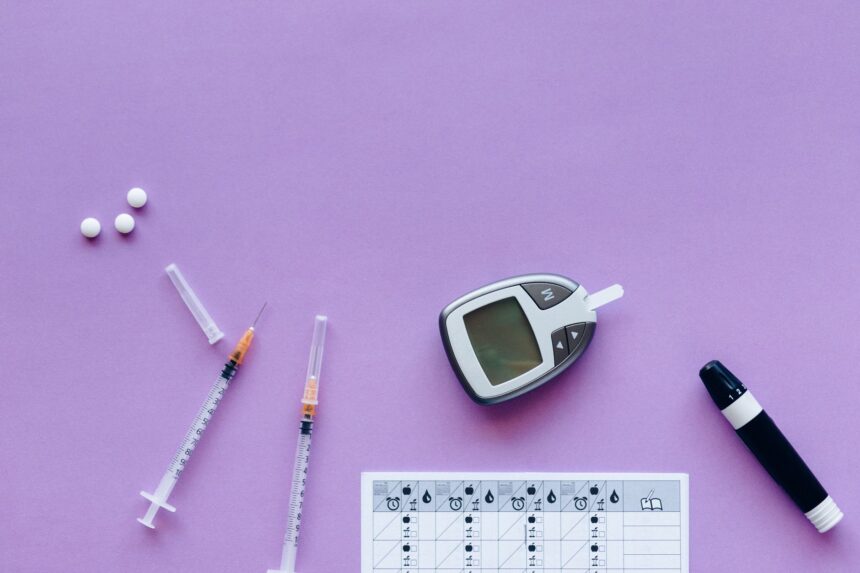
Medical vial of insulin with syringe representing diabetes treatment access challenges
More than a century after its discovery, insulin remains inaccessible to millions despite being a WHO essential medicine. Access barriers continue to prevent effective diabetes management globally. — Photo by Nataliya Vaitkevich on Pexels (Pexels License)
SHARE
1 min read|135 words

New data highlights a staggering disparity in insulin access: approximately 8.4 million people worldwide living with Type 1 diabetes require daily insulin injections for survival, yet a significant proportion lack adequate access to treatment. This insulin-dependent population faces disproportionate challenges in low- and middle-income countries, where supply chain limitations and affordability barriers restrict treatment options.

Insulin’s essential role in glucose regulation makes access failures particularly critical—without consistent therapy, Type 1 diabetes patients face life-threatening complications including diabetic ketoacidosis and long-term organ damage. The global distribution gaps reveal that despite over a century of pharmaceutical advancement, economic and logistical obstacles continue to prevent equitable access to this fundamental treatment. Addressing these disparities requires coordinated international efforts to strengthen supply chains, reduce manufacturing costs, and ensure affordable insulin availability across all regions.

Read the full article on GMJ Newsroom.

Was this article helpful?

GMJ Brief · Key Finding

📰 Read the full article: Insulin Remains Inaccessible to Millions Despite Century of Progress →

Related reference
  • Type 1 Diabetes · Condition
  • Insulin · Drug
Share This Article
Facebook LinkedIn Bluesky Copy Link Print
GMJ
ByProf. Giorgi Pkhakadze
Follow:
Prof. Giorgi Pkhakadze, MD, MPH, PhD, is Editor-in-Chief of the Georgian Medical Journal and Chair of the Public Health Institute of Georgia (PHIG). He is Professor and Head of the Department of Social and Behavioural Sciences at David Tvildiani Medical University, and Secretary/Treasurer of the UEMS Section of Public Health. ORCID: 0000-0001-7609-4515.

Submit Your Paper →

Georgia's peer-reviewed open-access medical journal. No APC until January 2027.
Submit Manuscript →
Scientists Discover Hidden Mechanism in Brain Ion Channels That Could Transform Neurological Treatment

Scientists discover that brain glutamate receptors need only 2 of 4 subunits…

California Hospital Groups Launch Competing Ballot Initiatives on Healthcare Worker Wages

California's healthcare sector faces competing ballot initiatives from worker unions and hospital…

UK Health Security Agency Publishes New Hantavirus Transmission Parameters for Public Health Response

UK Health Security Agency releases comprehensive guidance on hantavirus human-to-human transmission parameters.…

Submit Your Paper to GMJ

No APC until January 2027.
Submit Manuscript →

You Might Also Like

Global HealthPolicy & Systems

COVID-19 pandemic exposed critical gaps in global health diplomacy competencies

By
Prof. Giorgi Pkhakadze
26/05/2026
Abstract visualization of AI assisting with scientific research and data analysis

Three Critical Gaps Preventing AI Co-Scientists from Transforming Research

By
Prof. Giorgi Pkhakadze
27/06/2026

🚨 WHO South Africa 2025 Annual Report

By
Prof. Giorgi Pkhakadze
18/06/2026
Global HealthPolicy & Systems

WHO Declares International Emergency as Ebola Outbreak Spreads Beyond Congo to Uganda

By
Prof. Giorgi Pkhakadze
31/05/2026
Facebook Twitter Youtube Instagram
Company
  • Privacy Policy
  • Contact US
  • GMJ Journal
  • Submit Manuscript
  • Editorial Team
  • Register at GMJ
  • Terms of Use

Subscribe to GMJ News — Click here

Join Community
© 2026 Georgian Medical Journal (GMJ). Published by the Public Health Institute of Georgia (PHIG). All rights reserved.
Welcome Back!

Sign in to your account

Username or Email Address
Password

Lost your password?

Not a member? Sign Up