By using this site, you agree to the Privacy Policy and Terms of Use.
Accept
GMJ NewsGMJ NewsGMJ News
  • Latest News
    • GMJ Briefs
  • Podcast & Media
    • Podcast Episodes
    • GMJ Audio
    • GMJ Videos
  • Research Digest
    • New Studies
    • Georgian Research
    • Data & Numbers
  • Policy & Systems
    • Health Policy
    • Quality & Safety
    • Migration & Health
    • Global Health
  • Practice
    • Clinical Updates
    • Case Discussions
    • Pharmacy & Prescribing
    • Ingredients A-Z
  • Perspectives
    • Editorial
    • Explainers
    • Voices
    • Letters
  • Health Topics
  • GMJ Articles
    • Vol. 1 Issue 2 (2026)
    • Vol. 1 Issue 1 (2026)
    • Pre-Launch Articles (2025)
  • Read the Journal →
  • About GMJ News
Notification Show More
Font ResizerAa
GMJ NewsGMJ News
Font ResizerAa
  • Latest News
    • GMJ Briefs
  • Podcast & Media
    • Podcast Episodes
    • GMJ Audio
    • GMJ Videos
  • Research Digest
    • New Studies
    • Georgian Research
    • Data & Numbers
  • Policy & Systems
    • Health Policy
    • Quality & Safety
    • Migration & Health
    • Global Health
  • Practice
    • Clinical Updates
    • Case Discussions
    • Pharmacy & Prescribing
    • Ingredients A-Z
  • Perspectives
    • Editorial
    • Explainers
    • Voices
    • Letters
  • Health Topics
  • GMJ Articles
    • Vol. 1 Issue 2 (2026)
    • Vol. 1 Issue 1 (2026)
    • Pre-Launch Articles (2025)
  • Read the Journal →
  • About GMJ News
Follow US
GMJ News > GMJ Briefs > Announcement: How Cells Move Materials: The Microtubule Transport System Explained

Announcement: How Cells Move Materials: The Microtubule Transport System Explained

GMJ
Last updated: 12/08/2026 23:29
By
Prof. Giorgi Pkhakadze
Share
0 Min Read
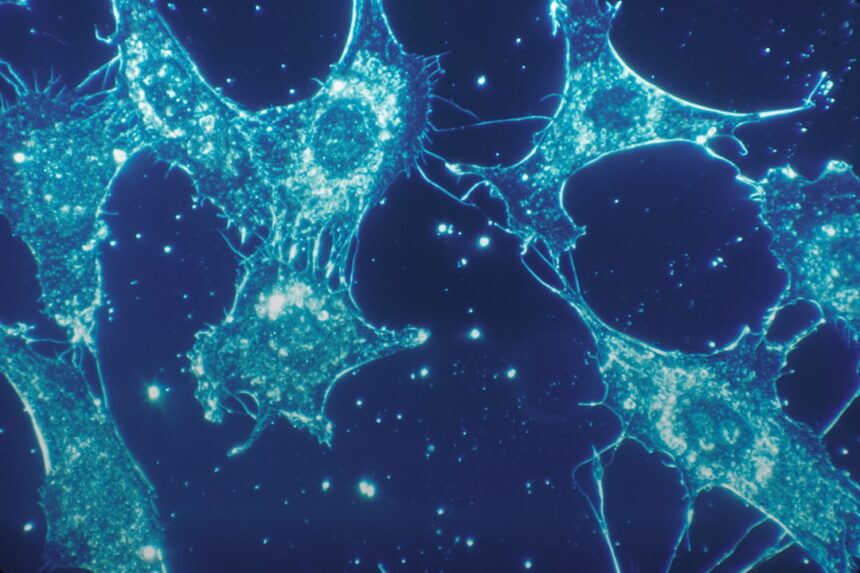
Glowing microtubule filaments showing dynamic assembly and disassembly inside a living cell under fluorescence microscopy
Microtubules—cylindrical protein structures inside cells—continuously rebuild themselves through dynamic instability, enabling cell division, neuronal transport over meter-long distances, and cellular migration. Understanding this system reveals both how cancer drugs work and what goes wrong in neurodegenerative diseases. — Photo by National Cancer Institute on Unsplash (Unsplash License)
SHARE
1 min read|48 words

Inside every cell, a constant rebuilding process enables division, long-distance neuronal transport, and adaptation. Microtubules continuously assemble and disassemble through dynamic instability—a system exploited by cancer drugs and disrupted in Alzheimer's disease. Watch how this fundamental cellular machine works.

Read the full article on GMJ Newsroom →

Was this article helpful?

GMJ Brief · Announcement

📰 Read the full article: How Cells Move Materials: The Microtubule Transport System Explained →

Share This Article
Facebook LinkedIn Bluesky Copy Link Print
GMJ
ByProf. Giorgi Pkhakadze
Follow:
Prof. Giorgi Pkhakadze, MD, MPH, PhD, is Editor-in-Chief of the Georgian Medical Journal and Chair of the Public Health Institute of Georgia (PHIG). He is Professor and Head of the Department of Social and Behavioural Sciences at David Tvildiani Medical University, and Secretary/Treasurer of the UEMS Section of Public Health. ORCID: 0000-0001-7609-4515.

Submit Your Paper →

Georgia's peer-reviewed open-access medical journal. No APC until January 2027.
Submit Manuscript →
Medical Groups Warn Gender-Affirming Care Bans Undermine Child Safety, Not Protect It

Physicians warn that legislative bans on gender-affirming care for transgender youth undermine…

How US Hospital Operators Exploit Emergency Care Loopholes While Generating Millions

A STAT News investigation reveals that Nutex Health and similar operators exploit…

First oral drug shows promise in childhood achondroplasia: Phase 3 trial results

A Phase 3 trial published in the New England Journal of Medicine…

Submit Your Paper to GMJ

No APC until January 2027.
Submit Manuscript →

You Might Also Like

New StudiesResearch Digest

Semaglutide linked to doubled risk of rare vision-threatening eye condition

By
Prof. Giorgi Pkhakadze
26/05/2026
Abstract visualization of AI assisting with scientific research and data analysis

Validation Crisis: Why Researchers Distrust AI Co-Scientist Tools

By
Prof. Giorgi Pkhakadze
10/06/2026
Healthcare worker examining infant in African clinic setting

Paradox in Sub-Saharan Africa: Why Sicker Babies Receive Less Healthcare

By
Prof. Giorgi Pkhakadze
31/05/2026
WHO World Health Assembly meeting hall during historic fatty liver disease resolution vote

One in Five Adults Affected: The Staggering Global Burden of Fatty Liver Disease

By
Prof. Giorgi Pkhakadze
30/06/2026
Facebook Twitter Youtube Instagram
Company
  • Privacy Policy
  • Contact US
  • GMJ Journal
  • Submit Manuscript
  • Editorial Team
  • Register at GMJ
  • Terms of Use

Subscribe to GMJ News — Click here

Join Community
© 2026 Georgian Medical Journal (GMJ). Published by the Public Health Institute of Georgia (PHIG). All rights reserved.
Welcome Back!

Sign in to your account

Username or Email Address
Password

Lost your password?

Not a member? Sign Up