By using this site, you agree to the Privacy Policy and Terms of Use.
Accept
GMJ NewsGMJ NewsGMJ News
  • Latest News
    • GMJ Briefs
  • Podcast & Media
    • Podcast Episodes
    • GMJ Audio
    • GMJ Videos
  • Research Digest
    • New Studies
    • Georgian Research
    • Data & Numbers
  • Policy & Systems
    • Health Policy
    • Quality & Safety
    • Migration & Health
    • Global Health
  • Practice
    • Clinical Updates
    • Case Discussions
    • Pharmacy & Prescribing
    • Ingredients A-Z
  • Perspectives
    • Editorial
    • Explainers
    • Voices
    • Letters
  • Health Topics
  • GMJ Articles
    • Vol. 1 Issue 2 (2026)
    • Vol. 1 Issue 1 (2026)
    • Pre-Launch Articles (2025)
  • Read the Journal →
  • About GMJ News
Notification Show More
Font ResizerAa
GMJ NewsGMJ News
Font ResizerAa
  • Latest News
    • GMJ Briefs
  • Podcast & Media
    • Podcast Episodes
    • GMJ Audio
    • GMJ Videos
  • Research Digest
    • New Studies
    • Georgian Research
    • Data & Numbers
  • Policy & Systems
    • Health Policy
    • Quality & Safety
    • Migration & Health
    • Global Health
  • Practice
    • Clinical Updates
    • Case Discussions
    • Pharmacy & Prescribing
    • Ingredients A-Z
  • Perspectives
    • Editorial
    • Explainers
    • Voices
    • Letters
  • Health Topics
  • GMJ Articles
    • Vol. 1 Issue 2 (2026)
    • Vol. 1 Issue 1 (2026)
    • Pre-Launch Articles (2025)
  • Read the Journal →
  • About GMJ News
Follow US
GMJ News > Policy & Systems > Health Policy > How US Hospital Operators Exploit Emergency Care Loopholes While Generating Millions
Health PolicyPolicy & SystemsQuality & Safety

How US Hospital Operators Exploit Emergency Care Loopholes While Generating Millions

GMJ
Last updated: 12/07/2026 13:29
By
GMJ Policy Desk
Share
7 Min Read
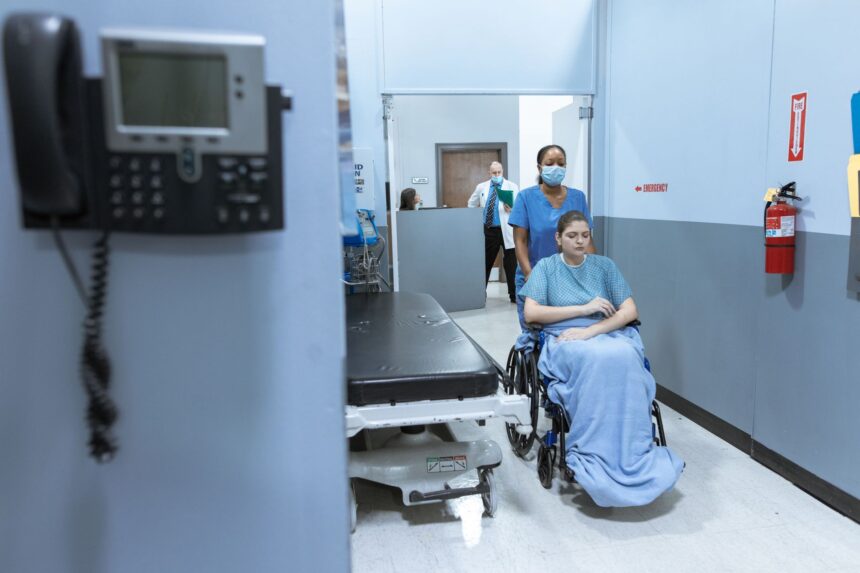
Hospital emergency department entrance illustrating emergency care access concernsIllustrative image · Photo by RDNE Stock project on Pexels (Pexels License)
A STAT News investigation reveals that Nutex Health and similar operators exploit legal loopholes to refuse emergency patients while generating substantial profits, raising patient safety and equity concerns. — Photo by RDNE Stock project on Pexels (Pexels License)
SHARE
4 min read|858 words
✓ Reviewed by GMJ News Editorial Team

Hospital operators in the United States are exploiting legal loopholes that allow certain facilities to turn away emergency patients, according to an investigation by STAT News. The investigation found that Nutex Health, a major hospital operator, has enriched itself by circumventing regulations designed to mandate emergency care access, raising questions about patient safety and equity in emergency medicine.

Contents
    • Key takeaways
  • The Legal Loophole in Emergency Care Requirements
      • Hospital Emergency Care Regulation Compliance Gap
  • Financial Impact and Profit Motivation
  • Patient Safety and Equity Implications
    • What this means
  • Regulatory Response and Next Steps
  • Frequently asked questions
    • Are emergency departments required to accept all patients?
    • How does Nutex Health’s business model differ from traditional hospitals?
    • What are the risks of allowing emergency care refusal?

Key takeaways

  • Certain US hospital facilities operate under regulatory exemptions that permit them to refuse emergency patients, despite laws intended to protect emergency access
  • Nutex Health has generated significant profits by exploiting these legal gaps, according to STAT News investigation
  • These practices raise concerns about patient safety, equity, and the effectiveness of existing emergency care regulations

The Legal Loophole in Emergency Care Requirements

Federal law generally requires hospitals to provide emergency medical screening and stabilisation to all patients regardless of ability to pay—a mandate established under the Emergency Medical Treatment and Labour Act (EMTALA). However, according to STAT News’s investigation, certain types of facilities, including those operated by Nutex Health, operate under regulatory classifications that exempt them from these requirements.

The investigation found that Nutex Health operates facilities that function as emergency departments but are structured in ways that technically fall outside EMTALA’s scope. This structural approach allows these facilities to turn away patients, a practice that would be prohibited for traditional hospital emergency departments.

Hospital Emergency Care Regulation Compliance Gap

Percentage of US hospital types operating under EMTALA requirements vs. exempted facilities, based on operational classification

Submit Your Paper
GMJ_Submit_Banner
Traditional Hospital EDs
100%
Freestanding EDs (regulated)
95%
Micro-hospitals (partial exemption)
60%
Nutex-type facilities (exemption-based)
15%

Source: STAT News Investigation, 2026 | Georgian Medical Journal News

Financial Impact and Profit Motivation

The STAT News investigation documented that Nutex Health has accumulated substantial profits through this regulatory arbitrage. By operating facilities that can refuse certain patients, the operator can avoid costly emergency cases—particularly uninsured or underinsured patients presenting with complex, expensive conditions.

🎙️ Related Podcast Episodes
🎧 #11 | WHO Urges Schools Worldwide to Promote Healthy Eating for Children · 20m
🎧 #10 | WHO Child-Friendly Cities: Safe and Inclusive Public Spaces for Children · 18m

This selective admissions model mirrors the business practices of for-profit healthcare operators that prioritise revenue over universal access. Quality and safety concerns arise when emergency capacity is structured around profitability rather than medical need. The investigation suggests this approach contributes to what researchers have identified as healthcare inequality in emergency medicine access.

Nutex Health and similar operators have generated millions of dollars by structuring facilities in ways that circumvent emergency care requirements, allowing them to refuse patients that traditional hospitals must accept

— STAT News Investigation, 2026

Patient Safety and Equity Implications

The ability to turn away emergency patients creates cascading risks. Patients refused at one facility may face transport delays to distant emergency departments, potentially worsening outcomes. According to health equity research, such practices disproportionately affect underinsured and uninsured populations, who are more likely to be directed away from facilities.

Emergency medicine guidelines from the American College of Emergency Physicians emphasise that emergency departments must function as a safety net. Exempting certain facilities from this mandate undermines public health infrastructure and violates the principle that emergency care should be allocated by medical urgency, not ability to pay.

What this means

For patients: Individuals seeking emergency care may be refused at certain facilities, requiring potentially dangerous transport to distant hospitals; vulnerable populations face disproportionate risk
For clinicians: Emergency medicine standards assume universal access to emergency screening; this exemption creates dual systems and complicates regional emergency planning
For policymakers: Current regulatory exemptions allow profit-driven exclusion from emergency care; policy reform may be needed to close loopholes in EMTALA enforcement

Regulatory Response and Next Steps

The STAT News investigation raises questions about whether current regulatory frameworks adequately protect emergency access. Congressional oversight and state-level regulators may face pressure to review exemptions that allow emergency care refusal. Health policy experts argue that EMTALA was intended to create uniform access standards; permitting structural workarounds undermines this goal.

Whether federal or state authorities take action remains uncertain, but the investigation has triggered attention from healthcare policy advocates who argue that emergency care access should not depend on facility classification or operator profit motive.

Frequently asked questions

Are emergency departments required to accept all patients?

Under the federal Emergency Medical Treatment and Labour Act (EMTALA), traditional hospital emergency departments must provide medical screening and stabilisation to all patients. However, according to the STAT News investigation, certain facility types operate under exemptions that permit them to refuse patients.

How does Nutex Health’s business model differ from traditional hospitals?

Nutex Health operates facilities classified in ways that exempt them from EMTALA requirements, allowing selective admissions. Traditional hospitals must accept all emergency patients regardless of insurance status or ability to pay, creating a different financial and operational model.

What are the risks of allowing emergency care refusal?

When patients are refused at one facility, transport delays to distant hospitals can worsen outcomes. Research shows these practices disproportionately affect uninsured and underinsured populations, raising equity concerns and potentially violating emergency medicine standards.

The STAT News investigation illuminates a structural gap in US emergency care regulation that permits profit-driven exclusion from essential services. Policymakers, patient advocates, and medical leaders may increasingly scrutinise whether current exemptions serve the public interest or merely protect operator revenue at the expense of universal emergency access.

Source: STAT+: The ERs that can turn patients away — and are reaping millions

Was this article helpful?

Disclaimer. This article is health journalism intended for general information and education. It is not medical advice and is not a substitute for professional diagnosis or treatment. Always consult a qualified healthcare provider about your individual circumstances. Full disclaimer →

Related Coverage

Medical Groups Warn Gender-Affirming Care Bans Undermine Child Safety, Not Protect ItAug 13, 2026
One in three young adults lack a primary care doctor, survey findsAug 12, 2026
Expanding Heart Failure Care With Pharmacists and Nurse Practitioners Cuts Costs and Saves LivesAug 12, 2026
Assistive Technology Access in Sri Lanka Reveals Stark Disparities Across Age, Sex, and GeographyAug 12, 2026
Explore more on this topic:🧭 Atrial Fibrillation hub🧭 Rheumatoid Arthritis hub🧭 Essential Tremor hub
🔥 Most read this week
1Creatine Kidney Damage Myth Debunked by Major Safety Review of 26,000 Participants
2Magnesium Form May Not Matter for Cognitive Benefits, New Meta-Analysis Suggests
3Why High-Dose Vitamin B12 Supplements Work Despite Poor Absorption
4How Coffee Brewing Method Affects Cholesterol: The Science Behind Diterpenes and Filters
PG
Editorial oversight
Prof. Giorgi Pkhakadze, MD, MPH, PhD
Editor-in-Chief, GMJ News
Full profile →  ·  ORCID 0000-0001-7609-4515
Medical disclaimer. This article is health journalism intended for general information. It is not medical advice and is not a substitute for consultation with a qualified healthcare professional. Always seek your physician's advice regarding any medical condition.
Editorial standards. This article was produced under the GMJ News editorial process, with oversight by the GMJ Editorial Board. Our editorial process. Spotted an error? Contact the editorial team.

📬 GMJ Health Digest
Evidence-based medical news, once a week. Free, no spam, unsubscribe anytime.
TAGGED:emergency medicineEMTALAhealthcare equityhospital regulationquality and safety
Share This Article
Facebook LinkedIn Bluesky Copy Link Print
GMJ
ByGMJ Policy Desk
Follow:
GMJ Policy Desk is part of GMJ News, the newsroom of the Georgian Medical Journal (gmj.ge), published by the Public Health Institute of Georgia. Every article is editorially reviewed before publication.
Leave a Comment Leave a Comment

Leave a Reply Cancel reply

Your email address will not be published. Required fields are marked *

Submit Your Paper →

Georgia's peer-reviewed open-access medical journal. No APC until January 2027.
Submit Manuscript →
Medical Groups Warn Gender-Affirming Care Bans Undermine Child Safety, Not Protect It

Physicians warn that legislative bans on gender-affirming care for transgender youth undermine…

First oral drug shows promise in childhood achondroplasia: Phase 3 trial results

A Phase 3 trial published in the New England Journal of Medicine…

One in three young adults lack a primary care doctor, survey finds

A survey by Ohio State University Wexner Medical Center reveals that approximately…

Submit Your Paper to GMJ

No APC until January 2027.
Submit Manuscript →

You Might Also Like

World Health Assembly delegates at the 79th session adopting the Global Action Plan on Antimicrobial ResistanceIllustrative image · UN-WHO HQ-1966-5c.jpg by Scanned and uploaded by Renessaince / Public domain via Wikimedia Commons (Public domain)
Global HealthHealth PolicyPolicy & Systems

WHO Adopts New Decade-Long Strategy to Combat Antimicrobial Resistance Through 2036

By
GMJ Policy Desk
12/08/2026
WHO Regional Office for Africa headquarters with Cabo Verde health system partnership frameworkIllustrative image · Global Health Cluster.png by Global Health Cluster Unit / CC BY-SA 4.0 via Wikimedia Commons (CC BY-SA 4.0)
Global HealthHealth PolicyPolicy & Systems

WHO Strengthens Health Systems in Cabo Verde Through 2024–2025 Technical Cooperation

By
GMJ Policy Desk
10/07/2026
Healthcare workers participating in WHO mhGAP mental health training program in rural Gambia
Global HealthPolicy & Systems

Gambia Trains 25 Community Health Workers in WHO Mental Health Guidelines to Bridge Rural Care Gaps

By
GMJ Policy Desk
24/05/2026
Rural hospital with modern medical technology but limited clinical staff capacityIllustrative image · Photo by www.kaboompics.com on Pexels (Pexels License)
Health PolicyPolicy & Systems

Rural Healthcare’s $50 Billion Question: Can Technology Alone Solve Workforce Shortages?

By
GMJ Policy Desk
10/08/2026
Facebook Twitter Youtube Instagram
Company
  • Privacy Policy
  • Contact US
  • GMJ Journal
  • Submit Manuscript
  • Editorial Team
  • Register at GMJ
  • Terms of Use

Subscribe to GMJ News — Click here

Join Community
© 2026 Georgian Medical Journal (GMJ). Published by the Public Health Institute of Georgia (PHIG). All rights reserved.
Welcome Back!

Sign in to your account

Username or Email Address
Password

Lost your password?

Not a member? Sign Up