By using this site, you agree to the Privacy Policy and Terms of Use.
Accept
GMJ NewsGMJ NewsGMJ News
  • Latest News
    • GMJ Briefs
  • Podcast & Media
    • Podcast Episodes
    • GMJ Audio
    • GMJ Videos
  • Research Digest
    • New Studies
    • Georgian Research
    • Data & Numbers
  • Policy & Systems
    • Health Policy
    • Quality & Safety
    • Migration & Health
    • Global Health
  • Practice
    • Clinical Updates
    • Case Discussions
    • Pharmacy & Prescribing
    • Ingredients A-Z
  • Perspectives
    • Editorial
    • Explainers
    • Voices
    • Letters
  • GMJ Articles
    • Vol. 1 Issue 2 (2026)
    • Vol. 1 Issue 1 (2026)
    • Pre-Launch Articles (2025)
  • Read the Journal →
  • About GMJ News
Notification Show More
Font ResizerAa
GMJ NewsGMJ News
Font ResizerAa
  • Latest News
    • GMJ Briefs
  • Podcast & Media
    • Podcast Episodes
    • GMJ Audio
    • GMJ Videos
  • Research Digest
    • New Studies
    • Georgian Research
    • Data & Numbers
  • Policy & Systems
    • Health Policy
    • Quality & Safety
    • Migration & Health
    • Global Health
  • Practice
    • Clinical Updates
    • Case Discussions
    • Pharmacy & Prescribing
    • Ingredients A-Z
  • Perspectives
    • Editorial
    • Explainers
    • Voices
    • Letters
  • GMJ Articles
    • Vol. 1 Issue 2 (2026)
    • Vol. 1 Issue 1 (2026)
    • Pre-Launch Articles (2025)
  • Read the Journal →
  • About GMJ News
Follow US
GMJ News > Policy & Systems > Global Health > Global blood safety improves but access gaps persist as WHO reports 85% voluntary donations
Global HealthPolicy & Systems

Global blood safety improves but access gaps persist as WHO reports 85% voluntary donations

GMJ
Last updated: 23/06/2026 18:42
By
GMJ Policy Desk
Share
5 Min Read
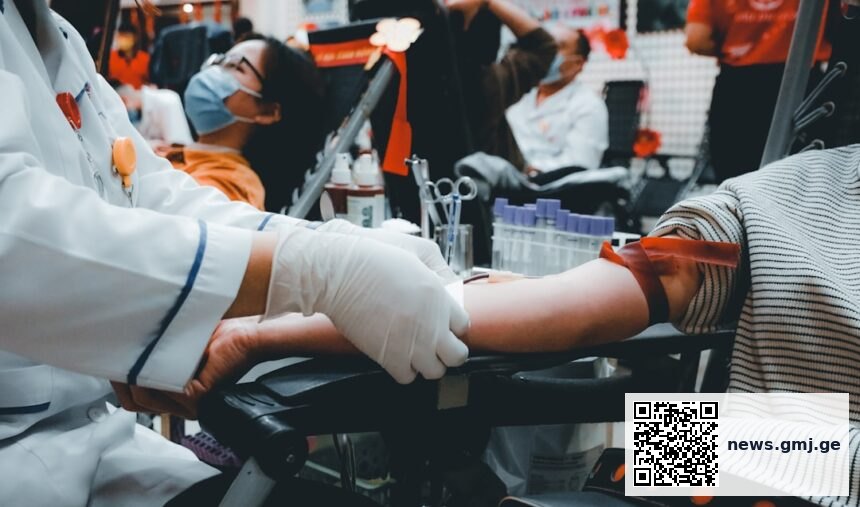
Infographic showing global blood donation statistics and safety improvements by WHOIllustrative image · Photo by Nguyễn Hiệp on Unsplash (Unsplash License)
WHO reports voluntary blood donations now exceed 85% globally, marking progress in blood safety. However, significant access inequalities persist between high-income and low-income countries. — Photo by Nguyễn Hiệp on Unsplash (Unsplash License)
SHARE
3 min read|667 words
✓ Reviewed by Prof. Giorgi Pkhakadze, MD, MPH, PhD · ORCID 0000-0001-7609-4515

🟢 Strong Evidence

Contents
    • Key takeaways
      • Global Blood Safety Progress
  • Voluntary donation milestone achieved but inequities remain
  • System weaknesses threaten progress
  • Regional disparities in access persist
    • What this means
  • Frequently asked questions
    • Why are voluntary blood donations safer than paid donations?
    • What challenges prevent universal access to safe blood?
    • How can countries improve their blood safety systems?

Global blood safety has reached a significant milestone, with voluntary blood donations now exceeding 85% worldwide, according to new data released by the World Health Organization in June 2026. However, the report reveals concerning disparities in access to safe blood supplies, particularly affecting low-income countries and vulnerable populations.

Key takeaways

  • Voluntary blood donations have surpassed 85% globally, marking substantial progress in blood safety
  • Significant access inequalities persist between high-income and low-income countries
  • Governance, financing, and regulatory weaknesses continue to challenge blood system effectiveness
85%
of global blood donations now voluntary, WHO reports

Global Blood Safety Progress

Voluntary blood donations by income level, 2026

95%
High-income countries
85%
Global average
65%
Low-income countries

Source: World Health Organization, 2026 | Georgian Medical Journal News

Submit Your Paper
GMJ_Submit_Banner

Voluntary donation milestone achieved but inequities remain

The WHO’s 2026 Global Status Report on Blood Safety documents sustained progress toward safer blood supplies worldwide, with voluntary donations crossing the 85% threshold for the first time. This represents a critical advancement in reducing transmission risks associated with paid or replacement donations.

🎙️ Related Podcast Episodes
🎧 #50 | GMJ Podcast | Inclusive Health for Refugees and Migrants: WHO Reports Global Progress and Remaining Gaps · 17m
🎧 #4 Patient-Centred Care in Liver Transplantation in Georgia Professionalism, Communication, and Quality Standards in Transplant Services | GMJ Official Podcast · 17m
🎧 #52 | GMJ Podcast | Health and Migration Knowledge Hub — A Global Resource for Evidence-Based Practice · 17m
🎧 #24 | WHO Releases Updated Health Inequality Data Repository and Equity Toolkit · 21m
🎧 #20 | WHO: Conflict and Instability Make Pregnancy More Dangerous · 18m

Despite this achievement, the report identifies persistent inequalities that leave many populations without adequate access to safe blood products. Low-income countries continue to lag significantly behind high-income nations in both donation rates and blood safety infrastructure. For comprehensive coverage of global health disparities, visit our Global Health section.

System weaknesses threaten progress

The WHO analysis reveals critical gaps in governance, financing, and regulation that undermine blood system effectiveness across multiple countries. These systemic weaknesses particularly affect resource-limited settings, where inadequate funding and regulatory oversight compromise both blood collection and processing capabilities.

Blood transfusion services in many regions lack sufficient government support and regulatory frameworks necessary to ensure consistent safety standards, according to the WHO’s Blood Safety Programme. The report emphasizes that sustainable financing mechanisms remain essential for maintaining safe blood supplies globally.

Over 85% of blood donations worldwide are now voluntary, representing the highest level of blood safety achieved to date, though access inequalities persist across income levels.

— World Health Organization, Global Status Report on Blood Safety (2026)

Regional disparities in access persist

The data reveal stark regional differences in blood availability and safety measures. High-income countries have achieved near-universal voluntary donation rates exceeding 95%, while many low-income nations struggle to reach 65% voluntary donations. This gap directly impacts patient outcomes and emergency response capabilities in resource-limited settings.

The WHO Global Health Observatory data show that blood donation rates correlate closely with healthcare infrastructure development and regulatory capacity. Countries with stronger health systems demonstrate both higher voluntary donation rates and more robust blood safety protocols. For analysis of healthcare policy impacts, see our Health Policy coverage.

What this means

For patients: Improved blood safety reduces infection risks, but access remains limited in low-resource settings requiring advocacy for local blood system strengthening
For clinicians: Enhanced voluntary donation rates improve transfusion safety profiles, though practitioners in resource-limited settings must maintain vigilance regarding blood product availability and quality
For policymakers: Sustained investment in blood system governance, financing, and regulation is essential to address persistent access inequalities and maintain safety improvements

Frequently asked questions

Why are voluntary blood donations safer than paid donations?

Voluntary donors are more likely to provide accurate health histories and have lower rates of infectious diseases compared to paid donors, reducing transfusion-transmitted infection risks.

What challenges prevent universal access to safe blood?

Key barriers include inadequate healthcare infrastructure, insufficient government funding, weak regulatory systems, and limited donor recruitment programs, particularly in low-income countries.

How can countries improve their blood safety systems?

WHO recommends strengthening governance frameworks, increasing sustainable financing, implementing robust quality standards, and developing comprehensive donor recruitment and retention programs.

The WHO’s findings underscore both significant progress in global blood safety and the urgent need for targeted interventions to address persistent access inequalities. As voluntary donations continue to increase worldwide, sustained policy commitment and resource allocation will be essential to ensure that all populations benefit from safe blood supplies. The challenge ahead lies in translating these global improvements into equitable access for the world’s most vulnerable communities.

Source: Safe blood supply improves as voluntary donations exceed 85%, but many people still lack access

Was this article helpful?

Disclaimer. This article is health journalism intended for general information and education. It is not medical advice and is not a substitute for professional diagnosis or treatment. Always consult a qualified healthcare provider about your individual circumstances. Full disclaimer →

Related Coverage

UK Establishes National Hepatitis C Register to Track Viral Infection PatternsJun 29, 2026
Americas Need Higher Health Taxes on Alcohol and Sugary Drinks, PAHO SaysJun 28, 2026
Blood donation rates plummet in the Americas, PAHO warns of critical shortageJun 28, 2026
Denmark Updates Digital Clinical Trial Guidance to Align with EU StandardsJun 28, 2026
PG
Written by
Prof. Giorgi Pkhakadze, MD, MPH, PhD
Editor-in-Chief, GMJ News
Full profile →  ·  ORCID 0000-0001-7609-4515
Medical disclaimer. This article is health journalism intended for general information. It is not medical advice and is not a substitute for consultation with a qualified healthcare professional. Always seek your physician's advice regarding any medical condition.
Medically reviewed by Prof. Giorgi Pkhakadze, MD, MPH, PhD. Spotted an error? Contact the editorial team.

Get the GMJ News digest
Evidence-based health journalism in your inbox. No spam; unsubscribe anytime.
TAGGED:blood safetyblood transfusionglobal-healthvoluntary donationsWHO report
Share This Article
Facebook LinkedIn Bluesky Copy Link Print
GMJ
ByGMJ Policy Desk
Follow:
GMJ Policy Desk is part of GMJ News, the newsroom of the Georgian Medical Journal (gmj.ge), published by the Public Health Institute of Georgia. Every article is editorially reviewed before publication.
Leave a Comment Leave a Comment

Leave a Reply Cancel reply

Your email address will not be published. Required fields are marked *

Submit Your Paper →

Georgia's peer-reviewed open-access medical journal. No APC until January 2027.
Submit Manuscript →
UK Establishes National Hepatitis C Register to Track Viral Infection Patterns

The UK has established a National Hepatitis C Register to track viral…

Americas Need Higher Health Taxes on Alcohol and Sugary Drinks, PAHO Says

Pan American Health Organization calls for higher taxes on alcohol and sugary…

Blood donation rates plummet in the Americas, PAHO warns of critical shortage

PAHO warns of critical blood shortages across the Americas, calling for urgent…

Submit Your Paper to GMJ

No APC until January 2027.
Submit Manuscript →

You Might Also Like

Healthcare worker using mobile app to report medicine safety issues in Nigeria
Health PolicyPolicy & SystemsQuality & Safety

Nigeria’s NAFDAC Launches Digital Platform to Combat Counterfeit Medicines

By
GMJ Policy Desk
07/06/2026
Young person with keys to new apartment representing successful transition from careIllustrative image · Photo by Monstera Production on Pexels (Pexels License)
Migration & HealthPolicy & Systems

New Supported Housing Scheme Reduces Homelessness Risk for Care Leavers by 40%

By
GMJ Policy Desk
15/06/2026
Healthcare professionals discussing staffing challenges and mental health service gapsIllustrative image · Photo by www.kaboompics.com on Pexels (Pexels License)
Health PolicyPolicy & Systems

Healthcare Workers Face Critical Shortages as Mental Health Crisis Deepens

By
GMJ Policy Desk
23/06/2026
Sudanese students in classroom setting representing educational access challengesIllustrative image · "Texas National Guard" by The National Guard is licensed under CC BY 2.0. To view a copy of this license, visit https://creativecommons.org/licenses/by/2.0/. (CC BY 2.0)
Migration & HealthPolicy & Systems

UNICEF Calls for Equal Access to National Exams for All Sudanese Students Amid Ongoing Crisis

By
GMJ Policy Desk
26/06/2026
Facebook Twitter Youtube Instagram
Company
  • Privacy Policy
  • Contact US
  • GMJ Journal
  • Submit Manuscript
  • Editorial Team
  • Register at GMJ
  • Terms of Use

Subscribe to GMJ News — Click here

Join Community
© 2026 Georgian Medical Journal (GMJ). Published by the Public Health Institute of Georgia (PHIG). All rights reserved.
Welcome Back!

Sign in to your account

Username or Email Address
Password

Lost your password?

Not a member? Sign Up