


Blood Safety
GMJ News knowledge hub · last reviewed September 2026 · Georgian Medical Journal
SummaryStatisticsGlossaryGMJ newsFAQDocumentsOrganizationsResearch
Safe blood and blood products are a critical, lifesaving resource — yet the global blood supply is severely inadequate and inequitable: 118.5 million blood donations are collected annually, but 42% come from high-income countries that house only 16% of the world's population (WHO 2022). In low-income countries, up to 65% of blood transfusions go to children under 5 with severe anaemia — yet blood supply systems are chronically underfunded and transfusion safety standards are inconsistently applied. WHO targets 100% voluntary non-remunerated blood donation as the foundation of a safe, sustainable supply.
Key messages
118.5 million donations — still insufficient
118.5 million blood donations are collected annually, yet supplies are severely insufficient and inequitably distributed: 42% of donations come from high-income countries (16% of the world's population) (WHO 2022).
100% voluntary non-remunerated donation
WHO targets 100% voluntary non-remunerated blood donation (VNRBD) — from donors motivated solely by the desire to save lives — as the only way to ensure a safe, sustainable supply. Paid and family/replacement donation carries higher risk of transfusion-transmitted infections.
TTIs remain a threat
Transfusion-transmitted infections (TTIs) — HIV, hepatitis B, hepatitis C, syphilis — remain a concern in LMICs where blood screening is inconsistent. WHO estimates that 1-2 million unsafe blood transfusions are performed per year in LMICs.
Children and women are primary recipients
In low-income countries, up to 65% of blood transfusions go to children under 5 with severe malarial anaemia. In high-income countries, the primary recipients are adults — haematology and oncology patients, elective surgery patients and trauma patients.
Cold chain and short shelf-life
Red blood cells have a shelf life of 42 days; platelets only 5 days. Blood requires cold chain storage and regular fresh donations — creating supply chain challenges that are particularly acute in LMICs.
Blood banking in LMICs
WHO supports national blood programmes in LMICs through technical assistance, training and advocacy for VNRBD. The target is at least 10 blood donations per 1,000 population per year for national self-sufficiency.
Key statistics
Blood donation rates per 1,000 population by country income group — WHO 2022
Source: WHO Global Status Report on Blood Safety and Availability 2022.
Glossary of key terms
Latest GMJ coverage
Rwanda’s Drone Network Cuts Blood Delivery Times, Improving Transfusion Outcomes
21/09/2026
Community-led blood donation model cuts costs by 40% in rural Sierra Leone
10/07/2026
WHO Africa Calls for Greater Blood Donation as Critical Shortages Persist Across Region
04/07/2026
Blood donation rates plummet in the Americas, PAHO warns of critical shortage
28/06/2026
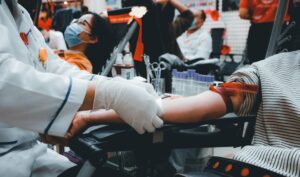
Global blood safety improves but access gaps persist as WHO reports 85% voluntary donations
28/06/2026
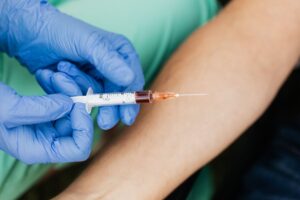
Global Blood Safety Report Reveals Widening Access Gap Despite Progress
27/06/2026
Frequently asked questions 12 Q&A — structured for Google featured snippets and AI discovery
Knowledge hub: guidelines, conventions and reports
Organizations working in migration and health
Related health topics
HIV/AIDSHepatitis B and CAnaemiaMalariaPatient safetyUHC
About this hub. Produced by the GMJ News Editorial Team as a public-good service. Every statistic is linked to its primary source. Documents are preserved in the GMJ Repository with full attribution. Georgian Medical Journal · Contact the editorial team