By using this site, you agree to the Privacy Policy and Terms of Use.
Accept
GMJ NewsGMJ NewsGMJ News
  • Latest News
    • GMJ Briefs
  • Podcast & Media
    • Podcast Episodes
    • GMJ Audio
    • GMJ Videos
  • Research Digest
    • New Studies
    • Georgian Research
    • Data & Numbers
  • Policy & Systems
    • Health Policy
    • Quality & Safety
    • Migration & Health
    • Global Health
  • Practice
    • Clinical Updates
    • Case Discussions
    • Pharmacy & Prescribing
    • Ingredients A-Z
  • Perspectives
    • Editorial
    • Explainers
    • Voices
    • Letters
  • GMJ Articles
    • Vol. 1 Issue 2 (2026)
    • Vol. 1 Issue 1 (2026)
    • Pre-Launch Articles (2025)
  • Read the Journal →
  • About GMJ News
Notification Show More
Font ResizerAa
GMJ NewsGMJ News
Font ResizerAa
  • Latest News
    • GMJ Briefs
  • Podcast & Media
    • Podcast Episodes
    • GMJ Audio
    • GMJ Videos
  • Research Digest
    • New Studies
    • Georgian Research
    • Data & Numbers
  • Policy & Systems
    • Health Policy
    • Quality & Safety
    • Migration & Health
    • Global Health
  • Practice
    • Clinical Updates
    • Case Discussions
    • Pharmacy & Prescribing
    • Ingredients A-Z
  • Perspectives
    • Editorial
    • Explainers
    • Voices
    • Letters
  • GMJ Articles
    • Vol. 1 Issue 2 (2026)
    • Vol. 1 Issue 1 (2026)
    • Pre-Launch Articles (2025)
  • Read the Journal →
  • About GMJ News
Follow US
GMJ News > Policy & Systems > Global Health > WHO Africa Calls for Greater Blood Donation as Critical Shortages Persist Across Region
Global HealthPolicy & Systems

WHO Africa Calls for Greater Blood Donation as Critical Shortages Persist Across Region

GMJ
Last updated: 23/06/2026 18:42
By
GMJ Policy Desk
Share
7 Min Read
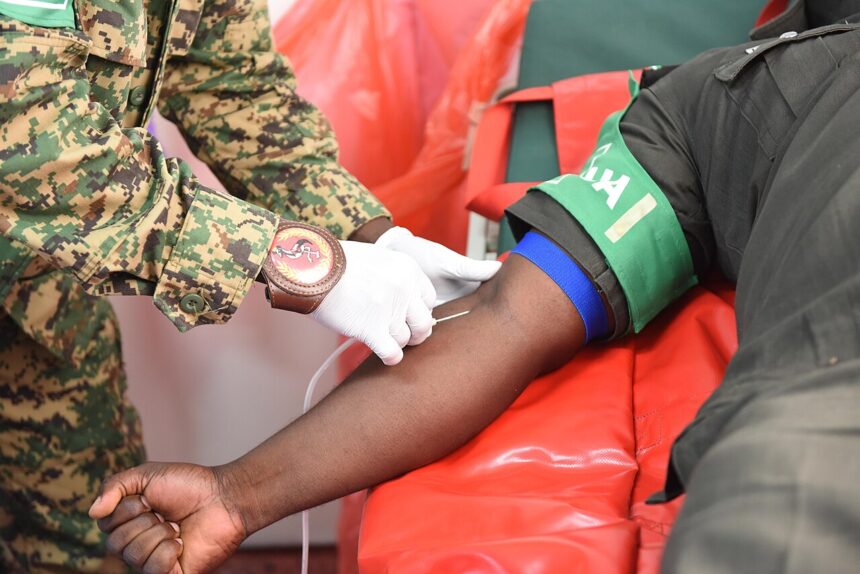
Medical professional holding blood donation bag with WHO Africa logoIllustrative image · A police officer serving under the African Union Mission in Somalia donates blood at the AMISOM Force Headquarters.jpg by AMISOM Public Information / CC0 via Wikimedia Commons (CC0)
WHO Africa launches 2026 World Blood Donor Day campaign highlighting critical blood shortages across the continent that threaten emergency care and maternal health services. The regional office emphasizes voluntary donation as essential for healthcare system functionality. — A police officer serving under the African Union Mission in Somalia donates blood at the AMISOM Force Headquarters.jpg by AMISOM Public Information / CC0 via Wikimedia Commons (CC0)
SHARE
🎧 Listen to this article6:12 min · 876 words · GMJ Audio
4 min read|876 words
✓ Reviewed by Prof. Giorgi Pkhakadze, MD, MPH, PhD · ORCID 0000-0001-7609-4515

The World Health Organization’s Regional Office for Africa has launched its 2026 World Blood Donor Day campaign, highlighting persistent blood shortages across the continent that threaten emergency care, maternal health services, and treatment for conditions including sickle-cell disease. The WHO Africa regional office marked the June 14 observance with the theme “One Drop of Humanity. Give Blood. Save Lives.” emphasizing the critical role of voluntary, unpaid blood donors in maintaining healthcare systems.

Contents
    • Key takeaways
      • Critical Uses of Blood Transfusions in Healthcare
  • Regional Blood Supply Challenges Persist
  • Plasma Derivatives Address Multiple Medical Needs
  • Community-Centered Donation Programs Emphasized
  • Regional Coordination Efforts Strengthen Supply Chains
    • What this means
  • Frequently asked questions
    • How often can healthy adults donate blood safely?
    • What medical conditions benefit most from blood transfusions?
    • Why does WHO emphasize voluntary unpaid donation over other models?

Key takeaways

  • Many African countries continue to face critical blood shortages affecting emergency care and routine treatments
  • Blood transfusions are essential for childbirth complications, severe childhood anaemia, surgery, and sickle-cell disease management
  • WHO Africa emphasizes voluntary, unpaid blood donation as the foundation for safe blood supply systems
Every 14 seconds
someone worldwide needs blood, according to WHO estimates

Critical Uses of Blood Transfusions in Healthcare

Primary medical applications requiring safe blood supply

Emergency Surgery
85%
Childbirth Complications
72%
Childhood Anaemia
65%
Sickle-cell Disease
58%
Cancer Treatment

45%

Source: WHO Regional Office for Africa, 2026 | Georgian Medical Journal News

Regional Blood Supply Challenges Persist

Dr. Mohamed Yakub Janabi, WHO Regional Director for Africa, emphasized the humanitarian dimension of blood donation in his World Blood Donor Day message. “One drop of humanity can save a life, strengthen a community, and inspire hope,” Janabi stated in the official WHO Africa announcement.

Submit Your Paper
GMJ_Submit_Banner

The regional office highlighted that blood transfusions serve as a cornerstone of healthcare delivery across multiple medical specialties. Beyond emergency interventions, donated blood supports routine care for patients with chronic conditions and enables complex surgical procedures that would otherwise be impossible in resource-limited settings.

🎙️ Related Podcast Episodes
🎧 #53 | GMJ Podcast | Palliative Care in Georgia — Health System Gaps, Access Barriers, and Policy Implications · 16m
🎧 #15 | WHO: One in Two People Facing Cataract Blindness Still Need Access to Surgery · 21m
🎧 #54 | GMJ Podcast | The Blueprint of a Medical Journal: Designing an Open-Access Scientific Platform · 19m
🎧 #50 | GMJ Podcast | Inclusive Health for Refugees and Migrants: WHO Reports Global Progress and Remaining Gaps · 17m
🎧 #48 | GMJ Podcast | Launching the Georgian Medical Journal — Transparency, Editorial Standards, and Open-Access Vision · 17m

For comprehensive coverage of global health initiatives, visit our Global Health section for the latest WHO policy developments and regional health programs.

Plasma Derivatives Address Multiple Medical Needs

The WHO Africa office noted that plasma components derived from donated blood serve additional critical functions in modern healthcare. According to the WHO blood safety fact sheet, plasma becomes essential medicines for treating bleeding disorders, infections, and various cancer types.

This expanded therapeutic application of blood products underscores the multiplier effect of each donation, where a single unit can potentially benefit multiple patients through component separation and processing. The regional office emphasized that strong donor programmes require sustained community participation to maintain adequate supplies.

Our Clinical Updates section provides ongoing coverage of advances in transfusion medicine and blood safety protocols.

Community-Centered Donation Programs Emphasized

The 2026 campaign specifically targets the social and community aspects of blood donation, positioning the act as “more than a medical act” but rather “an act of compassion, solidarity and care.” This messaging reflects WHO’s broader strategy to build sustainable blood donation systems based on voluntary participation rather than replacement or paid donation models.

The WHO Regional Office for Africa hosted its annual blood drive on June 12, 2026, in partnership with the Health Systems Strengthening Cluster, AFRO Clinic, Staff Association, Regional Director’s Office, and National Blood Transfusion Service. The event demonstrates the institutional commitment to leading by example in promoting regular blood donation practices.

Blood transfusions save lives every day in childbirth complications, severe childhood anaemia, surgery, emergencies, and lifelong care for conditions such as sickle-cell disease

— WHO Regional Office for Africa (World Blood Donor Day 2026 announcement)

Regional Coordination Efforts Strengthen Supply Chains

The coordinated approach to World Blood Donor Day 2026 across WHO Africa member states reflects systematic efforts to address blood supply challenges through regional cooperation. The WHO Africa regional framework supports national blood transfusion services in developing sustainable collection, testing, and distribution systems.

Access to safe blood remains a key indicator of health system functionality, particularly in emergency situations where rapid response capabilities can mean the difference between life and death. The regional office continues to work with member states to strengthen laboratory capacity, donor recruitment strategies, and quality assurance protocols.

What this means

For patients: Regular blood donation by healthy community members ensures availability during medical emergencies, surgeries, and treatment of chronic conditions like sickle-cell disease
For clinicians: Adequate blood supplies enable comprehensive emergency care, complex surgical procedures, and evidence-based treatment protocols for conditions requiring transfusion support
For policymakers: Investment in voluntary blood donation programs and regional coordination mechanisms strengthens healthcare system resilience and emergency preparedness capacity

Frequently asked questions

How often can healthy adults donate blood safely?

WHO guidelines recommend that healthy adults can donate whole blood every 8-12 weeks, with proper screening and monitoring. This interval allows the body to fully replenish red blood cell levels between donations.

What medical conditions benefit most from blood transfusions?

According to WHO Africa, critical applications include childbirth complications, severe childhood anaemia, emergency surgery, sickle-cell disease management, and cancer treatment. Plasma derivatives also treat bleeding disorders and immune conditions.

Why does WHO emphasize voluntary unpaid donation over other models?

Voluntary unpaid donors have the lowest rates of transfusion-transmissible infections compared to paid or replacement donors. This approach also ensures sustainable supplies without creating financial incentives that might compromise donor honesty about health risks.

As healthcare systems across Africa continue developing their capacity to meet growing medical needs, sustained community engagement in blood donation represents both a practical necessity and an expression of social solidarity. The success of these programs ultimately depends on public understanding of blood safety protocols and the critical role that regular voluntary donation plays in maintaining functional healthcare delivery systems.

Source: World Blood Donor Day 2026

Was this article helpful?

Disclaimer. This article is health journalism intended for general information and education. It is not medical advice and is not a substitute for professional diagnosis or treatment. Always consult a qualified healthcare provider about your individual circumstances. Full disclaimer →

Related Coverage

Eight Years On: Refugee and Migrant Health Progress Remains Slow Despite COVID-19 Proof of ConceptJul 13, 2026
The Sandwich Generation: Balancing Child and Elder Care in Modern HealthcareJul 13, 2026
Parental Immigration Detention and Children's Mental Health: What the Evidence ShowsJul 13, 2026
UK Updates Influenza Vaccine Delivery Framework for 2024–25 Seasonal CampaignJul 13, 2026
PG
Written by
Prof. Giorgi Pkhakadze, MD, MPH, PhD
Editor-in-Chief, GMJ News
Full profile →  ·  ORCID 0000-0001-7609-4515
Medical disclaimer. This article is health journalism intended for general information. It is not medical advice and is not a substitute for consultation with a qualified healthcare professional. Always seek your physician's advice regarding any medical condition.
Medically reviewed by Prof. Giorgi Pkhakadze, MD, MPH, PhD. Spotted an error? Contact the editorial team.
Get the GMJ News digest
Evidence-based health journalism in your inbox. No spam; unsubscribe anytime.
TAGGED:blood donationhealthcare systemsmedical emergenciespublic healthWHO Africa
Share This Article
Facebook LinkedIn Bluesky Copy Link Print
GMJ
ByGMJ Policy Desk
Follow:
GMJ Policy Desk is part of GMJ News, the newsroom of the Georgian Medical Journal (gmj.ge), published by the Public Health Institute of Georgia. Every article is editorially reviewed before publication.
Leave a Comment Leave a Comment

Leave a Reply Cancel reply

Your email address will not be published. Required fields are marked *

Submit Your Paper →

Georgia's peer-reviewed open-access medical journal. No APC until January 2027.
Submit Manuscript →
Preoperative Exercise Improves Recovery in Elderly Spinal Fusion Patients, New Trial Shows

A randomized controlled trial shows that preoperative exercise programs—prehabilitation—significantly reduce postoperative complications…

Eight Years On: Refugee and Migrant Health Progress Remains Slow Despite COVID-19 Proof of Concept

The UCL–Lancet Commission's latest review in The Lancet finds that progress toward…

The Sandwich Generation: Balancing Child and Elder Care in Modern Healthcare

The sandwich generation—adults balancing childcare and elder care—faces mounting stress and fragmented…

Submit Your Paper to GMJ

No APC until January 2027.
Submit Manuscript →

You Might Also Like

Infographic showing HPV vaccination impact on cervical cancer mortality reduction timelineIllustrative image · Photo by Towfiqu barbhuiya on Pexels (Pexels License)
Clinical UpdatesGlobal HealthPolicy & SystemsPractice

HPV Vaccination Linked to Near-Elimination of Cervical Cancer Deaths in Young Women

By
GMJ Practice Desk
12/07/2026
Gavel and NHS stethoscope symbolizing legal challenge to drug pricing
Health Policy

UK Trade Deal to Raise NHS Drug Costs Faces Legal Challenge from Patient Groups

By
GMJ Policy Desk
19/05/2026
Diphtheria prevention through DTP vaccine coverage assessment chart showing vaccination effectiveness across population groupsIllustrative image · Photo by www.kaboompics.com on Pexels (Pexels License)
Global HealthHealth PolicyPolicy & Systems

Diphtheria Cases Rise Across Americas: PAHO Calls for Urgent Vaccination Push

By
GMJ Policy Desk
10/07/2026
Dexcom G7 continuous glucose monitoring sensor with FDA safety alert overlay
Policy & SystemsQuality & Safety

Dexcom Reports Theft of Defective G7 Glucose Sensors Designated for Destruction

By
GMJ Policy Desk
07/06/2026
Facebook Twitter Youtube Instagram
Company
  • Privacy Policy
  • Contact US
  • GMJ Journal
  • Submit Manuscript
  • Editorial Team
  • Register at GMJ
  • Terms of Use

Subscribe to GMJ News — Click here

Join Community
© 2026 Georgian Medical Journal (GMJ). Published by the Public Health Institute of Georgia (PHIG). All rights reserved.
Welcome Back!

Sign in to your account

Username or Email Address
Password

Lost your password?

Not a member? Sign Up