Updated 13/09/2026
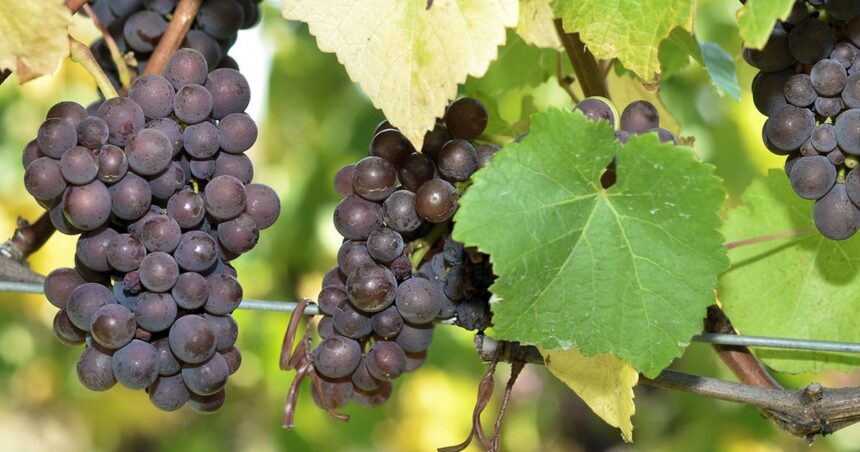
Photo: Pinot Grigio prior to harvest, vintage 2012, by stefano lubiana wines (Flickr), cropped for layout · Licensed CC BY 2.0 · Source
Plain-language summary of research published in the Georgian Medical Journal. Written for the general public by the GMJ News editorial team.
Red wine’s association with lower cardiovascular disease risk — the so-called “French paradox” — has been public-health folklore for decades, usually credited to polyphenols rather than the alcohol itself. A narrative review in the Georgian Medical Journal takes that idea somewhere more practical: winemaking produces enormous quantities of grape pomace, seeds, and skins as waste, and those by-products contain many of the same bioactive compounds found in the finished wine.

The Compounds Doing the Work
The review identifies quercetin, catechins, anthocyanins, flavonoids, resveratrol, and phenolic acids as the key bioactive constituents, credited with antioxidant, anti-inflammatory, anti-platelet, and vasoprotective (blood-vessel-protecting) actions. At the molecular level, these compounds inhibit the oxidation of low-density lipoprotein (LDL, “bad” cholesterol) — a key early step in atherosclerosis — suppress NF-κB signalling and the pro-inflammatory cytokines it triggers, enhance endothelial nitric oxide synthase activity, and improve nitric oxide bioavailability, which helps blood vessels relax and dilate properly.
Beyond Direct Antioxidant Action
The review also points to less obvious mechanisms: red wine polyphenols appear to influence gut microbiota composition, and confer vascular protection via epigenetic and mitochondrial signalling pathways — meaning their cardiovascular benefit may extend well beyond simply mopping up free radicals directly in the bloodstream.
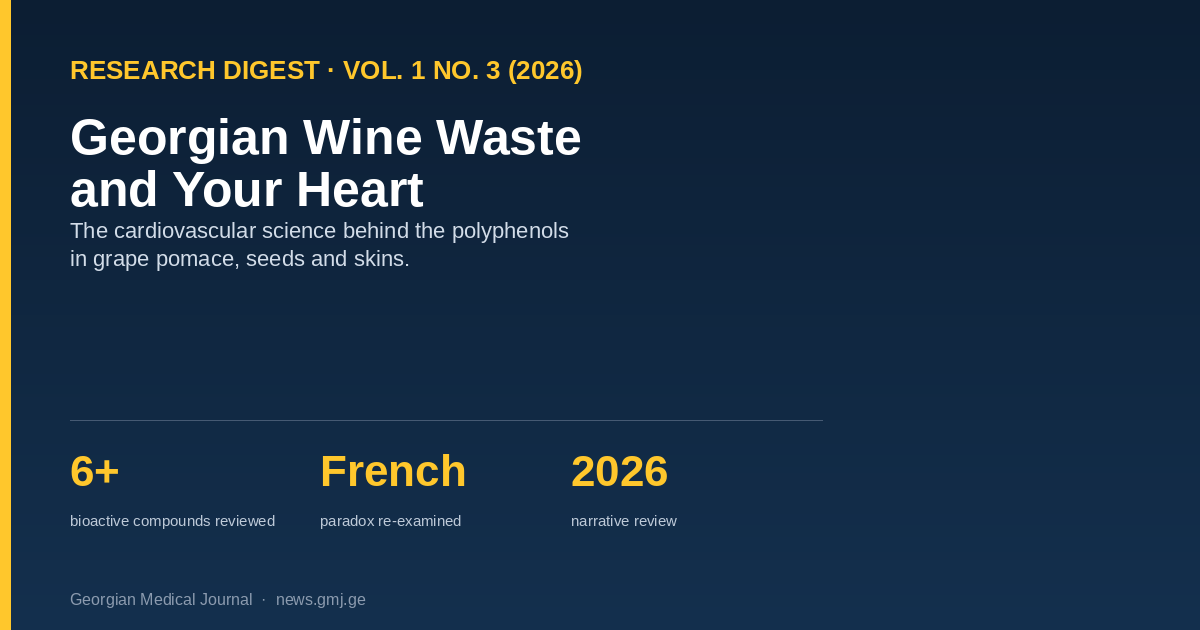
At a glance — the study’s headline figures.
The catch, as the review is careful to note, is that translating these promising preclinical and observational findings into actual clinical practice remains limited by inconsistent dosing strategies across studies — there’s no agreed-upon “how much, how often” yet. But the practical implication is still striking for a wine-producing country like Georgia: material currently treated as vinification waste — pomace, seeds, skins — may represent an underused source of the very compounds researchers are most interested in for cardiovascular health, independent of alcohol consumption altogether.
🗺️ Find certified Georgian healthcare providers: sheniekimi.ge — Georgia Health Map · 998 clinics · 6,600+ doctors · 2,296 pharmacies
Read the Original Research
Original article: Georgian Wine Waste and Your Heart: The Science Behind the Polyphenols
Published in: Georgian Medical Journal, Vol. 1 No. 3 (2026)
DOI: 10.66636/gmj.v1.i3.a191
📄 Read the full article at gmj.ge →
Georgian Medical Journal (GMJ) · ISSN 3088-4322 · gmj.ge · Open Access CC BY 4.0 · Published by the Public Health Institute of Georgia (PHIG). This summary is an independent editorial product of GMJ News; for clinical decisions, consult the original peer-reviewed article and a qualified professional.
Was this article helpful?
Disclaimer. This article is health journalism intended for general information and education. It is not medical advice and is not a substitute for professional diagnosis or treatment. Always consult a qualified healthcare provider about your individual circumstances. Full disclaimer →
Related Coverage


Editorial standards. This article was produced under the GMJ News editorial process, with oversight by the GMJ Editorial Board. Our editorial process. Spotted an error? Contact the editorial team.