By using this site, you agree to the Privacy Policy and Terms of Use.
Accept
GMJ NewsGMJ NewsGMJ News
  • Latest News
    • GMJ Briefs
  • Podcast & Media
    • Podcast Episodes
    • GMJ Audio
    • GMJ Videos
  • Research Digest
    • New Studies
    • Georgian Research
    • Data & Numbers
  • Policy & Systems
    • Health Policy
    • Quality & Safety
    • Migration & Health
    • Global Health
  • Practice
    • Clinical Updates
    • Case Discussions
    • Pharmacy & Prescribing
    • Ingredients A-Z
  • Perspectives
    • Editorial
    • Explainers
    • Voices
    • Letters
  • GMJ Articles
    • Vol. 1 Issue 2 (2026)
    • Vol. 1 Issue 1 (2026)
    • Pre-Launch Articles (2025)
  • Read the Journal →
  • About GMJ News
Notification Show More
Font ResizerAa
GMJ NewsGMJ News
Font ResizerAa
  • Latest News
    • GMJ Briefs
  • Podcast & Media
    • Podcast Episodes
    • GMJ Audio
    • GMJ Videos
  • Research Digest
    • New Studies
    • Georgian Research
    • Data & Numbers
  • Policy & Systems
    • Health Policy
    • Quality & Safety
    • Migration & Health
    • Global Health
  • Practice
    • Clinical Updates
    • Case Discussions
    • Pharmacy & Prescribing
    • Ingredients A-Z
  • Perspectives
    • Editorial
    • Explainers
    • Voices
    • Letters
  • GMJ Articles
    • Vol. 1 Issue 2 (2026)
    • Vol. 1 Issue 1 (2026)
    • Pre-Launch Articles (2025)
  • Read the Journal →
  • About GMJ News
Follow US
GMJ News > Policy & Systems > Global Health > Global Blood Safety Report Reveals Widening Access Gap Despite Progress
Global HealthPolicy & Systems

Global Blood Safety Report Reveals Widening Access Gap Despite Progress

GMJ
Last updated: 23/06/2026 18:42
By
GMJ Policy Desk
Share
5 Min Read
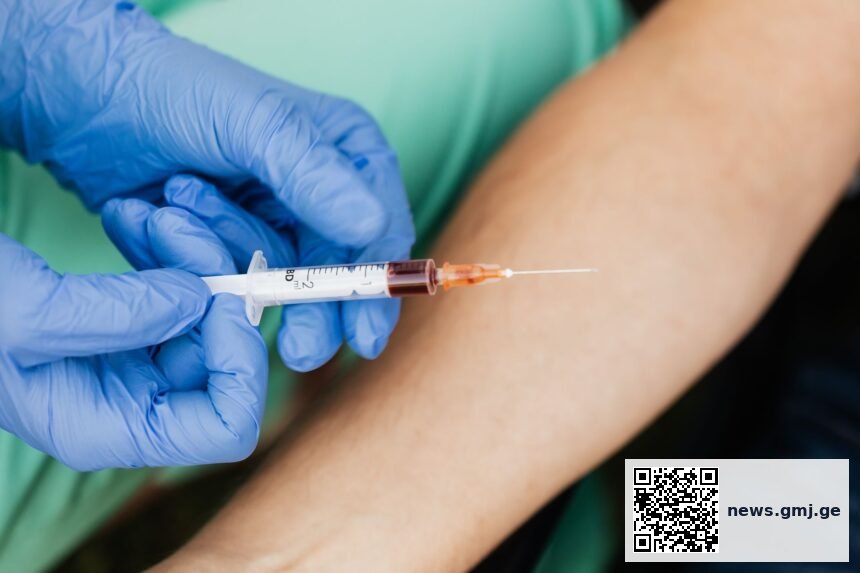
Medical professional handling blood collection equipment in clinical settingIllustrative image · Photo by www.kaboompics.com on Pexels (Pexels License)
New WHO report reveals significant progress in blood safety globally, but highlights persistent access inequalities that continue to endanger lives in lower-income countries. — Photo by www.kaboompics.com on Pexels (Pexels License)
SHARE
🎧 Listen to this article4:35 min · 643 words · GMJ Audio
3 min read|643 words
✓ Reviewed by Prof. Giorgi Pkhakadze, MD, MPH, PhD · ORCID 0000-0001-7609-4515

🟠 Moderate Evidence

Contents
    • Key takeaways
      • Global Blood Safety Progress by Income Level
  • Persistent inequalities threaten patient safety
  • Progress masks underlying challenges
  • Targeted interventions needed
    • What this means
  • Frequently asked questions
    • Why do blood safety inequalities persist globally?
    • How has blood safety improved in recent decades?
    • What patient populations are most affected by blood shortages?

A new World Health Organization report reveals that despite decades of progress in blood safety, access to lifesaving blood transfusions remains deeply unequal globally. The comprehensive assessment shows that while high-income countries have achieved near-universal blood safety standards, significant shortages continue to put lives at risk in many lower-income nations.

Key takeaways

  • Blood safety has improved significantly in high-income countries over the past two decades
  • Lower-income countries continue to face critical blood shortages that endanger patient lives
  • Access inequalities persist despite WHO’s ongoing global blood safety initiatives
Millions
of lives saved daily through safe blood transfusions globally

Global Blood Safety Progress by Income Level

Access to safe blood remains unequal across different economic regions, 2026

High
High-income countries
Moderate
Middle-income countries
Critical
Low-income countries

Source: World Health Organization, 2026 | Georgian Medical Journal News

Submit Your Paper
GMJ_Submit_Banner

Persistent inequalities threaten patient safety

The WHO assessment highlights how blood safety progress has been concentrated primarily in wealthier nations, leaving vulnerable populations in lower-income countries at continued risk. According to the WHO blood safety program, these disparities affect critical patient populations including women experiencing childbirth complications, accident victims, cancer patients, and individuals with chronic diseases requiring regular transfusions.

🎙️ Related Podcast Episodes
🎧 #53 | GMJ Podcast | Palliative Care in Georgia — Health System Gaps, Access Barriers, and Policy Implications · 16m
🎧 #16 | WHO Prequalifies New Oral Polio Vaccine to Strengthen Global Eradication Efforts · 20m
🎧 #9 Leprosy in 2026: Bridging Medical Cure and Social Inclusion – WHO World Leprosy Day Message · 18m
🎧 #54 | GMJ Podcast | The Blueprint of a Medical Journal: Designing an Open-Access Scientific Platform · 19m
🎧 #50 | GMJ Podcast | Inclusive Health for Refugees and Migrants: WHO Reports Global Progress and Remaining Gaps · 17m

Blood shortages in resource-limited settings create impossible choices for healthcare providers and families. The report emphasizes that global health inequities in blood access directly translate to preventable deaths and suffering.

Progress masks underlying challenges

While celebrating substantial improvements in blood screening and safety protocols over recent decades, WHO officials acknowledge that progress has been uneven. The report documents how high-income countries have successfully implemented comprehensive blood safety systems, including advanced screening technologies and robust quality assurance programs.

However, many lower-income nations continue to struggle with inadequate blood collection infrastructure, limited screening capabilities, and insufficient trained personnel. These systemic challenges are compounded by cultural and logistical barriers to blood donation in many regions, according to WHO emergency response data.

Safe blood helps save the lives of women experiencing childbirth complications, accident victims, cancer patients and people living with chronic diseases daily

— World Health Organization Global Blood Safety Report (2026)

Targeted interventions needed

The WHO report calls for renewed commitment to addressing blood safety inequalities through targeted interventions in the most affected regions. Priority areas include strengthening blood collection systems, improving screening technologies, and building local capacity for blood bank management.

International collaboration remains essential for bridging these gaps, with WHO emphasizing the need for sustained political commitment and financial investment. The organization highlights successful models from countries that have rapidly improved their blood safety infrastructure through strategic partnerships and technology transfer.

What this means

For patients: Those in lower-income countries may face increased risks when requiring blood transfusions due to safety and availability concerns
For clinicians: Healthcare providers in resource-limited settings need enhanced training and support for blood safety protocols and shortage management
For policymakers: Sustained investment in blood safety infrastructure and international cooperation frameworks is essential to address global inequities

Frequently asked questions

Why do blood safety inequalities persist globally?

Lower-income countries face multiple challenges including inadequate infrastructure, limited screening technology, insufficient trained personnel, and cultural barriers to donation. These systemic issues require sustained investment and international support to address effectively.

How has blood safety improved in recent decades?

High-income countries have implemented comprehensive screening protocols, advanced testing technologies, and robust quality assurance systems. However, these improvements have not been equally distributed globally.

What patient populations are most affected by blood shortages?

Women with childbirth complications, accident victims, cancer patients, and individuals with chronic diseases requiring regular transfusions are particularly vulnerable to blood shortages and safety issues.

The WHO report underscores that achieving universal blood safety will require sustained global commitment and targeted interventions addressing both technical and systemic barriers. As the organization continues monitoring progress, the focus must remain on ensuring that lifesaving blood transfusions are safely available to all patients regardless of their geographic location or economic circumstances.

Source: WHO report shows progress in blood safety, but there are worrying gaps

Was this article helpful?

Disclaimer. This article is health journalism intended for general information and education. It is not medical advice and is not a substitute for professional diagnosis or treatment. Always consult a qualified healthcare provider about your individual circumstances. Full disclaimer →

Related Coverage

High Tyrosine Levels Linked to Reduced Life Expectancy in Men, Large Study SuggestsJul 11, 2026
1 billion children exposed to multiple climate hazards simultaneously, UNICEF warnsJul 11, 2026
Serological Testing and Mathematical Models Align on True COVID-19 BurdenJul 11, 2026
Mobile Health Tools Strengthen Tuberculosis Contact Tracing in Low-Resource SettingsJul 11, 2026
PG
Written by
Prof. Giorgi Pkhakadze, MD, MPH, PhD
Editor-in-Chief, GMJ News
Full profile →  ·  ORCID 0000-0001-7609-4515
Medical disclaimer. This article is health journalism intended for general information. It is not medical advice and is not a substitute for consultation with a qualified healthcare professional. Always seek your physician's advice regarding any medical condition.
Medically reviewed by Prof. Giorgi Pkhakadze, MD, MPH, PhD. Spotted an error? Contact the editorial team.

Get the GMJ News digest
Evidence-based health journalism in your inbox. No spam; unsubscribe anytime.
TAGGED:blood safetyglobal-healthhealthcare inequalitytransfusion medicineWHO report
Share This Article
Facebook LinkedIn Bluesky Copy Link Print
GMJ
ByGMJ Policy Desk
Follow:
GMJ Policy Desk is part of GMJ News, the newsroom of the Georgian Medical Journal (gmj.ge), published by the Public Health Institute of Georgia. Every article is editorially reviewed before publication.
Leave a Comment Leave a Comment

Leave a Reply Cancel reply

Your email address will not be published. Required fields are marked *

Submit Your Paper →

Georgia's peer-reviewed open-access medical journal. No APC until January 2027.
Submit Manuscript →
High Tyrosine Levels Linked to Reduced Life Expectancy in Men, Large Study Suggests

A large-scale epidemiological study has found that men with higher circulating levels…

Calcium and Vitamin D Supplements Show Limited Benefit for Fracture Prevention in Older Adults, Major Review Finds

A comprehensive systematic review of nearly 154,000 older adults challenges decades of…

Nasal spray reaches women’s brains differently across menstrual cycle, new study reveals

Research shows that nasal sprays penetrate women's brains at different rates depending…

Submit Your Paper to GMJ

No APC until January 2027.
Submit Manuscript →

You Might Also Like

Conceptual illustration showing interconnected flags of middle power countries around health AI technology symbolsIllustrative image · Photo by Markus Winkler on Unsplash (Unsplash License)
Health PolicyPolicy & Systems

Middle powers must unite on health data and AI to challenge tech dominance

By
GMJ Policy Desk
24/06/2026
Data transparency barriers in systematic review evidence synthesisIllustrative image · Photo by RDNE Stock project on Pexels (Pexels License)
Health PolicyNew StudiesPolicy & SystemsResearch Digest

The Hidden Cost of Secrecy: How Missing Research Data Undermines Clinical Guidance

By
GMJ Policy Desk
09/07/2026
California healthcare workers and hospital representatives discussing ballot initiative proposalsIllustrative image · Photo by Sora Shimazaki on Pexels (Pexels License)
Health PolicyPolicy & Systems

California Hospital Groups Launch Competing Ballot Initiatives on Healthcare Worker Wages

By
GMJ Policy Desk
29/06/2026
Infographic showing IOM's global governance structure and member country participationIllustrative image · Photo by Nothing Ahead on Pexels (Pexels License)
Global HealthPolicy & Systems

IOM Governance Structure Reinforces Global Migration Health Framework

By
GMJ Policy Desk
20/06/2026
Facebook Twitter Youtube Instagram
Company
  • Privacy Policy
  • Contact US
  • GMJ Journal
  • Submit Manuscript
  • Editorial Team
  • Register at GMJ
  • Terms of Use

Subscribe to GMJ News — Click here

Join Community
© 2026 Georgian Medical Journal (GMJ). Published by the Public Health Institute of Georgia (PHIG). All rights reserved.
Welcome Back!

Sign in to your account

Username or Email Address
Password

Lost your password?

Not a member? Sign Up