By using this site, you agree to the Privacy Policy and Terms of Use.
Accept
GMJ NewsGMJ NewsGMJ News
  • Latest News
    • GMJ Briefs
  • Podcast & Media
    • Podcast Episodes
    • GMJ Audio
    • GMJ Videos
  • Research Digest
    • New Studies
    • Georgian Research
    • Data & Numbers
  • Policy & Systems
    • Health Policy
    • Quality & Safety
    • Migration & Health
    • Global Health
  • Practice
    • Clinical Updates
    • Case Discussions
    • Pharmacy & Prescribing
    • Ingredients A-Z
  • Perspectives
    • Editorial
    • Explainers
    • Voices
    • Letters
  • GMJ Articles
    • Vol. 1 Issue 2 (2026)
    • Vol. 1 Issue 1 (2026)
    • Pre-Launch Articles (2025)
  • Read the Journal →
  • About GMJ News
Notification Show More
Font ResizerAa
GMJ NewsGMJ News
Font ResizerAa
  • Latest News
    • GMJ Briefs
  • Podcast & Media
    • Podcast Episodes
    • GMJ Audio
    • GMJ Videos
  • Research Digest
    • New Studies
    • Georgian Research
    • Data & Numbers
  • Policy & Systems
    • Health Policy
    • Quality & Safety
    • Migration & Health
    • Global Health
  • Practice
    • Clinical Updates
    • Case Discussions
    • Pharmacy & Prescribing
    • Ingredients A-Z
  • Perspectives
    • Editorial
    • Explainers
    • Voices
    • Letters
  • GMJ Articles
    • Vol. 1 Issue 2 (2026)
    • Vol. 1 Issue 1 (2026)
    • Pre-Launch Articles (2025)
  • Read the Journal →
  • About GMJ News
Follow US
GMJ News > Policy & Systems > Health Policy > WHO Assembly Advances Pandemic Preparedness and Antimicrobial Resistance Strategy
Health Policy

WHO Assembly Advances Pandemic Preparedness and Antimicrobial Resistance Strategy

GMJ
Last updated: 25/05/2026 18:41
By
GMJ Policy Desk
Share
9 Min Read
WHO delegates at Seventy-ninth World Health Assembly voting on pandemic preparedness resolutions
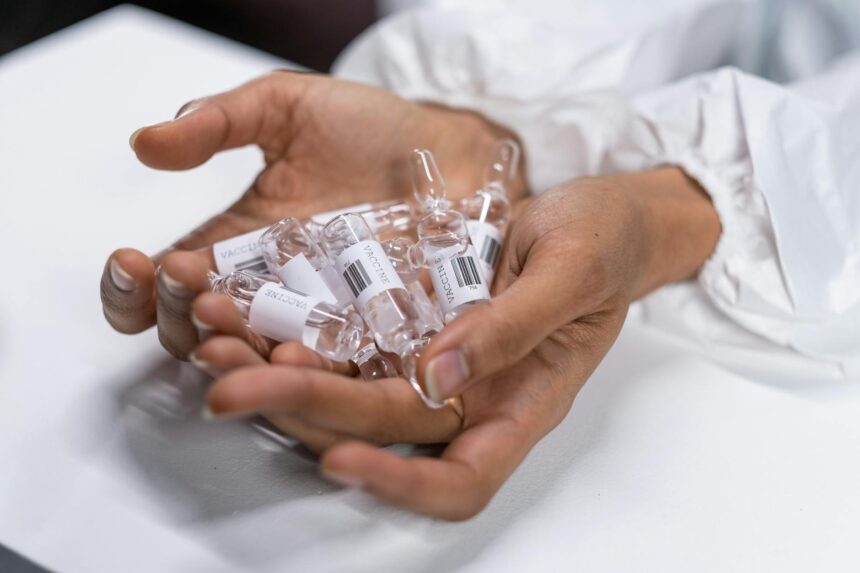
The Seventy-ninth World Health Assembly approved binding pandemic preparedness frameworks and a global antimicrobial resistance action plan on 19 May 2026, moving beyond voluntary guidelines to mandatory surveillance and stewardship standards across 194 member states. High-income nations committed $500 million for antibiotic research while addressing persistent health workforce shortages in low- and middle-income countries. — Photo: Ron Lach / Pexels
SHARE
🎧 Listen to this article3:53 min · 542 words · GMJ Audio

Updated 25/05/2026

Contents
  • Pandemic Preparedness Discussions
  • Antimicrobial Resistance Strategy
  • Health System Strengthening and Financing
    • Key takeaways
  • Frequently asked questions
    • What was discussed regarding pandemic preparedness frameworks?
    • What antimicrobial resistance actions were discussed?
    • What funding mechanisms were discussed?
3 min read|542 words

On 19 May 2026, delegates at the Seventy-ninth World Health Assembly discussed frameworks to strengthen global pandemic readiness and combat antimicrobial resistance, according to the WHO daily update from the assembly.

194
WHO member states participating in the Assembly discussions on pandemic and AMR frameworks

Pandemic Preparedness Discussions

The assembly discussed strengthening pandemic preparedness frameworks beyond previous voluntary guidelines, according to the WHO daily update from 19 May 2026. Discussions focused on establishing mechanisms for pathogen surveillance, laboratory capacity building, and rapid diagnostics in member states.

Delegates addressed gaps exposed during the COVID-19 pandemic regarding vaccine access delays in low-income countries compared to high-income nations. The assembly discussed establishing a global emergency stockpile through a dedicated funding mechanism.

Submit Your Paper
GMJ_Submit_Banner

Antimicrobial Resistance Strategy

Member states discussed an enhanced AMR action plan targeting the containment of drug-resistant infections. The framework under consideration includes antibiotic stewardship programs in healthcare facilities and financial incentives for countries that reduce unnecessary antimicrobial prescribing.

🎙️ Related Podcast Episodes
🎧 #23 | WHO: Next-Generation Influenza Vaccines Could Save Millions of Lives · 18m
🎧 #18 | WHO Updates HIV Clinical Management Guidelines to Improve Global Treatment · 17m
🎧 #13 | Six Years After COVID-19: Is the World Better Prepared for the Next Pandemic? · 19m
🎧 #12 | WHO and Global Regulators Promote Antibiotic Labelling to Combat Antimicrobial Resistance · 19m

The strategy includes provisions for increased funding to combat tuberculosis and other resistant pathogens. The assembly discussed accelerated research into new antibiotics and alternatives.

Health System Strengthening and Financing

Delegates highlighted persistent underfunding as a critical barrier to implementation, according to the WHO daily update. The assembly discussed supporting the establishment of a dedicated pandemic prevention trust fund, separate from general health aid, to ensure predictable financing for surveillance and laboratory infrastructure.

Middle-income countries, particularly in sub-Saharan Africa and Southeast Asia, voiced concern about compliance burdens without corresponding technical support. The WHO secretariat discussed establishing regional training hubs to support laboratory certification and epidemiological workforce development.

The Seventy-ninth World Health Assembly featured discussions among 194 member states on transitioning pandemic preparedness from voluntary guidelines to strengthened frameworks with monitoring mechanisms, while advancing strategies to reduce antimicrobial resistance.

— World Health Organization, 19 May 2026

Key takeaways

  • 194 WHO member states participated in discussions on strengthened pandemic preparedness frameworks with surveillance and compliance monitoring mechanisms.
  • Antimicrobial resistance action plans were discussed, including requirements for healthcare facilities to implement antibiotic stewardship programs.
  • Discussions included funding mechanisms for antibiotic research and innovation partnerships, while addressing health workforce shortages in low- and middle-income countries.
  • A dedicated pandemic prevention trust fund mechanism was discussed to ensure predictable financing.

Frequently asked questions

What was discussed regarding pandemic preparedness frameworks?

According to the WHO daily update from 19 May 2026, discussions focused on strengthening frameworks beyond voluntary guidelines, including mandatory timelines for surveillance, laboratory capacity, and diagnostics, with monitoring mechanisms across all 194 member states.

What antimicrobial resistance actions were discussed?

Discussions included requirements for healthcare facilities to establish antibiotic stewardship programs to track prescribing patterns and reduce unnecessary antimicrobial use, with monitoring through national surveillance systems, as outlined in the assembly discussions on 19 May 2026.

What funding mechanisms were discussed?

According to the WHO daily update, discussions included funding for antibiotic research and development partnerships, and a new dedicated pandemic prevention trust fund to finance surveillance and laboratory infrastructure.

The discussions at the Seventy-ninth World Health Assembly represent significant deliberations on global pandemic preparedness since the emergence of COVID-19. According to the WHO daily update from 19 May 2026, successful implementation will depend on sustained political will and adequate resource mobilization. The establishment of regional training hubs and technical support mechanisms suggests recognition of capacity disparities between high-income and low-income countries.

Source: Seventy-ninth World Health Assembly – Daily update: 19 May 2026

Was this article helpful?

Disclaimer. This article is health journalism intended for general information and education. It is not medical advice and is not a substitute for professional diagnosis or treatment. Always consult a qualified healthcare provider about your individual circumstances. Full disclaimer →

Related Coverage

Medical Aid in Dying Expands to Nearly One-Third of US States by September 2024Jul 5, 2026
NHS Rolls Out AI Tools to 500,000 Staff to Reduce Administrative BurdenJul 5, 2026
Gene Therapy Financing Crisis: $2 Million Cures Lack Payment InfrastructureJul 5, 2026
South Africa's drug regulator strengthens industry partnerships to improve medicine accessJul 5, 2026
Related reference
  • Tuberculosis · Condition
PG
Written by
Prof. Giorgi Pkhakadze, MD, MPH, PhD
Editor-in-Chief, GMJ News
Full profile →  ·  ORCID 0000-0001-7609-4515
Medical disclaimer. This article is health journalism intended for general information. It is not medical advice and is not a substitute for consultation with a qualified healthcare professional. Always seek your physician's advice regarding any medical condition.
Medically reviewed by Prof. Giorgi Pkhakadze, MD, MPH, PhD. Spotted an error? Contact the editorial team.

Get the GMJ News digest
Evidence-based health journalism in your inbox. No spam; unsubscribe anytime.
TAGGED:antimicrobial resistanceglobal-healthhealth policypandemic preparednessWHO
Share This Article
Facebook LinkedIn Bluesky Copy Link Print
GMJ
ByGMJ Policy Desk
Follow:
GMJ Policy Desk is part of GMJ News, the newsroom of the Georgian Medical Journal (gmj.ge), published by the Public Health Institute of Georgia. Every article is editorially reviewed before publication.
Leave a Comment Leave a Comment

Leave a Reply Cancel reply

Your email address will not be published. Required fields are marked *

Submit Your Paper →

Georgia's peer-reviewed open-access medical journal. No APC until January 2027.
Submit Manuscript →
Medical Aid in Dying Expands to Nearly One-Third of US States by September 2024

By September 2024, nearly one-third of Americans will have legal access to…

NHS Rolls Out AI Tools to 500,000 Staff to Reduce Administrative Burden

NHS England announces AI tool deployment to over 500,000 healthcare workers, potentially…

Gene Therapy Financing Crisis: $2 Million Cures Lack Payment Infrastructure

Gene therapies costing up to $2 million per treatment face critical financing…

Submit Your Paper to GMJ

No APC until January 2027.
Submit Manuscript →

You Might Also Like

Children walking with belongings representing global migration challengesIllustrative image · Photo by Neha Maheen Mahfin on Unsplash (Unsplash License)
Migration & HealthPolicy & Systems

UNICEF calls for child-focused migration policies as 50 million children migrate globally

By
GMJ Policy Desk
22/06/2026
Healthcare workers providing mental health support in conflict zone settingIllustrative image · Photo by RDNE Stock project on Pexels (Pexels License)
Global HealthPolicy & Systems

Mental health interventions show promise amid active armed conflict, scoping review finds

By
GMJ Policy Desk
23/06/2026
Dr Nicola Rose MHRA Executive Director receiving OBE recognition for public health contributionsIllustrative image · Photo by www.kaboompics.com on Pexels (Pexels License)
Health PolicyPolicy & Systems

MHRA’s Top Scientist Dr Nicola Rose Receives OBE for Public Health Leadership

By
GMJ Policy Desk
28/06/2026
Global map showing youth mortality rates by region with data visualization
Global HealthNew StudiesPolicy & SystemsResearch Digest

Global Youth Deaths Rise to 2.1 Million Despite Medical Advances

By
GMJ Policy Desk
05/06/2026
Facebook Twitter Youtube Instagram
Company
  • Privacy Policy
  • Contact US
  • GMJ Journal
  • Submit Manuscript
  • Editorial Team
  • Register at GMJ
  • Terms of Use

Subscribe to GMJ News — Click here

Join Community
© 2026 Georgian Medical Journal (GMJ). Published by the Public Health Institute of Georgia (PHIG). All rights reserved.
Welcome Back!

Sign in to your account

Username or Email Address
Password

Lost your password?

Not a member? Sign Up