By using this site, you agree to the Privacy Policy and Terms of Use.
Accept
GMJ NewsGMJ NewsGMJ News
  • Latest News
    • GMJ Briefs
  • Podcast & Media
    • Podcast Episodes
    • GMJ Audio
    • GMJ Videos
  • Research Digest
    • New Studies
    • Georgian Research
    • Data & Numbers
  • Policy & Systems
    • Health Policy
    • Quality & Safety
    • Migration & Health
    • Global Health
  • Practice
    • Clinical Updates
    • Case Discussions
    • Pharmacy & Prescribing
    • Ingredients A-Z
  • Perspectives
    • Editorial
    • Explainers
    • Voices
    • Letters
  • GMJ Articles
    • Vol. 1 Issue 2 (2026)
    • Vol. 1 Issue 1 (2026)
    • Pre-Launch Articles (2025)
  • Read the Journal →
  • About GMJ News
Notification Show More
Font ResizerAa
GMJ NewsGMJ News
Font ResizerAa
  • Latest News
    • GMJ Briefs
  • Podcast & Media
    • Podcast Episodes
    • GMJ Audio
    • GMJ Videos
  • Research Digest
    • New Studies
    • Georgian Research
    • Data & Numbers
  • Policy & Systems
    • Health Policy
    • Quality & Safety
    • Migration & Health
    • Global Health
  • Practice
    • Clinical Updates
    • Case Discussions
    • Pharmacy & Prescribing
    • Ingredients A-Z
  • Perspectives
    • Editorial
    • Explainers
    • Voices
    • Letters
  • GMJ Articles
    • Vol. 1 Issue 2 (2026)
    • Vol. 1 Issue 1 (2026)
    • Pre-Launch Articles (2025)
  • Read the Journal →
  • About GMJ News
Follow US
GMJ News > GMJ Briefs > Autoimmune Disease Under-Research Highlights Critical Data Gap in Women’s Health

Autoimmune Disease Under-Research Highlights Critical Data Gap in Women’s Health

GMJ
Last updated: 13/06/2026 18:22
By
Prof. Giorgi Pkhakadze
Share
1 Min Read
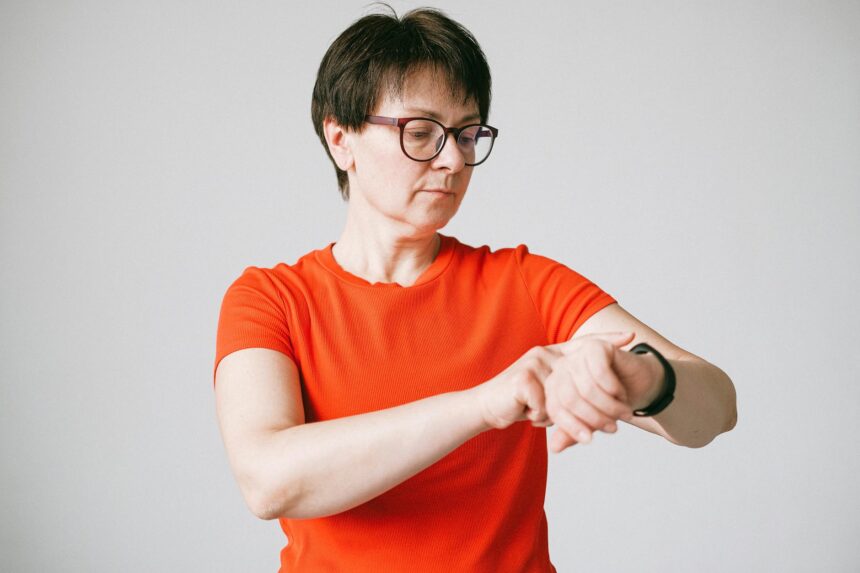
Woman wearing smartwatch for health monitoring representing digital medicine advancement
New analysis shows wearable technology could address women's under-representation in medical research through continuous health monitoring. Clinical validation and equity considerations remain essential for successful integration. — Photo: Anna Shvets / Pexels
SHARE
1 min read|133 words

Seventy percent of autoimmune diseases affect women, yet these conditions remain significantly under-researched in traditional clinical trials—a stark illustration of gender disparities in medical science. This research gap reflects broader patterns of women’s exclusion from medical studies, perpetuating limited understanding of how diseases uniquely impact women across their lifespans. Wearable health technologies present a compelling solution by enabling continuous, objective monitoring in real-world settings rather than controlled laboratory environments. Through constant data collection, these devices can reveal disease patterns and physiological responses that conventional research methodologies miss. The comprehensive review in Nature Reviews Disease Primers emphasizes how wearables could fill critical knowledge voids by tracking hormonal influences, disease progression, and treatment responses across diverse populations of women. This technological advancement offers researchers unprecedented opportunities to generate sex-specific evidence and improve clinical outcomes.

Was this article helpful?

GMJ Brief · Key Finding

📰 Read the full article: Digital Health Wearables Could Address Women’s Medical Under-Representation →

Related reference
  • Iron · Ingredient
Share This Article
Facebook LinkedIn Bluesky Copy Link Print
GMJ
ByProf. Giorgi Pkhakadze
Follow:
Prof. Giorgi Pkhakadze, MD, MPH, PhD, is Editor-in-Chief of the Georgian Medical Journal and Chair of the Public Health Institute of Georgia (PHIG). He is Professor and Head of the Department of Social and Behavioural Sciences at David Tvildiani Medical University, and Secretary/Treasurer of the UEMS Section of Public Health. ORCID: 0000-0001-7609-4515.

Submit Your Paper →

Georgia's peer-reviewed open-access medical journal. No APC until January 2027.
Submit Manuscript →
NEJM Images Show Advanced Diabetic Eye Disease Progression and Treatment Response

New NEJM clinical images demonstrate proliferative diabetic retinopathy progression, showing characteristic neovascularization…

NHS workforce crisis threatens patient safety as early career doctors report severe burnout

New NEJM analysis reveals how workforce pressures are forcing early-career doctors to…

GLP-1 Drugs Show 30% Lower Breast Cancer Risk in Major Study

Large observational study finds women taking GLP-1 drugs like Ozempic and Wegovy…

Submit Your Paper to GMJ

No APC until January 2027.
Submit Manuscript →

You Might Also Like

PHEIC Declaration: Ebola Outbreak Cross-Border Transmission DRC-Uganda

By
Prof. Giorgi Pkhakadze
31/05/2026
Brain neurotransmitter diagram showing chemical signaling pathways

Brain’s Chemical Messengers Drive Daily Mental Performance

By
Prof. Giorgi Pkhakadze
24/05/2026
Junior doctors on picket line holding BMA strike banners outside hospital

English Junior Doctors Escalate Industrial Action with 16th Strike in 15 Months

By
Prof. Giorgi Pkhakadze
04/06/2026

SITUATION BRIEF: Ebola Outbreak – Cross-Border Spread from DRC to Uganda

By
Prof. Giorgi Pkhakadze
31/05/2026
Facebook Twitter Youtube Instagram
Company
  • Privacy Policy
  • Contact US
  • GMJ Journal
  • Submit Manuscript
  • Editorial Team
  • Register at GMJ
  • Terms of Use

Subscribe to GMJ News — Click here

Join Community
© 2026 Georgian Medical Journal (GMJ). Published by the Public Health Institute of Georgia (PHIG). All rights reserved.
Welcome Back!

Sign in to your account

Username or Email Address
Password

Lost your password?

Not a member? Sign Up