By using this site, you agree to the Privacy Policy and Terms of Use.
Accept
GMJ NewsGMJ NewsGMJ News
  • Latest News
    • GMJ Briefs
  • Podcast & Media
    • Podcast Episodes
    • GMJ Audio
    • GMJ Videos
  • Research Digest
    • New Studies
    • Georgian Research
    • Data & Numbers
  • Policy & Systems
    • Health Policy
    • Quality & Safety
    • Migration & Health
    • Global Health
  • Practice
    • Clinical Updates
    • Case Discussions
    • Pharmacy & Prescribing
    • Ingredients A-Z
  • Perspectives
    • Editorial
    • Explainers
    • Voices
    • Letters
  • GMJ Articles
    • Vol. 1 Issue 2 (2026)
    • Vol. 1 Issue 1 (2026)
    • Pre-Launch Articles (2025)
  • Read the Journal →
  • About GMJ News
Notification Show More
Font ResizerAa
GMJ NewsGMJ News
Font ResizerAa
  • Latest News
    • GMJ Briefs
  • Podcast & Media
    • Podcast Episodes
    • GMJ Audio
    • GMJ Videos
  • Research Digest
    • New Studies
    • Georgian Research
    • Data & Numbers
  • Policy & Systems
    • Health Policy
    • Quality & Safety
    • Migration & Health
    • Global Health
  • Practice
    • Clinical Updates
    • Case Discussions
    • Pharmacy & Prescribing
    • Ingredients A-Z
  • Perspectives
    • Editorial
    • Explainers
    • Voices
    • Letters
  • GMJ Articles
    • Vol. 1 Issue 2 (2026)
    • Vol. 1 Issue 1 (2026)
    • Pre-Launch Articles (2025)
  • Read the Journal →
  • About GMJ News
Follow US
GMJ News > GMJ Briefs > Brain-Gut Coordination: The Hidden Mechanism Behind Intermittent Fasting Success

Brain-Gut Coordination: The Hidden Mechanism Behind Intermittent Fasting Success

GMJ
Last updated: 22/06/2026 18:17
By
Prof. Giorgi Pkhakadze
Share
1 Min Read
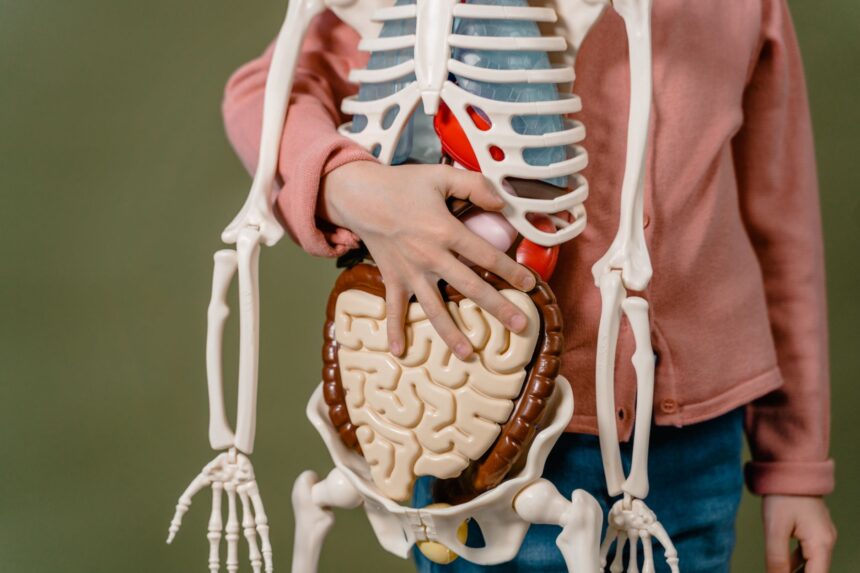
Brain scan and gut microbiome illustration showing intermittent fasting effects
New research reveals intermittent fasting triggers coordinated changes in brain appetite control regions and gut microbiome composition. The findings suggest these biological systems work together to support weight loss success. — Photo: MART PRODUCTION / Pexels
SHARE
1 min read|128 words

Recent neuroimaging research has quantified a previously theoretical connection: intermittent fasting produces measurable, simultaneous changes in both brain activity and gut microbiota composition. Study findings revealed that participants following time-restricted eating protocols demonstrated reduced activity in appetite-control brain regions while experiencing significant shifts toward healthier bacterial profiles in their gastrointestinal systems.

This coordinated biological response appears critical to weight management success. The data suggest that these two systems do not operate independently but rather communicate through a sophisticated gut-brain axis. Participants reported decreased food cravings and enhanced ability to resist calorie-dense foods alongside their microbiota improvements. Understanding this dual mechanism provides valuable insight into why intermittent fasting may be more effective than approaches targeting only dietary restriction or behavioral change alone.

Read the full article on GMJ Newsroom.

Was this article helpful?

GMJ Brief · Key Finding

📰 Read the full article: Intermittent Fasting Rewires Brain and Gut Microbiome, New Study Reveals →

Share This Article
Facebook LinkedIn Bluesky Copy Link Print
GMJ
ByProf. Giorgi Pkhakadze
Follow:
Prof. Giorgi Pkhakadze, MD, MPH, PhD, is Editor-in-Chief of the Georgian Medical Journal and Chair of the Public Health Institute of Georgia (PHIG). He is Professor and Head of the Department of Social and Behavioural Sciences at David Tvildiani Medical University, and Secretary/Treasurer of the UEMS Section of Public Health. ORCID: 0000-0001-7609-4515.

Submit Your Paper →

Georgia's peer-reviewed open-access medical journal. No APC until January 2027.
Submit Manuscript →
WHO and BBC Launch Global Series on Animal-Human Health Connections

WOAH and BBC StoryWorks launch "Animals & Us," a multimedia series exploring…

Middle powers must unite on health data and AI to challenge tech dominance

Countries like Canada, Australia, and South Korea should unite to develop health…

Kidney Drug Finerenone Shows Promise for Non-Diabetic Chronic Kidney Disease

New clinical trial data show finerenone reduces kidney disease progression by 23%…

Submit Your Paper to GMJ

No APC until January 2027.
Submit Manuscript →

You Might Also Like

Scientific illustration of genetic clock mechanisms controlling biological development processes

Genetic Timekeeper Emerges as Orchestrator of Growth and Development

By
Prof. Giorgi Pkhakadze
19/06/2026

Major 6.7 Magnitude Earthquake Strikes Near Palu, Indonesia

By
Prof. Giorgi Pkhakadze
16/06/2026
Global HealthPolicy & Systems

WHO Declares Emergency as Ebola Outbreak Spreads Across Central Africa

By
Prof. Giorgi Pkhakadze
31/05/2026
Medical illustration showing osteomyelitis bone infection diagnosis and treatment advances

Diabetic Patients Face Tenfold Increased Osteomyelitis Risk, Early Detection Critical

By
Prof. Giorgi Pkhakadze
13/06/2026
Facebook Twitter Youtube Instagram
Company
  • Privacy Policy
  • Contact US
  • GMJ Journal
  • Submit Manuscript
  • Editorial Team
  • Register at GMJ
  • Terms of Use

Subscribe to GMJ News — Click here

Join Community
© 2026 Georgian Medical Journal (GMJ). Published by the Public Health Institute of Georgia (PHIG). All rights reserved.
Welcome Back!

Sign in to your account

Username or Email Address
Password

Lost your password?

Not a member? Sign Up