By using this site, you agree to the Privacy Policy and Terms of Use.
Accept
GMJ NewsGMJ NewsGMJ News
  • Latest News
    • GMJ Briefs
  • Podcast & Media
    • Podcast Episodes
    • GMJ Audio
    • GMJ Videos
  • Research Digest
    • New Studies
    • Georgian Research
    • Data & Numbers
  • Policy & Systems
    • Health Policy
    • Quality & Safety
    • Migration & Health
    • Global Health
  • Practice
    • Clinical Updates
    • Case Discussions
    • Pharmacy & Prescribing
    • Ingredients A-Z
  • Perspectives
    • Editorial
    • Explainers
    • Voices
    • Letters
  • GMJ Articles
    • Vol. 1 Issue 2 (2026)
    • Vol. 1 Issue 1 (2026)
    • Pre-Launch Articles (2025)
  • Read the Journal →
  • About GMJ News
Notification Show More
Font ResizerAa
GMJ NewsGMJ News
Font ResizerAa
  • Latest News
    • GMJ Briefs
  • Podcast & Media
    • Podcast Episodes
    • GMJ Audio
    • GMJ Videos
  • Research Digest
    • New Studies
    • Georgian Research
    • Data & Numbers
  • Policy & Systems
    • Health Policy
    • Quality & Safety
    • Migration & Health
    • Global Health
  • Practice
    • Clinical Updates
    • Case Discussions
    • Pharmacy & Prescribing
    • Ingredients A-Z
  • Perspectives
    • Editorial
    • Explainers
    • Voices
    • Letters
  • GMJ Articles
    • Vol. 1 Issue 2 (2026)
    • Vol. 1 Issue 1 (2026)
    • Pre-Launch Articles (2025)
  • Read the Journal →
  • About GMJ News
Follow US
GMJ News > GMJ Briefs > Brain State Control Without Synaptic Change: New Understanding of Astrocyte Function

Brain State Control Without Synaptic Change: New Understanding of Astrocyte Function

GMJ
Last updated: 31/07/2026 21:30
By
Prof. Giorgi Pkhakadze
Share
1 Min Read
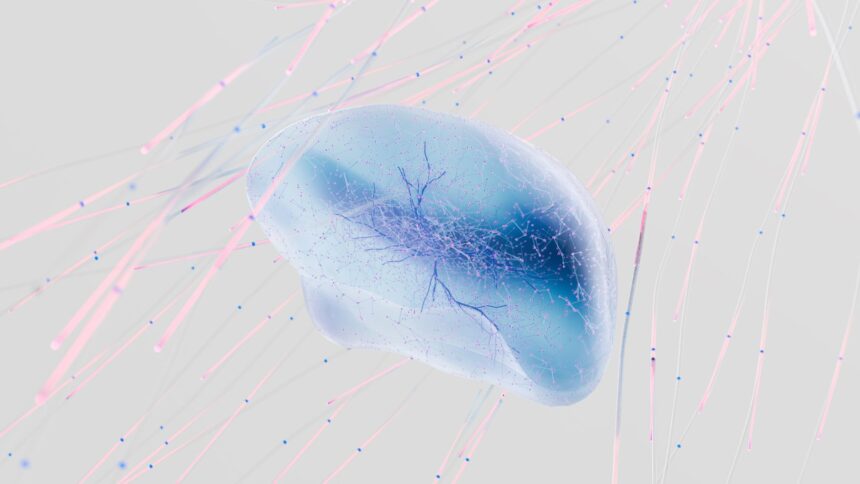
Digital fluorescence microscopy showing coordinated calcium waves propagating across astrocytes in response to glutamate, 1989
A landmark 1989 video by Yale neuroscientist Prof. Stephen J. Smith revealed that astrocytes—long dismissed as passive brain support cells—actively respond to neurotransmitters and regulate neural network states through coordinated calcium signaling, fundamentally reshaping neuroscience. — Photo by Google DeepMind on Pexels (Pexels License)
SHARE
1 min read|127 words

Recent research has established a striking finding: astrocytes regulate critical brain state transitions—including arousal, fatigue, and cognitive engagement—without requiring any structural changes to synaptic connections. This discovery emerged from work spanning three decades, initiated by a landmark 1989 video documenting coordinated calcium waves in astrocytes responding to glutamate stimulation. The implications are profound. Rather than relying solely on neurotransmitter release and synaptic remodeling to maintain consciousness and alertness, the brain appears to employ astrocytes as rapid-response regulators operating on seconds-to-minutes timescales. This mechanism represents a distinct regulatory layer within neural networks, enabling the brain to modulate its overall state and responsiveness with remarkable efficiency. The finding has expanded our understanding of how millions of cells coordinate to produce the dynamic brain states that characterize human cognition.

Was this article helpful?

GMJ Brief · Key Finding

📰 Read the full article: Astrocytes as Brain Regulators: How a 1989 Video Revealed Hidden Neural Intelligence →

Related reference
  • Calcium · Ingredient
Share This Article
Facebook LinkedIn Bluesky Copy Link Print
GMJ
ByProf. Giorgi Pkhakadze
Follow:
Prof. Giorgi Pkhakadze, MD, MPH, PhD, is Editor-in-Chief of the Georgian Medical Journal and Chair of the Public Health Institute of Georgia (PHIG). He is Professor and Head of the Department of Social and Behavioural Sciences at David Tvildiani Medical University, and Secretary/Treasurer of the UEMS Section of Public Health. ORCID: 0000-0001-7609-4515.

Submit Your Paper →

Georgia's peer-reviewed open-access medical journal. No APC until January 2027.
Submit Manuscript →
Australian Hospital Deploys World-First Robotic Surgery Technology for Complex Procedures

Footscray Hospital in Victoria, Australia, has deployed the world's first instance of…

Celebrity Disclosure Renews Focus on Prostate Cancer Screening and Early Detection

Television presenter Jeremy Clarkson's recent disclosure of aggressive prostate cancer and remission…

Magnesium Supplement Claims vs. Evidence: What the Science Actually Shows

Animal studies show tissue-specific magnesium uptake, but human trials have not replicated…

Submit Your Paper to GMJ

No APC until January 2027.
Submit Manuscript →

You Might Also Like

🚨 Green earthquake (Magnitude 7.3M, Depth:18.584km) in Mexico 17/07/2026 14:48 UTC, 60 thousand (in MMI>=VII).

By
Prof. Giorgi Pkhakadze
18/07/2026
Infographic showing magnesium's effects on heart failure, stroke, diabetes, and mortality risk

Magnesium’s Selective Heart Benefits: What a Million-Person Study Reveals

By
Prof. Giorgi Pkhakadze
29/07/2026
Medical professionals reviewing kidney health policy documents and implementation guidelines

850 Million Affected: The Stark Reality Behind WHO’s Kidney Health Resolution

By
Prof. Giorgi Pkhakadze
14/07/2026
Medical illustration showing teclistamab bispecific antibody mechanism in multiple myeloma treatment

Teclistamab Reshapes Multiple Myeloma Treatment Strategy with Earlier-Line Success

By
Prof. Giorgi Pkhakadze
16/06/2026
Facebook Twitter Youtube Instagram
Company
  • Privacy Policy
  • Contact US
  • GMJ Journal
  • Submit Manuscript
  • Editorial Team
  • Register at GMJ
  • Terms of Use

Subscribe to GMJ News — Click here

Join Community
© 2026 Georgian Medical Journal (GMJ). Published by the Public Health Institute of Georgia (PHIG). All rights reserved.
Welcome Back!

Sign in to your account

Username or Email Address
Password

Lost your password?

Not a member? Sign Up