🟡 Preliminary Evidence
An experimental compound called DT-109 has reversed severe fatty liver disease in preclinical animal models by restoring the integrity of the gut barrier and preventing bacterial toxins from entering the bloodstream, according to research released in July 2026. The finding suggests a mechanistic pathway for treating metabolic dysfunction-associated fatty liver disease (MASH) — a condition affecting an estimated 80 million adults in the United States alone — through gut-directed therapeutics rather than direct hepatic intervention.
Key takeaways
- DT-109 reversed severe fatty liver disease in animal models by strengthening the gut epithelial barrier
- The drug prevented bacterial lipopolysaccharides (LPS) from translocating into the bloodstream and damaging liver tissue
- This represents a novel therapeutic strategy targeting the gut-liver axis rather than treating the liver directly
- Clinical trials in humans have not yet been initiated; preclinical evidence is preliminary
The Gut-Liver Axis: How Barrier Dysfunction Drives MASH
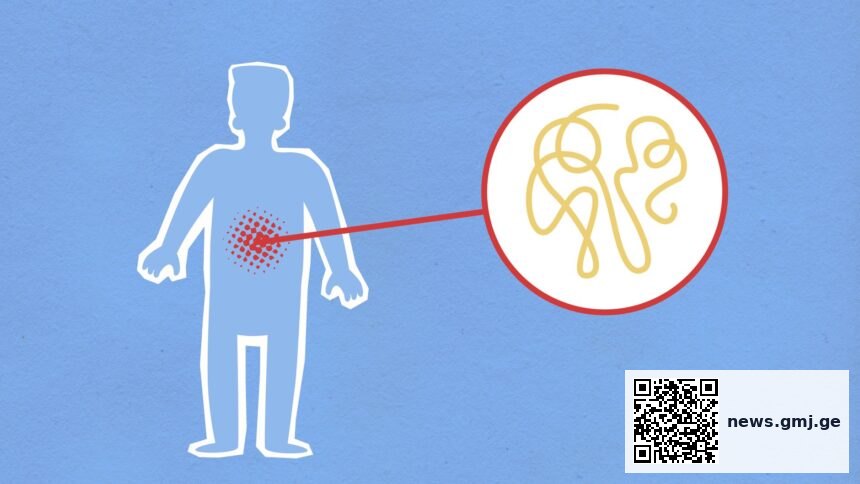
Pathways by which intestinal barrier dysfunction contributes to hepatic lipid accumulation and inflammation
Mechanism diagram based on preclinical animal model data | Georgian Medical Journal News

A Novel Target: The Gut Barrier as Therapeutic Intervention Point
For decades, MASH research focused on direct hepatic mechanisms — insulin resistance, lipid accumulation, mitochondrial dysfunction — with limited therapeutic success. The DT-109 discovery pivots this focus to an upstream mechanism: the intestinal epithelial barrier.
Bacterial lipopolysaccharides (LPS), endotoxins released from gram-negative bacteria in the intestinal lumen, are thought to play a central role in MASH pathogenesis. When the intestinal tight junctions become compromised — a condition sometimes called “leaky gut” — LPS molecules translocate across the epithelium into the portal bloodstream, triggering innate immune activation in the liver. This chronic low-grade endotoxemia drives hepatic inflammation, lipid accumulation, and fibrosis.
DT-109 appears to function by stabilizing claudins and occludin, structural tight junction proteins, according to the preclinical findings. By restoring barrier integrity, the drug prevents LPS translocation without directly modulating lipid metabolism or hepatic inflammation — a mechanistically distinct approach from existing pharmacological strategies. Read more about clinical updates on emerging treatments at GMJ News.
Preclinical Evidence: Reversibility in Animal Models
The experimental data demonstrated not merely halting disease progression, but reversal of established severe fatty liver disease when DT-109 was administered to animal models with advanced MASH. Histological analysis showed reduced hepatic triglyceride content, decreased inflammatory infiltration, and attenuated fibrosis scores compared to untreated controls.
Mechanistic studies confirmed reduced LPS levels in portal blood, restored tight junction protein expression in intestinal tissue, and normalized hepatic gene expression patterns related to lipid and inflammatory pathways. However, these findings derive from controlled laboratory conditions in non-human organisms and do not guarantee similar efficacy or safety in human subjects.
DT-109 reversed severe fatty liver disease in animal models through restoration of gut epithelial barrier integrity, preventing bacterial lipopolysaccharide translocation and the resulting hepatic inflammation and lipid accumulation.
— Preclinical research data released July 2026
The Gut-Liver Axis: Translating Animal Evidence to Human Disease
The gut-liver axis is an emerging framework in hepatology, supported by observational and mechanistic human studies showing associations between intestinal dysbiosis, barrier dysfunction, and MASH severity. Published data from clinical cohort studies have documented reduced tight junction protein expression and increased intestinal permeability in patients with advanced fatty liver disease compared to healthy controls.
The theoretical appeal of DT-109 is clear: if MASH is partly driven by gut barrier dysfunction, then repairing that barrier might halt or reverse disease without the metabolic complications associated with insulin sensitizers or other systemic medications. However, translating this logic from mice or rat models to human MASH requires careful clinical validation.
Key questions remain unresolved in human populations: What proportion of MASH cases are sufficiently driven by barrier dysfunction to respond to DT-109? What is the drug’s safety profile across diverse human genetic backgrounds and microbiota compositions? Can the preclinical reversibility be replicated in humans with established fibrosis or cirrhosis? Explore more on recent research developments affecting clinical practice.
Path to Clinical Translation: Timeline and Regulatory Landscape
As of July 2026, no human clinical trials of DT-109 have been publicly announced or registered on ClinicalTrials.gov, according to available regulatory databases. The transition from preclinical proof-of-concept to Investigational New Drug (IND) application typically requires additional toxicology studies, formulation optimization, and pharmacokinetic characterization in non-human primates — a process lasting 18–36 months under normal circumstances.
The regulatory pathway for MASH therapeutics has accelerated following FDA breakthrough designation for pioglitazone and GLP-1 receptor agonists in non-diabetic MASH. DT-109, if advanced to clinical development, might qualify for expedited pathways given the unmet medical need in a large patient population and the novelty of the gut-directed mechanism.
Current standard-of-care recommendations from the American Association for the Study of Liver Diseases (AASLD) emphasize weight loss, lifestyle modification, and management of metabolic comorbidities. Pioglitazone has demonstrated modest benefit in non-diabetic MASH in randomized controlled trials, though tolerability concerns limit uptake. GLP-1 receptor agonists show promise in observational data but lack robust long-term hepatic outcome data. A mechanistically novel agent like DT-109 could fill an important therapeutic gap if clinical efficacy is confirmed.
What this means
Frequently asked questions
What is the difference between MASH and NAFLD?
MASH (metabolic dysfunction-associated fatty liver disease) is the updated clinical term replacing NAFLD (non-alcoholic fatty liver disease), reflecting the broader metabolic dysfunction underlying the condition rather than merely the absence of alcohol. MASH encompasses hepatic steatosis alongside metabolic features such as obesity, insulin resistance, or dyslipidaemia, and includes the full spectrum from simple steatosis to cirrhosis.
How do bacterial lipopolysaccharides (LPS) damage the liver?
LPS are structural components of gram-negative bacterial cell walls. When the intestinal barrier is compromised, LPS translocate into the portal bloodstream, where they bind toll-like receptor 4 (TLR4) on hepatic innate immune cells (Kupffer cells), triggering inflammatory cytokine production. Chronic LPS-driven inflammation promotes hepatic lipid accumulation, oxidative stress, and progression to fibrosis and cirrhosis.
When will DT-109 be available for human use?
DT-109 is currently in preclinical development and has not yet entered human clinical trials. If development proceeds on a typical timeline, Phase 1 safety studies might begin in 2027–2028, with efficacy data (Phase 2–3) potentially available 3–5 years thereafter. Regulatory approval, if granted, would follow completion and FDA review of Phase 3 trials.
The discovery that DT-109 reverses severe fatty liver disease through gut barrier repair represents a conceptual advance in MASH therapeutics, opening a new mechanistic avenue for intervention. However, the path from preclinical proof-of-concept to clinically validated treatment is long and uncertain. Rigorous Phase 1–3 human trials will be essential to establish safety, efficacy, and optimal patient populations for this novel approach. In the interim, patients with MASH should continue evidence-based lifestyle and pharmacological management, while researchers and regulators prepare the infrastructure for timely clinical evaluation of gut-directed MASH therapeutics.
Source: Experimental drug reverses severe fatty liver disease by repairing the gut, ScienceDaily, July 2026
Was this article helpful?
Disclaimer. This article is health journalism intended for general information and education. It is not medical advice and is not a substitute for professional diagnosis or treatment. Always consult a qualified healthcare provider about your individual circumstances. Full disclaimer →
Related Coverage



Editorial standards. This article was produced under the GMJ News editorial process, with oversight by the GMJ Editorial Board. Our editorial process. Spotted an error? Contact the editorial team.