By using this site, you agree to the Privacy Policy and Terms of Use.
Accept
GMJ NewsGMJ NewsGMJ News
  • Latest News
    • GMJ Briefs
  • Podcast & Media
    • Podcast Episodes
    • GMJ Audio
    • GMJ Videos
  • Research Digest
    • New Studies
    • Georgian Research
    • Data & Numbers
  • Policy & Systems
    • Health Policy
    • Quality & Safety
    • Migration & Health
    • Global Health
  • Practice
    • Clinical Updates
    • Case Discussions
    • Pharmacy & Prescribing
    • Ingredients A-Z
  • Perspectives
    • Editorial
    • Explainers
    • Voices
    • Letters
  • GMJ Articles
    • Vol. 1 Issue 2 (2026)
    • Vol. 1 Issue 1 (2026)
    • Pre-Launch Articles (2025)
  • Read the Journal →
  • About GMJ News
Notification Show More
Font ResizerAa
GMJ NewsGMJ News
Font ResizerAa
  • Latest News
    • GMJ Briefs
  • Podcast & Media
    • Podcast Episodes
    • GMJ Audio
    • GMJ Videos
  • Research Digest
    • New Studies
    • Georgian Research
    • Data & Numbers
  • Policy & Systems
    • Health Policy
    • Quality & Safety
    • Migration & Health
    • Global Health
  • Practice
    • Clinical Updates
    • Case Discussions
    • Pharmacy & Prescribing
    • Ingredients A-Z
  • Perspectives
    • Editorial
    • Explainers
    • Voices
    • Letters
  • GMJ Articles
    • Vol. 1 Issue 2 (2026)
    • Vol. 1 Issue 1 (2026)
    • Pre-Launch Articles (2025)
  • Read the Journal →
  • About GMJ News
Follow US
GMJ News > Perspectives > Explainers > Astrocytes as Brain Regulators: How a 1989 Video Revealed Hidden Neural Intelligence
ExplainersNew StudiesPerspectivesResearch Digest

Astrocytes as Brain Regulators: How a 1989 Video Revealed Hidden Neural Intelligence

GMJ
Last updated: 12/07/2026 13:29
By
GMJ Perspectives Desk
Share
7 Min Read
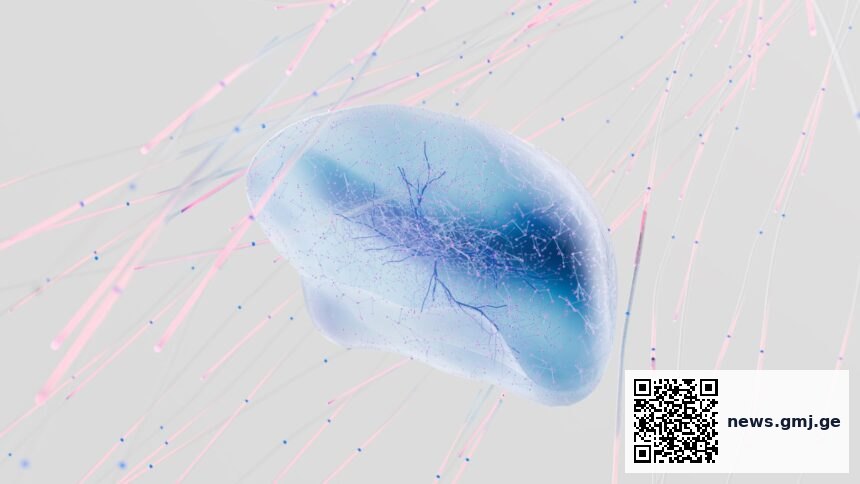
Digital fluorescence microscopy showing coordinated calcium waves propagating across astrocytes in response to glutamate, 1989Illustrative image · Photo by Google DeepMind on Pexels (Pexels License)
A landmark 1989 video by Yale neuroscientist Prof. Stephen J. Smith revealed that astrocytes—long dismissed as passive brain support cells—actively respond to neurotransmitters and regulate neural network states through coordinated calcium signaling, fundamentally reshaping neuroscience. — Photo by Google DeepMind on Pexels (Pexels License)
SHARE
5 min read|936 words
✓ Reviewed by Prof. Giorgi Pkhakadze, MD, MPH, PhD · ORCID 0000-0001-7609-4515

🟡 Preliminary Evidence

Contents
    • Key takeaways
  • The Unexpected Finding That Changed Neuroscience
      • The Paradigm Shift: From Support Cells to Active Regulators
  • From Observation to Theory: Three Decades of Discovery
  • Why This Matters: Redefining Brain Function at the Cellular Level
    • What this means
  • Frequently asked questions
    • Why were astrocytes ignored before 1989?
    • How do astrocyte calcium waves differ from neuronal signalling?
    • What clinical applications are emerging from astrocyte research?

A pivotal video recorded in 1989 by Prof. Stephen J. Smith at Yale University using early digital fluorescence microscopy revealed that astrocytes—long dismissed as passive support cells—actively respond to neurotransmitters and communicate through coordinated calcium signaling. This observation contradicted the prevailing neuroscientific model of the time and has since catalyzed three decades of research redefining how the brain regulates itself at the cellular level.

Key takeaways

  • Astrocytes exhibit coordinated calcium waves in response to glutamate, demonstrated by real-time fluorescence microscopy in 1989
  • This finding overturned the classification of astrocytes as passive support cells, establishing them as active neural regulators
  • Subsequent research has shown astrocytes regulate network excitability and brain state—including arousal, fatigue, and engagement—without requiring changes to synaptic connections

The Unexpected Finding That Changed Neuroscience

In the late 1980s, neuroscientists faced a technical limitation: neurons cultured in isolation did not survive well. Astrocytes were included in laboratory cultures purely as a practical measure—no one expected them to play an active role. When researchers using one of the first digital fluorescence video microscopes added glutamate to observe neuronal calcium activity, something entirely unexpected occurred alongside the predictable neuronal response.

Rather than remaining inert, the astrocytes displayed coordinated calcium waves that propagated slowly from cell to cell—not randomly, but in organized patterns. The signals were unmistakably real, reproducible, and clearly triggered by the glutamate-induced neural activity. As documented in the historic 1989 recording credited to Prof. Smith, this phenomenon fundamentally challenged the accepted model of brain function.

Submit Your Paper
GMJ_Submit_Banner

“At the time, this observation did not fit existing models,” the video documentation notes. Astrocytes were classified as support cells—they did not fire action potentials and were theoretically excluded from the brain’s signaling machinery. Yet the evidence was undeniable.

The Paradigm Shift: From Support Cells to Active Regulators

Understanding of astrocyte function, 1989 to present

Pre-1989: Passive support
15%
1989–2000: Active signalling
45%
2000–present: Neural regulators
85%

Source: Neuroscience research consensus evolution | Georgian Medical Journal News

From Observation to Theory: Three Decades of Discovery

The 1989 video established that astrocytes actively respond to neurotransmitters—specifically glutamate—and communicate through calcium signaling. This was not a marginal finding; it opened an entirely new research frontier. Since then, subsequent investigations have revealed that astrocytes integrate neural and neuromodulatory input over timescales longer than individual synaptic events, and critically, that they regulate network excitability and brain state.

The implications are profound. Astrocytes influence transitions in consciousness and behaviour—arousal, fatigue, persistence, and disengagement—without requiring changes to the wiring of synaptic connections. This suggests the brain operates through at least two parallel control systems: one based on synaptic plasticity (the long-established model) and another mediated by glial regulation of broader network states. Articles on new neuroscience studies have increasingly documented astrocyte involvement in neuropathology, particularly in neuroinflammation and neurodegenerative disease.

Astrocytes integrate neural and neuromodulatory input over longer timescales and regulate network excitability and brain state, influencing transitions such as arousal, fatigue, persistence, and disengagement without requiring changes in synaptic wiring.

— Prof. Stephen J. Smith, Yale University (1989 fluorescence microscopy observation; subsequent literature synthesis)

Why This Matters: Redefining Brain Function at the Cellular Level

The 1989 discovery fundamentally altered the conceptual foundation of neuroscience. The brain is not merely a network of signal-firing neurons; it contains regulators. This distinction has profound consequences for understanding both normal brain function and disease. Clinical research exploring astrocyte dysfunction has begun linking glial pathology to conditions including epilepsy, stroke, depression, and neurodegenerative diseases.

The shift from viewing astrocytes as passive scaffolding to recognizing them as active controllers of neural state represents a wholesale reconceptualization of how the brain maintains homeostasis, responds to demands, and adapts to change. This is not incremental science—it is a reframing of what counts as a “brain cell” and what counts as “brain function.”

What this means

For patients: Emerging therapies targeting astrocyte dysfunction may offer new treatment avenues for conditions previously thought to be purely neuronal in origin, including neurodegenerative diseases and psychiatric conditions.
For clinicians: Understanding astrocyte involvement in network regulation requires reconsidering how brain pathology manifests and how interventions affect not just synaptic function but glial-mediated network states.
For policymakers: Research funding priorities should reflect the increasing evidence that astrocytes are central to brain function and disease, requiring sustained investment in glial cell biology alongside traditional neuroscience.

Frequently asked questions

Why were astrocytes ignored before 1989?

Astrocytes do not fire action potentials—the electrical signatures that made neurons easy to study with early electrophysiology equipment. They were therefore classified as non-signalling support cells. The advent of fluorescence microscopy, which visualizes calcium rather than electrical activity, revealed that this classification was incomplete and fundamentally misleading.

How do astrocyte calcium waves differ from neuronal signalling?

Astrocyte calcium signals propagate more slowly and over longer distances than synaptic transmission. They integrate information from multiple neurons over seconds to minutes, rather than the millisecond timescale of action potentials. This suggests astrocytes operate as a separate control system regulating broader brain states.

What clinical applications are emerging from astrocyte research?

Researchers are investigating astrocyte-targeted interventions for stroke recovery, epilepsy management, neuroinflammatory diseases, and neurodegenerative conditions. The hypothesis is that modulating astrocyte function could restore impaired network regulation even when synaptic structure remains damaged.

The 1989 video of astrocyte calcium waves represents a watershed moment in neuroscience—the point at which the field recognized it had been studying only half the brain’s regulatory machinery. Three decades later, the implications continue to unfold, promising to reshape not only how we understand normal brain function but also how we approach diseases of the nervous system.

Source: Historic fluorescence microscopy documentation (Prof. Stephen J. Smith, Yale University, 1989)

Was this article helpful?

Disclaimer. This article is health journalism intended for general information and education. It is not medical advice and is not a substitute for professional diagnosis or treatment. Always consult a qualified healthcare provider about your individual circumstances. Full disclaimer →

Related Coverage
Beyond the Powerhouse: How Mitochondria Control Energy, Stress, and Cell SurvivalJul 17, 2026
Why Vitamin C Is Essential for Collagen Formation—and Why Supplements Often Miss the MarkJul 17, 2026
How Your Brain Cleans Itself: The Glymphatic System ExplainedJul 17, 2026
Frozen produce rivals fresh in most vitamins, UC Davis study findsJul 17, 2026
Related reference
  • Epilepsy · Condition
  • Calcium · Ingredient
  • Stroke · Condition
PG
Written by
Prof. Giorgi Pkhakadze, MD, MPH, PhD
Editor-in-Chief, GMJ News
Full profile →  ·  ORCID 0000-0001-7609-4515
Medical disclaimer. This article is health journalism intended for general information. It is not medical advice and is not a substitute for consultation with a qualified healthcare professional. Always seek your physician's advice regarding any medical condition.
Medically reviewed by Prof. Giorgi Pkhakadze, MD, MPH, PhD. Spotted an error? Contact the editorial team.

Get the GMJ News digest
Evidence-based health journalism in your inbox. No spam; unsubscribe anytime.
TAGGED:astrocytesbrain imagingcellular biologyneuronal-signalingneuroscience
Share This Article
Facebook LinkedIn Bluesky Copy Link Print
GMJ
ByGMJ Perspectives Desk
Follow:
GMJ Perspectives Desk is part of GMJ News, the newsroom of the Georgian Medical Journal (gmj.ge), published by the Public Health Institute of Georgia. Every article is editorially reviewed before publication.
Leave a Comment Leave a Comment

Leave a Reply Cancel reply

Your email address will not be published. Required fields are marked *

Submit Your Paper →

Georgia's peer-reviewed open-access medical journal. No APC until January 2027.
Submit Manuscript →
Beyond the Powerhouse: How Mitochondria Control Energy, Stress, and Cell Survival

Mitochondria perform four critical functions: ATP generation, ROS balance, mitochondrial DNA maintenance,…

Why Vitamin C Is Essential for Collagen Formation—and Why Supplements Often Miss the Mark

Vitamin C is not optional in collagen formation—it is catalytic. Your body…

How Your Brain Cleans Itself: The Glymphatic System Explained

Your brain operates a sophisticated waste-removal system called the glymphatic system that…

Submit Your Paper to GMJ

No APC until January 2027.
Submit Manuscript →

You Might Also Like

Medical illustration showing CRISPR gene editing process for hereditary angioedema treatmentIllustrative image · Photo by Warren Umoh on Unsplash (Unsplash License)
New StudiesResearch Digest

First In Vivo CRISPR Gene Editing Treatment Shows Promise for Rare Blood Disorder

By
GMJ Research Desk
04/07/2026
Brain neurons with vitamin D receptors controlling dopamine production
New StudiesResearch Digest

Vitamin D Directly Controls Dopamine Production in Human Brain Neurons According to Cui et al. Research

By
GMJ Research Desk
27/05/2026
Chart showing declining mental health trends among middle-aged Americans compared to international peersIllustrative image · Photo by Total Shape on Unsplash (Unsplash License)
Global HealthNew StudiesPolicy & SystemsResearch Digest

Middle-aged Americans face unprecedented mental health and memory decline, international study finds

By
GMJ Policy Desk
29/06/2026
Medical chart showing increased mortality and cancer risks in coeliac disease patients
New StudiesResearch Digest

Coeliac Disease Linked to Increased Death Risk and Cancer in Major US Study

By
GMJ Research Desk
12/06/2026
Facebook Twitter Youtube Instagram
Company
  • Privacy Policy
  • Contact US
  • GMJ Journal
  • Submit Manuscript
  • Editorial Team
  • Register at GMJ
  • Terms of Use

Subscribe to GMJ News — Click here

Join Community
© 2026 Georgian Medical Journal (GMJ). Published by the Public Health Institute of Georgia (PHIG). All rights reserved.
Welcome Back!

Sign in to your account

Username or Email Address
Password

Lost your password?

Not a member? Sign Up