By using this site, you agree to the Privacy Policy and Terms of Use.
Accept
GMJ NewsGMJ NewsGMJ News
  • Latest News
    • GMJ Briefs
  • Podcast & Media
    • Podcast Episodes
    • GMJ Audio
    • GMJ Videos
  • Research Digest
    • New Studies
    • Georgian Research
    • Data & Numbers
  • Policy & Systems
    • Health Policy
    • Quality & Safety
    • Migration & Health
    • Global Health
  • Practice
    • Clinical Updates
    • Case Discussions
    • Pharmacy & Prescribing
    • Ingredients A-Z
  • Perspectives
    • Editorial
    • Explainers
    • Voices
    • Letters
  • GMJ Articles
    • Vol. 1 Issue 2 (2026)
    • Vol. 1 Issue 1 (2026)
    • Pre-Launch Articles (2025)
  • Read the Journal →
  • About GMJ News
Notification Show More
Font ResizerAa
GMJ NewsGMJ News
Font ResizerAa
  • Latest News
    • GMJ Briefs
  • Podcast & Media
    • Podcast Episodes
    • GMJ Audio
    • GMJ Videos
  • Research Digest
    • New Studies
    • Georgian Research
    • Data & Numbers
  • Policy & Systems
    • Health Policy
    • Quality & Safety
    • Migration & Health
    • Global Health
  • Practice
    • Clinical Updates
    • Case Discussions
    • Pharmacy & Prescribing
    • Ingredients A-Z
  • Perspectives
    • Editorial
    • Explainers
    • Voices
    • Letters
  • GMJ Articles
    • Vol. 1 Issue 2 (2026)
    • Vol. 1 Issue 1 (2026)
    • Pre-Launch Articles (2025)
  • Read the Journal →
  • About GMJ News
Follow US
GMJ News > GMJ Briefs > CAR-T Cell Therapy Emerges as Game-Changer for Autoimmune Disease Treatment

CAR-T Cell Therapy Emerges as Game-Changer for Autoimmune Disease Treatment

GMJ
Last updated: 03/06/2026 11:01
By
Prof. Giorgi Pkhakadze
Share
1 Min Read
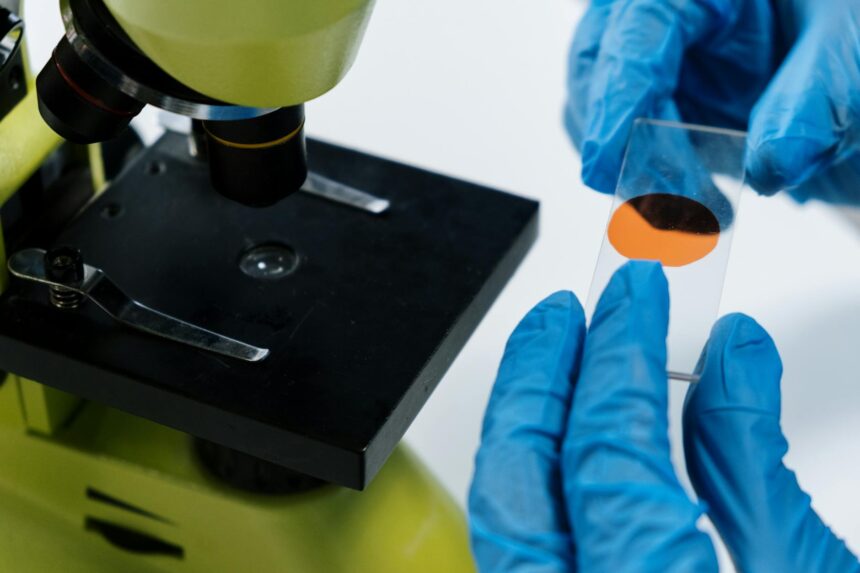
CAR-T cell attacking autoimmune B cells under microscope
CAR-T cell therapy shows remarkable promise for 'resetting' immune systems in autoimmune disease patients, with clinical trials demonstrating 68-85% remission rates. New research reveals how these treatments eliminate pathogenic B cells while preserving immune renewal capacity. — Photo: cottonbro studio / Pexels
SHARE
1 min read|130 words

Chimeric antigen receptor T cell therapy, originally developed for blood cancers, is demonstrating unprecedented efficacy in treating severe autoimmune diseases by fundamentally resetting immune function. Unlike conventional immunosuppressive approaches that broadly dampen the entire immune system, CAR-T therapy specifically targets and eliminates CD19-positive B cells responsible for autoimmune attacks while preserving the immune system’s capacity for renewal.

Clinical trials have delivered remarkable results across multiple conditions, with systemic lupus erythematosus patients achieving an 85% remission rate. The therapy works by genetically modifying patients’ own T cells to recognize and destroy pathogenic B cells, effectively eliminating the pathological immune memory that drives autoimmune disease. Most significantly, clinical evidence shows sustained remissions lasting 12-24 months following a single treatment cycle, suggesting potential long-term disease control.

Read the full article on GMJ Newsroom.

Was this article helpful?

GMJ Brief · Announcement

📰 Read the full article: CAR-T Cell Therapy Shows Promise for ‘Resetting’ Autoimmune Disease →

Related reference
  • Systemic Lupus Erythematosus · Condition
Share This Article
Facebook LinkedIn Bluesky Copy Link Print
GMJ
ByProf. Giorgi Pkhakadze
Follow:
Prof. Giorgi Pkhakadze, MD, MPH, PhD, is Editor-in-Chief of the Georgian Medical Journal and Chair of the Public Health Institute of Georgia (PHIG). He is Professor and Head of the Department of Social and Behavioural Sciences at David Tvildiani Medical University, and Secretary/Treasurer of the UEMS Section of Public Health. ORCID: 0000-0001-7609-4515.

Submit Your Paper →

Georgia's peer-reviewed open-access medical journal. No APC until January 2027.
Submit Manuscript →
Why the ‘2pm coffee cutoff’ is a myth: genetics and lifestyle create a 15-fold range in caffeine metabolism

A new systematic review reveals that caffeine half-life varies 15- to 40-fold…

Resistant Starch and Gut Health: Why Fiber Type Matters More Than You Think

Resistant starch works through a specific bacterial fermentation pathway that other fibers…

The 30-gram protein myth: why recent evidence challenges the fitness industry’s most durable claim

For over a decade, the fitness industry has promoted a rule: your…

Submit Your Paper to GMJ

No APC until January 2027.
Submit Manuscript →

You Might Also Like

Medical illustration showing multiple myeloma cells and treatment timeline concepts

NEJM Editorial Challenges Traditional Early Relapse Definitions in Multiple Myeloma

By
Prof. Giorgi Pkhakadze
07/06/2026
MHRA medicines defect notification document for denosumab injection labelling error

MHRA Issues Class 4 Alert for Ponlimsi Denosumab Following Carton Labelling Discrepancy

By
Prof. Giorgi Pkhakadze
22/06/2026

EBOLA OUTBREAK – DRC/UGANDA CROSS-BORDER TRANSMISSION WITH WHO PHEIC DECLARATION

By
Prof. Giorgi Pkhakadze
31/05/2026
Medical ultrasound equipment used for intestinal imaging in Crohn's disease monitoring

Post-Surgical Crohn’s Recurrence Rates High, Yet Ultrasound Monitoring Remains Underutilized

By
Prof. Giorgi Pkhakadze
13/06/2026
Facebook Twitter Youtube Instagram
Company
  • Privacy Policy
  • Contact US
  • GMJ Journal
  • Submit Manuscript
  • Editorial Team
  • Register at GMJ
  • Terms of Use

Subscribe to GMJ News — Click here

Join Community
© 2026 Georgian Medical Journal (GMJ). Published by the Public Health Institute of Georgia (PHIG). All rights reserved.
Welcome Back!

Sign in to your account

Username or Email Address
Password

Lost your password?

Not a member? Sign Up