By using this site, you agree to the Privacy Policy and Terms of Use.
Accept
GMJ NewsGMJ NewsGMJ News
  • Latest News
    • GMJ Briefs
  • Podcast & Media
    • Podcast Episodes
    • GMJ Audio
    • GMJ Videos
  • Research Digest
    • New Studies
    • Georgian Research
    • Data & Numbers
  • Policy & Systems
    • Health Policy
    • Quality & Safety
    • Migration & Health
    • Global Health
  • Practice
    • Clinical Updates
    • Case Discussions
    • Pharmacy & Prescribing
    • Ingredients A-Z
  • Perspectives
    • Editorial
    • Explainers
    • Voices
    • Letters
  • GMJ Articles
    • Vol. 1 Issue 2 (2026)
    • Vol. 1 Issue 1 (2026)
    • Pre-Launch Articles (2025)
  • Read the Journal →
  • About GMJ News
Notification Show More
Font ResizerAa
GMJ NewsGMJ News
Font ResizerAa
  • Latest News
    • GMJ Briefs
  • Podcast & Media
    • Podcast Episodes
    • GMJ Audio
    • GMJ Videos
  • Research Digest
    • New Studies
    • Georgian Research
    • Data & Numbers
  • Policy & Systems
    • Health Policy
    • Quality & Safety
    • Migration & Health
    • Global Health
  • Practice
    • Clinical Updates
    • Case Discussions
    • Pharmacy & Prescribing
    • Ingredients A-Z
  • Perspectives
    • Editorial
    • Explainers
    • Voices
    • Letters
  • GMJ Articles
    • Vol. 1 Issue 2 (2026)
    • Vol. 1 Issue 1 (2026)
    • Pre-Launch Articles (2025)
  • Read the Journal →
  • About GMJ News
Follow US
GMJ News > GMJ Briefs > Climate Crisis Deepens Global Education Inequity for Vulnerable Children

Climate Crisis Deepens Global Education Inequity for Vulnerable Children

GMJ
Last updated: 19/06/2026 04:11
By
Prof. Giorgi Pkhakadze
Share
1 Min Read
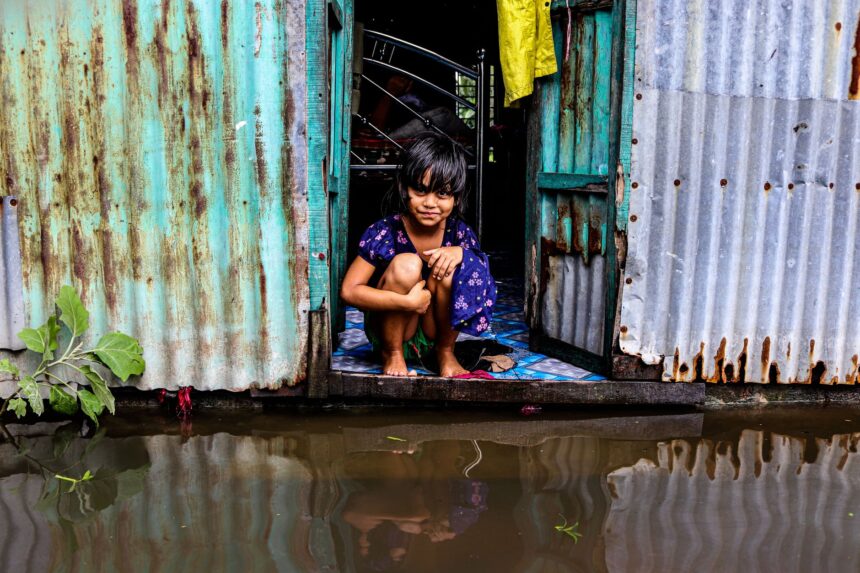
Children walking to damaged school building after climate disaster, symbolizing educational disruption
Climate change is systematically disrupting education for 617 million children worldwide, with those living in poverty experiencing the most severe learning impacts. New research reveals how extreme weather creates lasting educational inequities. — Photo: Najmul Hasan Mahedi / Pexels
SHARE
1 min read|131 words

A comprehensive review published in The Lancet Public Health reveals that climate change is systematically disrupting education systems worldwide, with children living in poverty experiencing the most severe consequences. Extreme weather events, rising temperatures, and environmental degradation are creating cascading effects that compromise academic performance and developmental outcomes for 617 million children globally who already lack basic literacy and numeracy skills.

The research, analyzing 29 studies across 18 countries between 2010 and 2024, documents alarming disparities in climate impact by household income. Children in extreme poverty face an 89% rate of learning disruption compared to just 12% in high-income households. Particularly concerning is the finding that girls are 40% more likely to drop out permanently following climate-related disruptions, further entrenching educational inequities and limiting economic opportunities for the world’s most vulnerable populations.

Read the full article on GMJ Newsroom.

Was this article helpful?

GMJ Brief · Announcement

📰 Read the full article: Climate Change Disrupts Education for 617 Million Children in Poverty Worldwide →

Related reference
  • Iron · Ingredient
Share This Article
Facebook LinkedIn Bluesky Copy Link Print
GMJ
ByProf. Giorgi Pkhakadze
Follow:
Prof. Giorgi Pkhakadze, MD, MPH, PhD, is Editor-in-Chief of the Georgian Medical Journal and Chair of the Public Health Institute of Georgia (PHIG). He is Professor and Head of the Department of Social and Behavioural Sciences at David Tvildiani Medical University, and Secretary/Treasurer of the UEMS Section of Public Health. ORCID: 0000-0001-7609-4515.

Submit Your Paper →

Georgia's peer-reviewed open-access medical journal. No APC until January 2027.
Submit Manuscript →
Ceramide Metabolism May Explain Racial Disparities in Prostate Cancer Drug Response

New research reveals that differences in ceramide lipid metabolism between Black and…

Wearable Ultrasound Patch for High-Risk Pregnancies Shows Promise in UC San Diego Trial

UC San Diego engineers develop wearable ultrasound patch for continuous fetal monitoring…

Rare Earth Mining Creates Hidden Public Health Crisis in Myanmar

Rare earth mining operations in Myanmar are creating an unmonitored environmental health…

Submit Your Paper to GMJ

No APC until January 2027.
Submit Manuscript →

You Might Also Like

Global HealthPolicy & Systems

WHO Deploys Community-Centred Response to Rare Ebola Strain Outbreak in Eastern DRC

By
Prof. Giorgi Pkhakadze
26/05/2026
Clinical UpdatesPolicy & SystemsPracticeQuality & Safety

CDC Issues Alert on Growing Salmonella Outbreaks Linked to Moringa Leaf Products

By
Prof. Giorgi Pkhakadze
03/06/2026
Nurse speaking compassionately with psychiatric patient in hospital setting

Relationship-Centered Care Transforms Psychiatric Outcomes: Major NHS Study Reveals 30% Reduction in Hospital Stays

By
Prof. Giorgi Pkhakadze
17/06/2026
Athlete resting during training break with fitness retention data visualization

Fear of Training Loss May Be Worse Than Reality, Studies Suggest

By
Prof. Giorgi Pkhakadze
24/05/2026
Facebook Twitter Youtube Instagram
Company
  • Privacy Policy
  • Contact US
  • GMJ Journal
  • Submit Manuscript
  • Editorial Team
  • Register at GMJ
  • Terms of Use

Subscribe to GMJ News — Click here

Join Community
© 2026 Georgian Medical Journal (GMJ). Published by the Public Health Institute of Georgia (PHIG). All rights reserved.
Welcome Back!

Sign in to your account

Username or Email Address
Password

Lost your password?

Not a member? Sign Up