By using this site, you agree to the Privacy Policy and Terms of Use.
Accept
GMJ NewsGMJ NewsGMJ News
  • Latest News
    • GMJ Briefs
  • Podcast & Media
    • Podcast Episodes
    • GMJ Audio
    • GMJ Videos
  • Research Digest
    • New Studies
    • Georgian Research
    • Data & Numbers
  • Policy & Systems
    • Health Policy
    • Quality & Safety
    • Migration & Health
    • Global Health
  • Practice
    • Clinical Updates
    • Case Discussions
    • Pharmacy & Prescribing
    • Ingredients A-Z
  • Perspectives
    • Editorial
    • Explainers
    • Voices
    • Letters
  • GMJ Articles
    • Vol. 1 Issue 2 (2026)
    • Vol. 1 Issue 1 (2026)
    • Pre-Launch Articles (2025)
  • Read the Journal →
  • About GMJ News
Notification Show More
Font ResizerAa
GMJ NewsGMJ News
Font ResizerAa
  • Latest News
    • GMJ Briefs
  • Podcast & Media
    • Podcast Episodes
    • GMJ Audio
    • GMJ Videos
  • Research Digest
    • New Studies
    • Georgian Research
    • Data & Numbers
  • Policy & Systems
    • Health Policy
    • Quality & Safety
    • Migration & Health
    • Global Health
  • Practice
    • Clinical Updates
    • Case Discussions
    • Pharmacy & Prescribing
    • Ingredients A-Z
  • Perspectives
    • Editorial
    • Explainers
    • Voices
    • Letters
  • GMJ Articles
    • Vol. 1 Issue 2 (2026)
    • Vol. 1 Issue 1 (2026)
    • Pre-Launch Articles (2025)
  • Read the Journal →
  • About GMJ News
Follow US
GMJ News > GMJ Briefs > Data-Driven Insight: Quantifying the Neural Processing Gap in Aging Balance Control

Data-Driven Insight: Quantifying the Neural Processing Gap in Aging Balance Control

GMJ
Last updated: 20/06/2026 18:51
By
Prof. Giorgi Pkhakadze
Share
1 Min Read
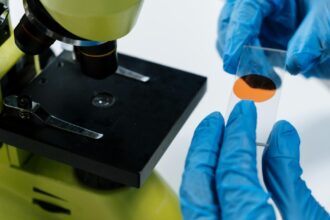
Brain scan showing neural processing differences between older and younger adults during balance tasks
New neuroscience research reveals that aging brains require nearly 50% longer to process balance information compared to younger adults. This first direct measurement of neural processing delays helps explain increased fall risk in older populations. — Photo: AI25.Studio AI GENERATIVE / Pexels
SHARE
1 min read|132 words

A new comparative neuroimaging study provides concrete measurements of age-related neural processing differences in balance control. The research reveals that older adults demonstrate neural response times of approximately 225 milliseconds for balance-related processing, compared to 150 milliseconds in younger adults—a significant 50% increase in processing delay.

This quantifiable difference directly correlates with increased fall risk in aging populations, offering the first direct brain-level evidence explaining why older adults are more prone to balance-related injuries. Previous research had relied on indirect measurement techniques, such as dual-task paradigms, making this direct neural measurement a methodological advancement in geriatric neuroscience. The specific data on processing time delays provides a foundation for future research into targeted interventions aimed at improving neural efficiency and reducing fall-related morbidity and mortality in older adults.

Read the full article on GMJ Newsroom.

Was this article helpful?
GMJ Brief · Key Finding

📰 Read the full article: Aging Brain Takes 50% Longer to Maintain Balance, New Neuroscience Study Reveals →

Share This Article
Facebook LinkedIn Bluesky Copy Link Print
GMJ
ByProf. Giorgi Pkhakadze
Follow:
Prof. Giorgi Pkhakadze, MD, MPH, PhD, is Editor-in-Chief of the Georgian Medical Journal and Chair of the Public Health Institute of Georgia (PHIG). He is Professor and Head of the Department of Social and Behavioural Sciences at David Tvildiani Medical University, and Secretary/Treasurer of the UEMS Section of Public Health. ORCID: 0000-0001-7609-4515.

Submit Your Paper →

Georgia's peer-reviewed open-access medical journal. No APC until January 2027.
Submit Manuscript →
AI-Guided Ultrasound Predicts Bubble Collapse to Improve Brain Barrier Opening

Researchers at Georgia Institute of Technology have developed an AI system that…

Orforglipron Shows Clinically Significant HbA1c Reductions in Type 2 Diabetes

Two phase III randomised controlled trials presented at the American Diabetes Association…

Plasma protein signatures reveal how individual cell types age and predict disease risk

Plasma proteomics can measure biological aging independently in 40+ cell types, with…

Submit Your Paper to GMJ

No APC until January 2027.
Submit Manuscript →

You Might Also Like

Dexcom G7 continuous glucose monitoring sensor with FDA safety alert overlay

Manufacturing Breach Alert: Stolen Dexcom G7 Sensors Flagged by FDA

By
Prof. Giorgi Pkhakadze
14/06/2026
Clinical UpdatesPolicy & SystemsPracticeQuality & Safety

Hologic Recalls BioZorb 3D Markers Over Patient Complication Risk

By
Prof. Giorgi Pkhakadze
02/07/2026
Scientific illustration showing genetic diversity mapping across Indigenous American populations

Decade-Long Genetic Study Reveals How Indigenous Americans Adapted to Extreme Environments

By
Prof. Giorgi Pkhakadze
06/06/2026
Microscopic brain tumor tissue sample being analyzed by AI diagnostic system

German AI System Transforms Brain Tumor Diagnosis Into Minutes, Not Weeks

By
Prof. Giorgi Pkhakadze
02/07/2026
Facebook Twitter Youtube Instagram
Company
  • Privacy Policy
  • Contact US
  • GMJ Journal
  • Submit Manuscript
  • Editorial Team
  • Register at GMJ
  • Terms of Use

Subscribe to GMJ News — Click here

Join Community
© 2026 Georgian Medical Journal (GMJ). Published by the Public Health Institute of Georgia (PHIG). All rights reserved.
Welcome Back!

Sign in to your account

Username or Email Address
Password

Lost your password?

Not a member? Sign Up