By using this site, you agree to the Privacy Policy and Terms of Use.
Accept
GMJ NewsGMJ NewsGMJ News
  • Latest News
    • GMJ Briefs
  • Podcast & Media
    • Podcast Episodes
    • GMJ Audio
    • GMJ Videos
  • Research Digest
    • New Studies
    • Georgian Research
    • Data & Numbers
  • Policy & Systems
    • Health Policy
    • Quality & Safety
    • Migration & Health
    • Global Health
  • Practice
    • Clinical Updates
    • Case Discussions
    • Pharmacy & Prescribing
    • Ingredients A-Z
  • Perspectives
    • Editorial
    • Explainers
    • Voices
    • Letters
  • GMJ Articles
    • Vol. 1 Issue 2 (2026)
    • Vol. 1 Issue 1 (2026)
    • Pre-Launch Articles (2025)
  • Read the Journal →
  • About GMJ News
Notification Show More
Font ResizerAa
GMJ NewsGMJ News
Font ResizerAa
  • Latest News
    • GMJ Briefs
  • Podcast & Media
    • Podcast Episodes
    • GMJ Audio
    • GMJ Videos
  • Research Digest
    • New Studies
    • Georgian Research
    • Data & Numbers
  • Policy & Systems
    • Health Policy
    • Quality & Safety
    • Migration & Health
    • Global Health
  • Practice
    • Clinical Updates
    • Case Discussions
    • Pharmacy & Prescribing
    • Ingredients A-Z
  • Perspectives
    • Editorial
    • Explainers
    • Voices
    • Letters
  • GMJ Articles
    • Vol. 1 Issue 2 (2026)
    • Vol. 1 Issue 1 (2026)
    • Pre-Launch Articles (2025)
  • Read the Journal →
  • About GMJ News
Follow US
GMJ News > GMJ Briefs > German AI System Transforms Brain Tumor Diagnosis Into Minutes, Not Weeks

German AI System Transforms Brain Tumor Diagnosis Into Minutes, Not Weeks

GMJ
Last updated: 02/07/2026 02:43
By
Prof. Giorgi Pkhakadze
Share
1 Min Read
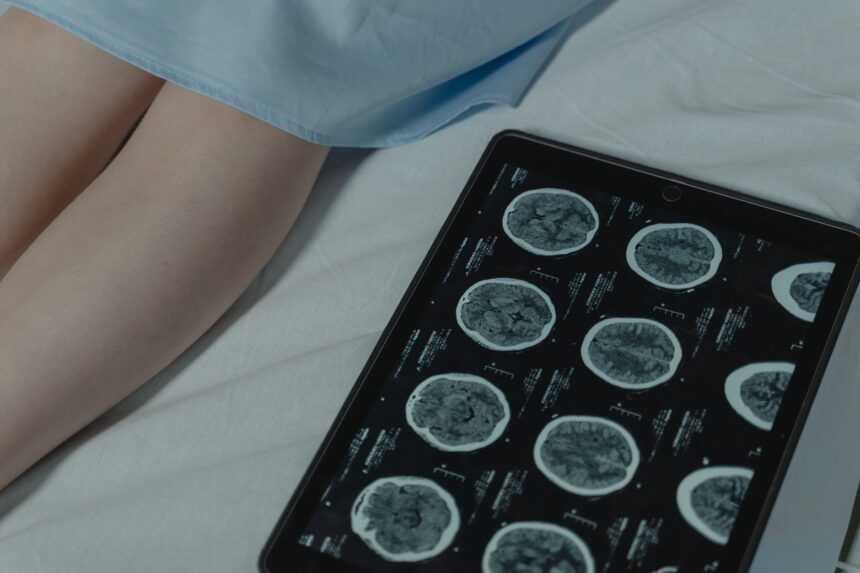
Microscopic brain tumor tissue sample being analyzed by AI diagnostic system
German researchers developed an AI system that accurately classifies 100+ brain tumor molecular subtypes in minutes using standard tissue staining, potentially transforming diagnosis from weeks to real-time. — Photo by Tima Miroshnichenko on Pexels (Pexels License)
SHARE
1 min read|151 words

Researchers at the German Cancer Research Center (DKFZ) in Heidelberg have unveiled a game-changing artificial intelligence system that diagnoses over 100 molecular subtypes of brain tumors with 95% accuracy in approximately five minutes. Published in Nature Cancer, this breakthrough leverages standard hematoxylin and eosin (H&E) tissue staining—a technique available in pathology labs worldwide for more than a century—eliminating the need for expensive molecular testing infrastructure.

The study, which analyzed 2,334 tumor samples across multiple centers, demonstrates that the AI system can deliver comprehensive tumor classification during surgery itself, enabling real-time surgical decision-making. This innovation has significant implications for global healthcare equity, particularly in resource-limited regions where molecular diagnostic capabilities remain inaccessible. By reducing diagnosis time from 2-6 weeks to just minutes while maintaining exceptional accuracy, this technology could democratize precision brain tumor diagnosis worldwide and fundamentally reshape how oncologists approach CNS tumor management.

Read the full article on GMJ Newsroom.

Was this article helpful?

GMJ Brief · Announcement

📰 Read the full article: AI System Diagnoses 100+ Brain Tumor Subtypes in Minutes With 95% Accuracy →

Share This Article
Facebook LinkedIn Bluesky Copy Link Print
GMJ
ByProf. Giorgi Pkhakadze
Follow:
Prof. Giorgi Pkhakadze, MD, MPH, PhD, is Editor-in-Chief of the Georgian Medical Journal and Chair of the Public Health Institute of Georgia (PHIG). He is Professor and Head of the Department of Social and Behavioural Sciences at David Tvildiani Medical University, and Secretary/Treasurer of the UEMS Section of Public Health. ORCID: 0000-0001-7609-4515.

Submit Your Paper →

Georgia's peer-reviewed open-access medical journal. No APC until January 2027.
Submit Manuscript →
Trump Administration Removes Job Protections for Thousands of Federal Health Workers

Thousands of federal health workers at HHS agencies including CDC, FDA, and…

Rare Lymphatic-Urinary Fistula Causes Milky Urine in NEJM Case Report

A rare case of chyluria caused by a lymphatic-urinary fistula demonstrates how…

Gene Therapy Shows Promise for Inherited Cholesterol Disorder in First-in-Human Trial

First-in-human gene therapy trial shows preliminary safety and efficacy for treating homozygous…

Submit Your Paper to GMJ

No APC until January 2027.
Submit Manuscript →

You Might Also Like

Global HealthPolicy & Systems

WHO Declares International Emergency as Ebola Crosses from DRC into Uganda

By
Prof. Giorgi Pkhakadze
31/05/2026
Psychologist demonstrating stress management techniques in clinical setting

Clinical Evidence Validates Psychologist’s Stress Management Framework

By
Prof. Giorgi Pkhakadze
23/06/2026
Various magnesium supplement bottles and capsules arranged on laboratory bench

Three Evidence-Based Truths About Magnesium Supplements

By
Prof. Giorgi Pkhakadze
26/06/2026
Medical illustration showing targeted cancer therapy mechanism

Savolitinib Advances Precision Treatment Options for MET-Amplified Gastric Cancer

By
Prof. Giorgi Pkhakadze
09/06/2026
Facebook Twitter Youtube Instagram
Company
  • Privacy Policy
  • Contact US
  • GMJ Journal
  • Submit Manuscript
  • Editorial Team
  • Register at GMJ
  • Terms of Use

Subscribe to GMJ News — Click here

Join Community
© 2026 Georgian Medical Journal (GMJ). Published by the Public Health Institute of Georgia (PHIG). All rights reserved.
Welcome Back!

Sign in to your account

Username or Email Address
Password

Lost your password?

Not a member? Sign Up