By using this site, you agree to the Privacy Policy and Terms of Use.
Accept
GMJ NewsGMJ NewsGMJ News
  • Latest News
    • GMJ Briefs
  • Podcast & Media
    • Podcast Episodes
    • GMJ Audio
    • GMJ Videos
  • Research Digest
    • New Studies
    • Georgian Research
    • Data & Numbers
  • Policy & Systems
    • Health Policy
    • Quality & Safety
    • Migration & Health
    • Global Health
  • Practice
    • Clinical Updates
    • Case Discussions
    • Pharmacy & Prescribing
    • Ingredients A-Z
  • Perspectives
    • Editorial
    • Explainers
    • Voices
    • Letters
  • GMJ Articles
    • Vol. 1 Issue 2 (2026)
    • Vol. 1 Issue 1 (2026)
    • Pre-Launch Articles (2025)
  • Read the Journal →
  • About GMJ News
Notification Show More
Font ResizerAa
GMJ NewsGMJ News
Font ResizerAa
  • Latest News
    • GMJ Briefs
  • Podcast & Media
    • Podcast Episodes
    • GMJ Audio
    • GMJ Videos
  • Research Digest
    • New Studies
    • Georgian Research
    • Data & Numbers
  • Policy & Systems
    • Health Policy
    • Quality & Safety
    • Migration & Health
    • Global Health
  • Practice
    • Clinical Updates
    • Case Discussions
    • Pharmacy & Prescribing
    • Ingredients A-Z
  • Perspectives
    • Editorial
    • Explainers
    • Voices
    • Letters
  • GMJ Articles
    • Vol. 1 Issue 2 (2026)
    • Vol. 1 Issue 1 (2026)
    • Pre-Launch Articles (2025)
  • Read the Journal →
  • About GMJ News
Follow US
GMJ News > GMJ Briefs > Depression Linked to Critical DHA Deficiency in Brain Tissue

Depression Linked to Critical DHA Deficiency in Brain Tissue

GMJ
Last updated: 04/08/2026 01:29
By
Prof. Giorgi Pkhakadze
Share
1 Min Read
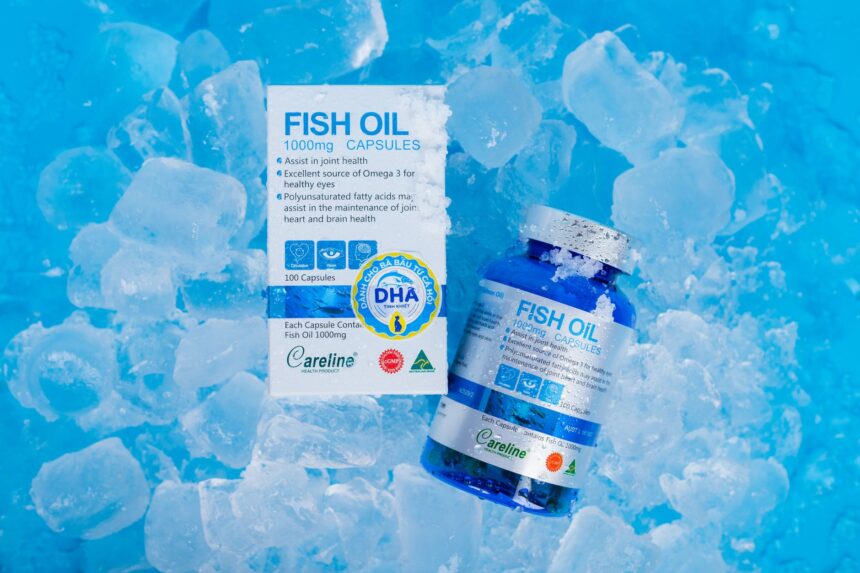
Diagram of neuronal membrane showing DHA molecule and six double bonds creating membrane fluidity
DHA is not a brain supplement—it is a fundamental structural component of brain tissue, comprising 40% of all brain polyunsaturated fatty acids. Patients with depression show 22% lower DHA in the orbitofrontal cortex, suggesting that brain architecture itself may be altered in mood disorders. — Photo by Hoàng Ngọc Long on Pexels (Pexels License)
SHARE
1 min read|128 words

A striking pattern emerges from neurochemical analysis: patients diagnosed with major depressive disorder show significantly reduced DHA concentrations in the orbitofrontal cortex, the brain region critical for emotional regulation and decision-making. Overall DHA deficiency in this region reaches 22%, but the sex-based disparity is notable—women demonstrate a 32% reduction while men show a 16% reduction.

These findings underscore that DHA is not merely a nutrient that “supports” brain function externally. Rather, it constitutes the physical architecture of neuronal membranes, comprising 40% of all brain polyunsaturated fatty acids and over 90% of brain omega-3 content. The specificity of regional DHA deficits in depression suggests that understanding omega-3 fatty acids as structural components—rather than supplements—may open new pathways for targeted clinical intervention in mood disorders.

Read the full article on GMJ Newsroom.

Was this article helpful?

GMJ Brief · Key Finding

📰 Read the full article: Why DHA Is Not a Brain Supplement—It’s Brain Architecture →
Related reference
  • Major Depressive Disorder · Condition
Share This Article
Facebook LinkedIn Bluesky Copy Link Print
GMJ
ByProf. Giorgi Pkhakadze
Follow:
Prof. Giorgi Pkhakadze, MD, MPH, PhD, is Editor-in-Chief of the Georgian Medical Journal and Chair of the Public Health Institute of Georgia (PHIG). He is Professor and Head of the Department of Social and Behavioural Sciences at David Tvildiani Medical University, and Secretary/Treasurer of the UEMS Section of Public Health. ORCID: 0000-0001-7609-4515.

Submit Your Paper →

Georgia's peer-reviewed open-access medical journal. No APC until January 2027.
Submit Manuscript →
L-Theanine Improves Task Accuracy Without Expected Brain Wave Changes, Research Shows

L-theanine marketing claims about alpha brain wave enhancement lack experimental support in…

Astrocytes Reshape Understanding of Brain Control: Beyond Neurons to Cellular Regulation

Astrocytes, comprising roughly 50% of brain cells, are now recognised as active…

How the immune system learns to remember threats: the science of innate and adaptive immunity

The immune system operates in two coordinated layers: an immediate innate response…

Submit Your Paper to GMJ

No APC until January 2027.
Submit Manuscript →

You Might Also Like

Medical illustration showing kidney protection with finerenone drug therapy

Three Essential Insights from Finerenone Trials: What Non-Diabetic CKD Patients Need to Know

By
Prof. Giorgi Pkhakadze
24/07/2026
Medical professionals reviewing genomic data at molecular tumor board meeting

Precision Medicine Transforms Cancer Care: Meta-Analysis Confirms Molecular Tumor Board Benefits

By
Prof. Giorgi Pkhakadze
13/07/2026
FDA warning label for alli weight loss medication showing kidney safety information

Key Finding: FDA Updates Alli Weight Loss Drug Label with Kidney Injury Warning

By
Prof. Giorgi Pkhakadze
10/07/2026
Microscopic image of biomaterial composite with tissue regeneration concept

Plant-Based Biomaterial Offers New Hope for Periodontitis Treatment

By
Prof. Giorgi Pkhakadze
21/07/2026
Facebook Twitter Youtube Instagram
Company
  • Privacy Policy
  • Contact US
  • GMJ Journal
  • Submit Manuscript
  • Editorial Team
  • Register at GMJ
  • Terms of Use

Subscribe to GMJ News — Click here

Join Community
© 2026 Georgian Medical Journal (GMJ). Published by the Public Health Institute of Georgia (PHIG). All rights reserved.
Welcome Back!

Sign in to your account

Username or Email Address
Password

Lost your password?

Not a member? Sign Up