


By using this site, you agree to the Privacy Policy and Terms of Use.
Accept
GMJ NewsGMJ NewsGMJ News
  • Latest News
    • GMJ Briefs
  • Podcast & Media
    • Podcast Episodes
    • GMJ Audio
    • GMJ Videos
  • Research Digest
    • New Studies
    • Georgian Research
    • Data & Numbers
  • Policy & Systems
    • Health Policy
    • Quality & Safety
    • Migration & Health
    • Global Health
  • Practice
    • Clinical Updates
    • Case Discussions
    • Pharmacy & Prescribing
    • Ingredients A-Z
  • Perspectives
    • Editorial
    • Explainers
    • Voices
    • Letters
  • GMJ Articles
    • Vol. 1 Issue 2 (2026)
    • Vol. 1 Issue 1 (2026)
    • Pre-Launch Articles (2025)
  • Read the Journal →
  • About GMJ News
Notification Show More
Font ResizerAa
GMJ NewsGMJ News
Font ResizerAa
  • Latest News
    • GMJ Briefs
  • Podcast & Media
    • Podcast Episodes
    • GMJ Audio
    • GMJ Videos
  • Research Digest
    • New Studies
    • Georgian Research
    • Data & Numbers
  • Policy & Systems
    • Health Policy
    • Quality & Safety
    • Migration & Health
    • Global Health
  • Practice
    • Clinical Updates
    • Case Discussions
    • Pharmacy & Prescribing
    • Ingredients A-Z
  • Perspectives
    • Editorial
    • Explainers
    • Voices
    • Letters
  • GMJ Articles
    • Vol. 1 Issue 2 (2026)
    • Vol. 1 Issue 1 (2026)
    • Pre-Launch Articles (2025)
  • Read the Journal →
  • About GMJ News
Follow US
GMJ News > GMJ Briefs > Diabetic Patients Face Tenfold Increased Osteomyelitis Risk, Early Detection Critical

Diabetic Patients Face Tenfold Increased Osteomyelitis Risk, Early Detection Critical

GMJ
Last updated: 13/06/2026 21:18
By
Prof. Giorgi Pkhakadze
Share
1 Min Read
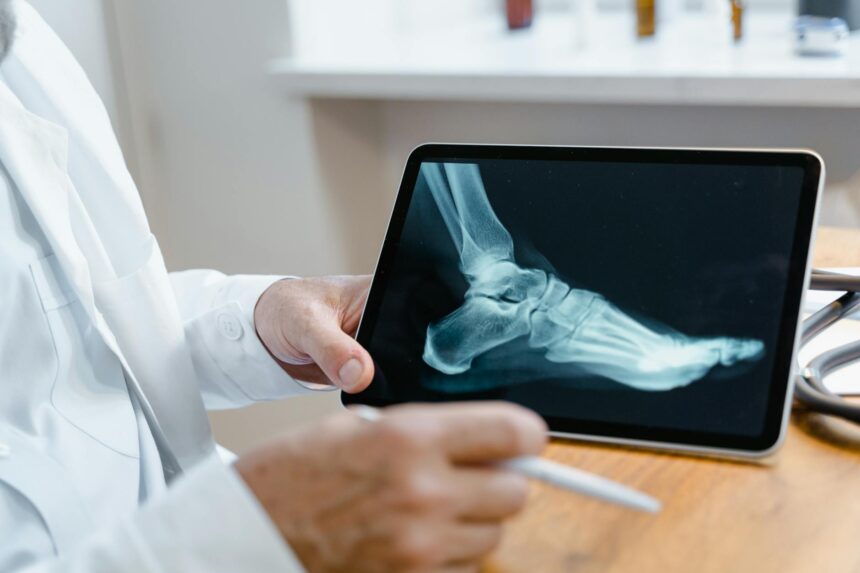
Medical illustration showing osteomyelitis bone infection diagnosis and treatment advances
New research reveals advances in osteomyelitis diagnosis and treatment, with MRI detection possible within 24-48 hours. The comprehensive analysis shows how early intervention prevents chronic disability from bacterial bone infections. — Photo: Tima Miroshnichenko / Pexels
SHARE
1 min read|128 words

A comprehensive analysis reveals striking disparities in osteomyelitis incidence across patient populations, with diabetic individuals facing a significantly elevated burden of disease. Diabetic patients experience 24.4 cases of osteomyelitis per 100,000 population annually—approximately ten times higher than the general population rate of 2.4 cases per 100,000. This alarming statistic underscores the profound impact of diabetes as a risk factor for bone infections. Post-surgical patients (18.2 cases per 100,000) and trauma patients (13.1 cases per 100,000) also demonstrate substantially elevated incidence rates. The elevated risk in diabetic populations stems from compromised immune function and reduced vascular perfusion that impair the body’s ability to combat infection. Given these statistics, early detection through rapid MRI imaging within 48 hours becomes essential for preventing chronic complications and disability. Healthcare teams must prioritize heightened vigilance and screening protocols for at-risk populations.

Was this article helpful?
GMJ Brief · Key Finding

📰 Read the full article: Osteomyelitis: New diagnostic advances and treatment strategies for bone infections →

Share This Article
Facebook LinkedIn Bluesky Copy Link Print
GMJ
ByProf. Giorgi Pkhakadze
Follow:
Prof. Giorgi Pkhakadze, MD, MPH, PhD, is Editor-in-Chief of the Georgian Medical Journal and Chair of the Public Health Institute of Georgia (PHIG). He is Professor and Head of the Department of Social and Behavioural Sciences at David Tvildiani Medical University, and Secretary/Treasurer of the UEMS Section of Public Health. ORCID: 0000-0001-7609-4515.

Submit Your Paper →

Georgia's peer-reviewed open-access medical journal. No APC until January 2027.
Submit Manuscript →
Decision Models Show Community Health Workers Remain Cost-Effective, But Quality Gaps Threaten Reliability

A systematic review of 37 economic evaluations of community health worker programmes…

Purple Urine Bag Syndrome: A Rare but Treatable Condition in Long-Term Care

Purple urine bag syndrome is a rare but benign condition affecting catheterised…

Cancer Survivors in Their Teens and Twenties Face Unique Long-Term Health Risks

Adolescents and young adults surviving cancer face distinct long-term complications and psychosocial…

Submit Your Paper to GMJ

No APC until January 2027.
Submit Manuscript →

You Might Also Like

Medical professional holding blood donation bag with WHO Africa logo

Takeaway: WHO Africa Calls for Greater Blood Donation as Critical Shortages Persist Across Region

By
Prof. Giorgi Pkhakadze
04/08/2026

Magnitude 6.3 Earthquake Strikes Southeast of Loyalty Islands

By
Prof. Giorgi Pkhakadze
13/07/2026
Global HealthPolicy & Systems

Ebola outbreak spreads unchecked in eastern DR Congo amid conflict

By
Prof. Giorgi Pkhakadze
28/05/2026

CLUSTER ALERT: Cross-Border Ebola Outbreak – DRC/Uganda

By
Prof. Giorgi Pkhakadze
31/05/2026
Facebook Twitter Youtube Instagram
Company
  • Privacy Policy
  • Contact US
  • GMJ Journal
  • Submit Manuscript
  • Editorial Team
  • Register at GMJ
  • Terms of Use

Subscribe to GMJ News — Click here

Join Community
© 2026 Georgian Medical Journal (GMJ). Published by the Public Health Institute of Georgia (PHIG). All rights reserved.
Welcome Back!

Sign in to your account

Username or Email Address
Password

Lost your password?

Not a member? Sign Up
