By using this site, you agree to the Privacy Policy and Terms of Use.
Accept
GMJ NewsGMJ NewsGMJ News
  • Latest News
    • GMJ Briefs
  • Podcast & Media
    • Podcast Episodes
    • GMJ Audio
    • GMJ Videos
  • Research Digest
    • New Studies
    • Georgian Research
    • Data & Numbers
  • Policy & Systems
    • Health Policy
    • Quality & Safety
    • Migration & Health
    • Global Health
  • Practice
    • Clinical Updates
    • Case Discussions
    • Pharmacy & Prescribing
    • Ingredients A-Z
  • Perspectives
    • Editorial
    • Explainers
    • Voices
    • Letters
  • GMJ Articles
    • Vol. 1 Issue 2 (2026)
    • Vol. 1 Issue 1 (2026)
    • Pre-Launch Articles (2025)
  • Read the Journal →
  • About GMJ News
Notification Show More
Font ResizerAa
GMJ NewsGMJ News
Font ResizerAa
  • Latest News
    • GMJ Briefs
  • Podcast & Media
    • Podcast Episodes
    • GMJ Audio
    • GMJ Videos
  • Research Digest
    • New Studies
    • Georgian Research
    • Data & Numbers
  • Policy & Systems
    • Health Policy
    • Quality & Safety
    • Migration & Health
    • Global Health
  • Practice
    • Clinical Updates
    • Case Discussions
    • Pharmacy & Prescribing
    • Ingredients A-Z
  • Perspectives
    • Editorial
    • Explainers
    • Voices
    • Letters
  • GMJ Articles
    • Vol. 1 Issue 2 (2026)
    • Vol. 1 Issue 1 (2026)
    • Pre-Launch Articles (2025)
  • Read the Journal →
  • About GMJ News
Follow US
GMJ News > GMJ Briefs > Every Five Years: How U.S. Dietary Guidelines Evolve with Evidence

Every Five Years: How U.S. Dietary Guidelines Evolve with Evidence

GMJ
Last updated: 02/08/2026 09:29
By
Prof. Giorgi Pkhakadze
Share
1 Min Read
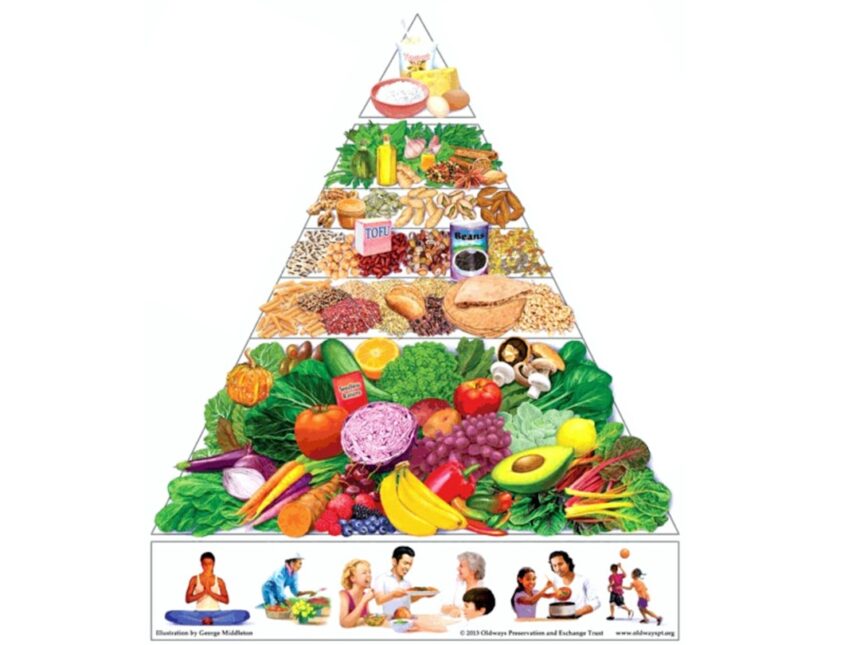
Updated 2025-2030 Food Pyramid showing emphasis on fruits, vegetables, proteins, and healthy fats
The White House has released an updated Food Pyramid aligned with the 2025-2030 Dietary Guidelines for Americans, shifting emphasis from carbohydrates to high-quality protein, healthy fats, and increased fruits and vegetables. This represents a significant alignment with contemporary nutritional science and global dietary recommendations. — Photo by Anthony Bernardo Buqui on Unsplash (Unsplash License)
SHARE
1 min read|121 words

The U.S. Department of Agriculture and Department of Health and Human Services release updated Dietary Guidelines for Americans on a five-year cycle, with the 2025-2030 version introducing substantial shifts in nutritional priorities. The latest update prioritises fat quality, protein diversity, and plant-based nutrients—a marked departure from earlier frameworks. Comparative analysis of guideline evolution reveals that emphasis on simple carbohydrates has substantially decreased, while recommendations for high-quality protein and healthy fats have increased significantly. This systematic review cycle ensures that federal dietary guidance remains aligned with peer-reviewed nutritional research and emerging epidemiological data. Healthcare professionals should recognise this regular update schedule as an opportunity to refresh patient counselling and align clinical nutrition recommendations with the most current evidence base available.

Was this article helpful?

GMJ Brief · Key Finding

📰 Read the full article: White House Updates Food Pyramid to Reflect 2025-2030 Dietary Guidelines →

Share This Article
Facebook LinkedIn Bluesky Copy Link Print
GMJ
ByProf. Giorgi Pkhakadze
Follow:
Prof. Giorgi Pkhakadze, MD, MPH, PhD, is Editor-in-Chief of the Georgian Medical Journal and Chair of the Public Health Institute of Georgia (PHIG). He is Professor and Head of the Department of Social and Behavioural Sciences at David Tvildiani Medical University, and Secretary/Treasurer of the UEMS Section of Public Health. ORCID: 0000-0001-7609-4515.

Submit Your Paper →

Georgia's peer-reviewed open-access medical journal. No APC until January 2027.
Submit Manuscript →
How Medical Practice Transforms When Evidence Shifts: The Case for Continuous Clinical Learning

Medical practice must continuously adapt as evidence evolves, yet the transition from…

Why Nutrients Work Better Together: How Coordinated Inputs Reshape Brain Synapses

New neuroscience research reveals that synapses respond more robustly to coordinated nutrient…

L-Theanine Improves Task Accuracy Without Expected Brain Wave Changes, Research Shows

L-theanine marketing claims about alpha brain wave enhancement lack experimental support in…

Submit Your Paper to GMJ

No APC until January 2027.
Submit Manuscript →

You Might Also Like

EBOLA OUTBREAK: Cross-Border Transmission DRC-Uganda with WHO PHEIC Declaration

By
Prof. Giorgi Pkhakadze
31/05/2026
Diagram showing creatine kinase shuttle system between mitochondria and myofibril, with phosphocreatine transferring phosphate to regenerate ATP

Beyond the Myths: How Creatine Actually Powers Muscle Performance

By
Prof. Giorgi Pkhakadze
26/07/2026
Medical illustration of pancreatic cancer treatment research and targeted therapy development

Announcement: New Pancreatic Cancer Drug Daraxonrasib Shows Promise in Phase 2 Trial

By
Prof. Giorgi Pkhakadze
09/06/2026
Global HealthPolicy & Systems

WHO Declares Public Health Emergency for Cross-Border Ebola Outbreak Between DRC and Uganda

By
Prof. Giorgi Pkhakadze
31/05/2026
Facebook Twitter Youtube Instagram
Company
  • Privacy Policy
  • Contact US
  • GMJ Journal
  • Submit Manuscript
  • Editorial Team
  • Register at GMJ
  • Terms of Use

Subscribe to GMJ News — Click here

Join Community
© 2026 Georgian Medical Journal (GMJ). Published by the Public Health Institute of Georgia (PHIG). All rights reserved.
Welcome Back!

Sign in to your account

Username or Email Address
Password

Lost your password?

Not a member? Sign Up