By using this site, you agree to the Privacy Policy and Terms of Use.
Accept
GMJ NewsGMJ NewsGMJ News
  • Latest News
    • GMJ Briefs
  • Podcast & Media
    • Podcast Episodes
    • GMJ Audio
    • GMJ Videos
  • Research Digest
    • New Studies
    • Georgian Research
    • Data & Numbers
  • Policy & Systems
    • Health Policy
    • Quality & Safety
    • Migration & Health
    • Global Health
  • Practice
    • Clinical Updates
    • Case Discussions
    • Pharmacy & Prescribing
    • Ingredients A-Z
  • Perspectives
    • Editorial
    • Explainers
    • Voices
    • Letters
  • GMJ Articles
    • Vol. 1 Issue 2 (2026)
    • Vol. 1 Issue 1 (2026)
    • Pre-Launch Articles (2025)
  • Read the Journal →
  • About GMJ News
Notification Show More
Font ResizerAa
GMJ NewsGMJ News
Font ResizerAa
  • Latest News
    • GMJ Briefs
  • Podcast & Media
    • Podcast Episodes
    • GMJ Audio
    • GMJ Videos
  • Research Digest
    • New Studies
    • Georgian Research
    • Data & Numbers
  • Policy & Systems
    • Health Policy
    • Quality & Safety
    • Migration & Health
    • Global Health
  • Practice
    • Clinical Updates
    • Case Discussions
    • Pharmacy & Prescribing
    • Ingredients A-Z
  • Perspectives
    • Editorial
    • Explainers
    • Voices
    • Letters
  • GMJ Articles
    • Vol. 1 Issue 2 (2026)
    • Vol. 1 Issue 1 (2026)
    • Pre-Launch Articles (2025)
  • Read the Journal →
  • About GMJ News
Follow US
GMJ News > GMJ Briefs > Beyond the Myths: How Creatine Actually Powers Muscle Performance

Beyond the Myths: How Creatine Actually Powers Muscle Performance

GMJ
Last updated: 26/07/2026 03:30
By
Prof. Giorgi Pkhakadze
Share
1 Min Read
Diagram showing creatine kinase shuttle system between mitochondria and myofibril, with phosphocreatine transferring phosphate to regenerate ATP
Creatine supplementation does not work by increasing water retention or providing energy like caffeine. Instead, it enhances the phosphocreatine shuttle system, which supplies approximately 70% of ATP regeneration during the first 3 seconds of maximal muscle contraction. This mechanism explains why creatine benefits only high-intensity short-duration efforts, not endurance exercise. — Photo by Gupta Sahil on Pexels (Pexels License)
SHARE
1 min read|126 words

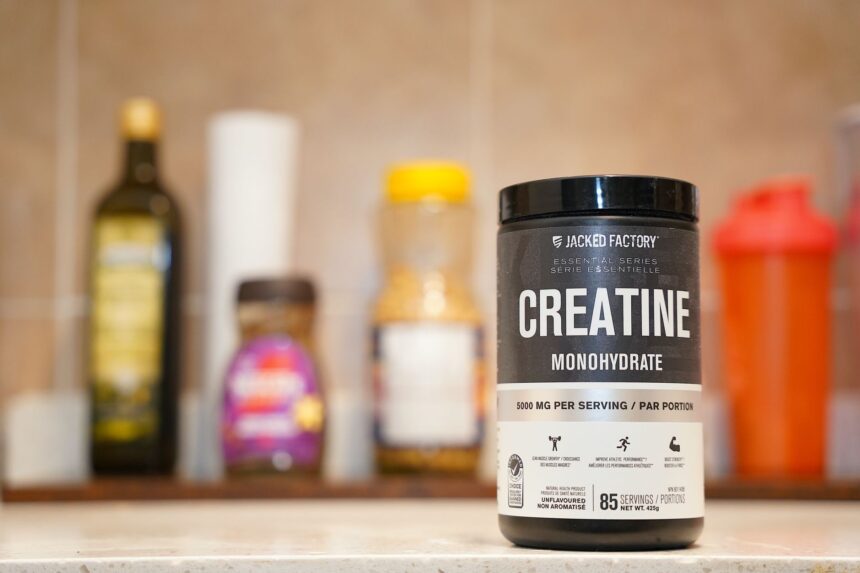
Creatine supplementation has long been surrounded by misconceptions, with many athletes attributing its effects to water retention or caffeine-like stimulation. However, emerging evidence reveals a far more sophisticated mechanism at work. According to research published in Clinical Science, creatine functions as a critical phosphate shuttle—a molecular transport system that regenerates ATP (adenosine triphosphate) on a millisecond timescale during intense muscle contractions. This process operates independently of oxygen and represents the fastest energy regeneration system available to muscle tissue. The phosphocreatine system supplies approximately 70% of ATP during the first three seconds of maximal effort, making it essential for explosive athletic movements. Understanding this mechanism helps athletes and fitness professionals optimize supplementation strategies and set realistic expectations for performance enhancement. Read the full article on GMJ Newsroom.

Was this article helpful?
GMJ Brief · Announcement

📰 Read the full article: How Creatine Actually Works: The Phosphate Shuttle That Powers Your Muscles →

Related reference
  • Creatine · Ingredient
Share This Article
Facebook LinkedIn Bluesky Copy Link Print
GMJ
ByProf. Giorgi Pkhakadze
Follow:
Prof. Giorgi Pkhakadze, MD, MPH, PhD, is Editor-in-Chief of the Georgian Medical Journal and Chair of the Public Health Institute of Georgia (PHIG). He is Professor and Head of the Department of Social and Behavioural Sciences at David Tvildiani Medical University, and Secretary/Treasurer of the UEMS Section of Public Health. ORCID: 0000-0001-7609-4515.

Submit Your Paper →

Georgia's peer-reviewed open-access medical journal. No APC until January 2027.
Submit Manuscript →
Peer-Led Anti-Stigma Programme Cuts Self-Stigma in Half Among Adults With Mental Illness

A large pragmatic trial published in The Lancet eBioMedicine shows that a…

How Medical Practice Transforms When Evidence Shifts: The Case for Continuous Clinical Learning

Medical practice must continuously adapt as evidence evolves, yet the transition from…

Why Nutrients Work Better Together: How Coordinated Inputs Reshape Brain Synapses

New neuroscience research reveals that synapses respond more robustly to coordinated nutrient…

Submit Your Paper to GMJ

No APC until January 2027.
Submit Manuscript →

You Might Also Like

EPIDEMIOLOGICAL INTELLIGENCE BRIEF: Multi-Signal Ebola Outbreak Alert – DRC/Uganda Cross-Border Transmission

By
Prof. Giorgi Pkhakadze
31/05/2026
CoQ10 supplement comparison chart showing bioavailability differences between formulations

CoQ10 Supplement Selection: What Matters and What Doesn’t

By
Prof. Giorgi Pkhakadze
27/06/2026
Global HealthPolicy & Systems

Ebola Outbreak in Democratic Republic of Congo Prompts WHO Emergency Declaration as Cases Cross Border

By
Prof. Giorgi Pkhakadze
31/05/2026
Conceptual illustration of ingestible temperature monitoring capsule technology

Swallowable Capsule Technology Offers Continuous Core Temperature Monitoring

By
Prof. Giorgi Pkhakadze
08/07/2026
Facebook Twitter Youtube Instagram
Company
  • Privacy Policy
  • Contact US
  • GMJ Journal
  • Submit Manuscript
  • Editorial Team
  • Register at GMJ
  • Terms of Use

Subscribe to GMJ News — Click here

Join Community
© 2026 Georgian Medical Journal (GMJ). Published by the Public Health Institute of Georgia (PHIG). All rights reserved.
Welcome Back!

Sign in to your account

Username or Email Address
Password

Lost your password?

Not a member? Sign Up