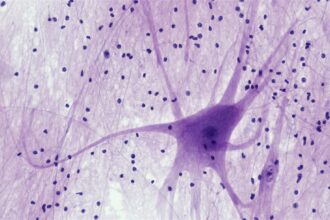
A newly developed experimental drug has successfully slowed nerve cell loss in mouse models of Alzheimer’s disease by targeting a previously unknown cellular mechanism. This finding represents a significant advancement in preclinical research, offering an alternative approach to the amyloid and tau-focused strategies that have dominated the field for years.
The compound’s ability to block this novel cellular pathway while demonstrating neuroprotective effects suggests a multi-faceted therapeutic potential. Unlike conventional treatments that have achieved limited clinical success, this mechanism operates through a distinct biological process central to neurodegeneration. The dual benefit of halting disease progression while supporting healthier brain aging makes this discovery particularly promising for future drug development efforts.
While these results are encouraging, researchers emphasize that translation from preclinical studies to human clinical trials requires additional validation. Read the full article on GMJ Newsroom.
Was this article helpful?