By using this site, you agree to the Privacy Policy and Terms of Use.
Accept
GMJ NewsGMJ NewsGMJ News
  • Latest News
    • GMJ Briefs
  • Podcast & Media
    • Podcast Episodes
    • GMJ Audio
    • GMJ Videos
  • Research Digest
    • New Studies
    • Georgian Research
    • Data & Numbers
  • Policy & Systems
    • Health Policy
    • Quality & Safety
    • Migration & Health
    • Global Health
  • Practice
    • Clinical Updates
    • Case Discussions
    • Pharmacy & Prescribing
    • Ingredients A-Z
  • Perspectives
    • Editorial
    • Explainers
    • Voices
    • Letters
  • Health Topics
  • GMJ Articles
    • Vol. 1 Issue 2 (2026)
    • Vol. 1 Issue 1 (2026)
    • Pre-Launch Articles (2025)
  • Read the Journal →
  • About GMJ News
Notification Show More
Font ResizerAa
GMJ NewsGMJ News
Font ResizerAa
  • Latest News
    • GMJ Briefs
  • Podcast & Media
    • Podcast Episodes
    • GMJ Audio
    • GMJ Videos
  • Research Digest
    • New Studies
    • Georgian Research
    • Data & Numbers
  • Policy & Systems
    • Health Policy
    • Quality & Safety
    • Migration & Health
    • Global Health
  • Practice
    • Clinical Updates
    • Case Discussions
    • Pharmacy & Prescribing
    • Ingredients A-Z
  • Perspectives
    • Editorial
    • Explainers
    • Voices
    • Letters
  • Health Topics
  • GMJ Articles
    • Vol. 1 Issue 2 (2026)
    • Vol. 1 Issue 1 (2026)
    • Pre-Launch Articles (2025)
  • Read the Journal →
  • About GMJ News
Follow US
GMJ News > GMJ Briefs > Extended Exercise Demands High Sodium: Why Water Alone Is Insufficient

Extended Exercise Demands High Sodium: Why Water Alone Is Insufficient

GMJ
Last updated: 12/08/2026 11:30
By
Prof. Giorgi Pkhakadze
Share
1 Min Read
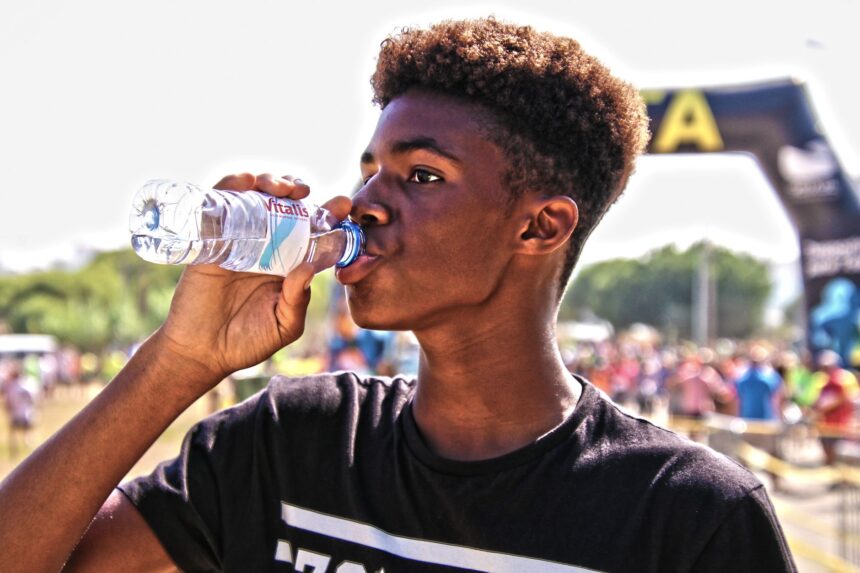
Illustration of hydration strategy by exercise duration showing fluid and sodium targets
An evidence-based hydration protocol establishes clear targets for fluid and electrolyte intake: 30–35 mL per kilogram daily, 300–1,000 mg sodium per hour during prolonged exercise, and 150% fluid replacement post-exercise. Personalisation based on sweat rate is essential. — Photo by RUN 4 FFWPU on Pexels (Pexels License)
SHARE
1 min read|124 words

A critical finding from current sports medicine guidance challenges a widespread athletic practice: drinking water alone during prolonged exercise carries significant physiological risk. Athletes exercising for more than 90 minutes require up to 1,000 mL fluid combined with 500–1,000 mg sodium per hour to maintain blood sodium concentration and prevent performance impairment.

Diluting blood sodium through water-only hydration—a condition known as hyponatraemia—can impair cognitive function, increase fatigue, and compromise athletic safety. The new evidence-based protocol underscores that sodium intake is not optional for endurance activities exceeding 90 minutes; it is a medical necessity.

The recommendation applies across varying environmental conditions and exercise intensities. Athletes are urged to personalise their hydration strategy based on individually measured sweat rate, established during training sessions rather than on competition day.

Was this article helpful?
GMJ Brief · Key Finding

📰 Read the full article: Evidence-Based Hydration Protocol: How Much Fluid and Sodium Athletes Actually Need →

Related reference
  • Sodium · Ingredient
  • Iron · Ingredient
Share This Article
Facebook LinkedIn Bluesky Copy Link Print
GMJ
ByProf. Giorgi Pkhakadze
Follow:
Prof. Giorgi Pkhakadze, MD, MPH, PhD, is Editor-in-Chief of the Georgian Medical Journal and Chair of the Public Health Institute of Georgia (PHIG). He is Professor and Head of the Department of Social and Behavioural Sciences at David Tvildiani Medical University, and Secretary/Treasurer of the UEMS Section of Public Health. ORCID: 0000-0001-7609-4515.

Submit Your Paper →

Georgia's peer-reviewed open-access medical journal. No APC until January 2027.
Submit Manuscript →
Cat Scratch Disease Returns: What Clinicians and Patients Need to Know

Cat scratch disease, caused by Bartonella henselae, presents with varied clinical manifestations…

Mechanism of chemotherapy resistance in ovarian cancer identified—and reversible

Michigan State University researchers have identified a protein mechanism that confers chemotherapy…

Mobile HPV screening aboard river ships reaches cervical cancer care to remote Amazon communities

A mobile point-of-care HPV screening and treatment strategy delivered by river vessels…

Submit Your Paper to GMJ

No APC until January 2027.
Submit Manuscript →

You Might Also Like

Infographic showing global foodborne disease statistics with focus on children's health risks

Three Critical Findings from WHO’s Food Safety Assessment: What Families Need to Know

By
Prof. Giorgi Pkhakadze
11/07/2026

🚨 [Perspectives] Liberalism and health equity?

By
Prof. Giorgi Pkhakadze
19/06/2026
Medical illustration showing heart protection through genetic-guided therapy with SGLT2 inhibitors

Precision Medicine Advances: Genetic Testing May Guide Dapagliflozin Use in Heart Failure Prevention

By
Prof. Giorgi Pkhakadze
24/06/2026
Diagram showing collagen triple helix formation and the role of vitamin C in hydroxylation modification

13 Degrees: The Temperature Gap Explaining Why Collagen Supplements Often Fail

By
Prof. Giorgi Pkhakadze
31/07/2026
Facebook Twitter Youtube Instagram
Company
  • Privacy Policy
  • Contact US
  • GMJ Journal
  • Submit Manuscript
  • Editorial Team
  • Register at GMJ
  • Terms of Use

Subscribe to GMJ News — Click here

Join Community
© 2026 Georgian Medical Journal (GMJ). Published by the Public Health Institute of Georgia (PHIG). All rights reserved.
Welcome Back!

Sign in to your account

Username or Email Address
Password

Lost your password?

Not a member? Sign Up