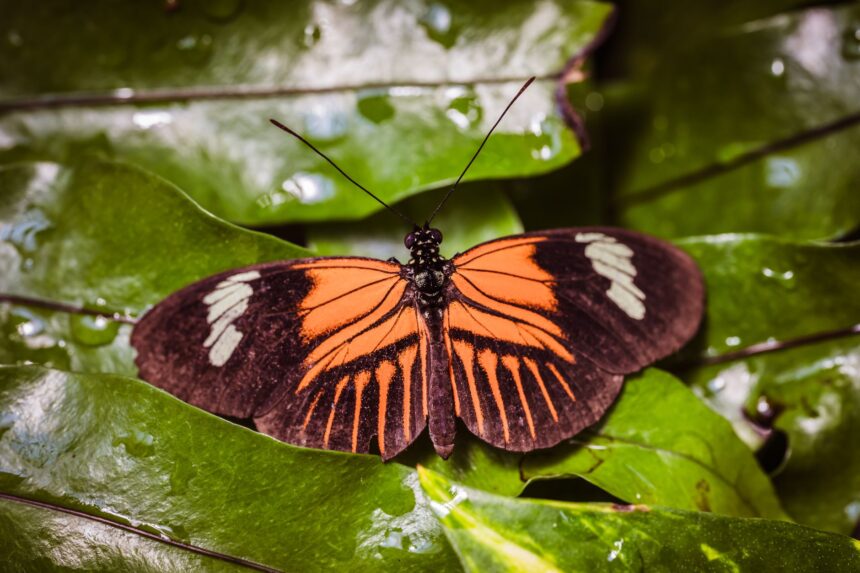
A striking biological pattern has emerged from recent evolutionary analysis: Heliconius butterflies exhibit lifespans several times longer than phylogenetically related species, with many individuals showing negligible age-related physical decline. This finding contradicts the typical butterfly lifespan of weeks, as Heliconius individuals routinely survive for months—a substantial extension that warrants investigation into underlying ageing mechanisms. The extended healthspan observed in these insects suggests that evolutionary adaptations can fundamentally alter the trajectory of senescence. Researchers now view Heliconius populations as natural experiments in longevity, offering opportunities to identify which biological pathways support both extended lifespan and preserved physiological function during ageing. These insights may prove instrumental in understanding conserved ageing mechanisms relevant to broader biological systems, including humans.
Was this article helpful?