🟠 Moderate Evidence
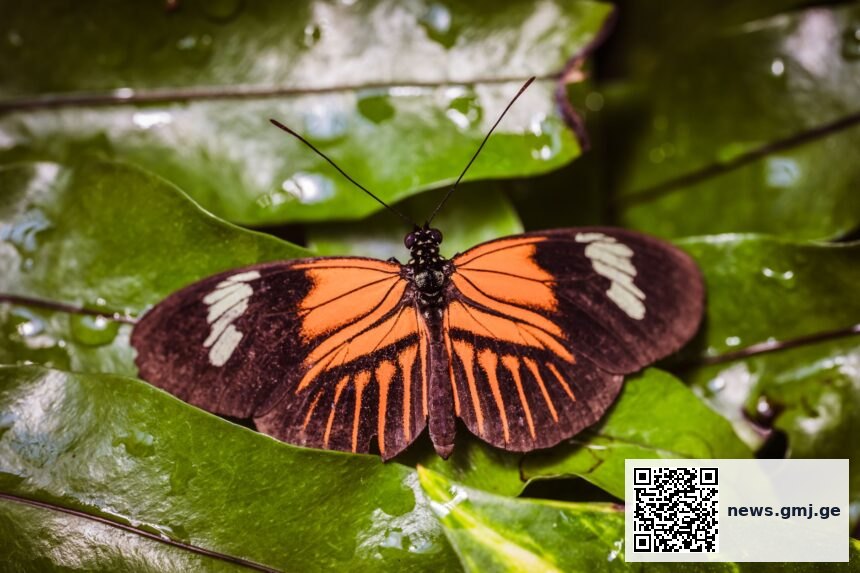
Researchers have documented that Heliconius butterflies exhibit lifespans several times longer than closely related butterfly species, with some individuals showing minimal physical decline across their extended lifespan. The findings, published in a recent analysis of butterfly populations, suggest that evolutionary adaptations—potentially linked to their unusual pollen-feeding behaviour—may hold clues to understanding ageing processes in organisms more broadly.
Key takeaways
- Heliconius butterflies live several times longer than related species, with some showing negligible senescence
- Their pollen-feeding diet, unusual among butterflies, may contribute to their longevity
- The research indicates deeper evolutionary changes beyond dietary factors are preserving health during ageing
- Study of these organisms may inform future gerontological research and understanding of ageing mechanisms
Lifespan advantage in Heliconius versus related butterfly families
Relative lifespan duration across butterfly groups; Heliconius species show extended longevity with reduced age-related decline
Source: Evolutionary biology research analysis, 2026 | Georgian Medical Journal News

An evolutionary puzzle with gerontological significance
The discovery that Heliconius butterflies demonstrate lifespans substantially exceeding those of phylogenetically related species challenges conventional understanding of butterfly ageing. Most butterfly species exhibit brief adult lifespans measured in weeks; Heliconius individuals routinely survive months, representing a biological anomaly that warrants investigation into the mechanisms underpinning extended healthspan.
The research reveals a crucial distinction: longevity alone is unremarkable in evolutionary terms. What distinguishes Heliconius populations is their apparent resistance to senescence—the progressive physical decline characteristic of ageing. Some individuals show minimal morphological deterioration across their extended lifespan, suggesting that evolutionary pressure has shaped not merely lifespan duration but the quality of that extended life.
Pollen feeding as a potential longevity factor
Among Lepidoptera (butterflies and moths), the Heliconius genus is singular in its reliance on pollen as a primary nutritional source. Most butterflies feed exclusively on nectar—a carbohydrate-rich but nutritionally limited resource. Pollen, by contrast, provides amino acids, lipids, and micronutrients absent from nectar, potentially supplying the biochemical substrates necessary for cellular repair and maintenance across an extended lifespan.
This dietary distinction offers a parsimonious hypothesis: nutritional density may underpin longevity differences. Yet the research indicates this explanation, while compelling, is incomplete. The evolutionary changes observed in Heliconius populations suggest that genetic and metabolic adaptations have been selected for independently of—or in concert with—dietary shifts. Identifying which specific pathways (antioxidant defence systems, DNA repair mechanisms, cellular senescence regulation) have been optimised in these organisms remains an open question with direct relevance to mammalian gerontology.
Implications for understanding human ageing
While butterflies and humans occupy vastly different positions on the phylogenetic tree, the fundamental biology of ageing—oxidative stress, mitochondrial dysfunction, telomere shortening, cellular senescence—is conserved across metazoans. Research into model organisms with unusual longevity phenotypes has historically yielded insights applicable to mammalian ageing. The discovery of Caenorhabditis elegans longevity genes in the 1990s, for example, catalysed two decades of mammalian gerontology research.
Heliconius butterflies may represent a natural experiment in ageing modulation. By identifying the genetic, proteomic, and metabolic signatures of these long-lived populations, researchers can generate hypotheses about conserved longevity pathways. Such work also informs evolutionary medicine: understanding why certain lineages have been selected for extended healthspan may reveal constraints and trade-offs that shape ageing trajectories across taxa.
Heliconius butterflies exhibit lifespans several times longer than closely related species, with some individuals showing negligible physical decline during ageing—suggesting both dietary and deeper evolutionary adaptations contribute to longevity.
— Research analysis from evolutionary biology studies, 2026
Next steps: From observation to mechanism
The current findings establish a phenomenon; mechanistic investigation must follow. Comparative genomic analysis between long-lived Heliconius species and shorter-lived relatives could identify candidate genes under positive selection. Transcriptomic studies across age cohorts within Heliconius populations would reveal which pathways remain active in aged individuals who resist senescence. Proteomic and metabolomic profiling could document differences in stress-response proteins, antioxidant levels, and energy metabolism.
Such work belongs within the broader framework of comparative gerontology and longevity research. Ageing is not a unitary process but a constellation of cellular and systemic changes shaped by evolution, development, and environment. By cataloguing natural variation in ageing phenotypes—from the negligible senescence of some organisms to the steep declines observed in others—we construct a richer conceptual toolkit for intervening in human ageing.
What this means
Frequently asked questions
How much longer do Heliconius butterflies live compared to other species?
Heliconius species exhibit lifespans several times longer than closely related butterfly families. While most butterflies live weeks as adults, Heliconius individuals routinely survive months—a substantial extension representing evolutionary adaptation.
Can findings from butterfly ageing directly apply to human longevity?
While butterflies and humans share fundamental ageing mechanisms (oxidative stress, mitochondrial dysfunction, cellular senescence), direct translation is limited by evolutionary distance. However, identifying genes and pathways under selection in long-lived butterfly populations can generate hypotheses testable in mammalian systems.
What role does pollen feeding play in Heliconius longevity?
The pollen-feeding lifestyle—unique among Heliconius—provides superior nutrition (amino acids, lipids, micronutrients) compared to nectar-only diets. This dietary advantage likely contributes to longevity, but research indicates genetic and metabolic adaptations have also been selected for independently.
Further investigation into the genetic architecture, metabolic profile, and stress-response systems of long-lived Heliconius populations promises to deepen understanding of ageing across the animal kingdom. As gerontology moves towards personalised and precision medicine, natural experiments like these offer invaluable perspective on the biological plasticity of ageing and the potential for evolutionary selection to shape lifespan and healthspan. Continued collaborative work between evolutionary biologists, entomologists, and gerontologists will be essential to translating these observations into actionable knowledge for human health.
Source: Butterfly that barely ages could help unlock longevity secrets
Was this article helpful?
Disclaimer. This article is health journalism intended for general information and education. It is not medical advice and is not a substitute for professional diagnosis or treatment. Always consult a qualified healthcare provider about your individual circumstances. Full disclaimer →
Related Coverage




Editorial standards. This article was produced under the GMJ News editorial process, with oversight by the GMJ Editorial Board. Our editorial process. Spotted an error? Contact the editorial team.