By using this site, you agree to the Privacy Policy and Terms of Use.
Accept
GMJ NewsGMJ NewsGMJ News
  • Latest News
    • GMJ Briefs
  • The Wire
  • Health Topics
  • Podcast & Media
    • GMJ Audio
    • GMJ Videos
    • Podcast & Media
    • Podcast Episodes
  • GMJ Articles
    • Vol. 1 Issue 3 (2026)
    • Public Health Dictionary — Supplement Edition
    • IAP Legacy Series
    • Read Full Journal (gmj.ge) →
    • Pre-Launch Articles (2025)
    • Vol. 1 Issue 1 (2026)
    • Vol. 1 Issue 2 (2026)
  • Perspectives
    • Editorial
    • Explainers
    • Letters
    • Voices
  • Policy & Systems
    • Global Health
    • Health Policy
    • Migration & Health
    • Quality & Safety
    • Work & Health
  • Dictionary
    • Our Story: 20 Years in the Making
    • Browse A–Z
    • About the Project
    • Contribute a Term
  • Practice
    • Case Discussions
    • Clinical Updates
    • Pharmacy & Prescribing
  • Research Digest
    • Data & Numbers
    • Georgian Research
    • New Studies
  • Read the Journal →
Notification Show More
Font ResizerAa
GMJ NewsGMJ News
Font ResizerAa
  • Latest News
  • The Wire
  • Health Topics
  • Podcast & Media
  • GMJ Articles
  • Perspectives
  • Policy & Systems
  • Dictionary
  • Practice
  • Research Digest
  • Read the Journal →
  • Latest News
    • GMJ Briefs
  • The Wire
  • Health Topics
  • Podcast & Media
    • GMJ Audio
    • GMJ Videos
    • Podcast & Media
    • Podcast Episodes
  • GMJ Articles
    • Vol. 1 Issue 3 (2026)
    • Public Health Dictionary — Supplement Edition
    • IAP Legacy Series
    • Read Full Journal (gmj.ge) →
    • Pre-Launch Articles (2025)
    • Vol. 1 Issue 1 (2026)
    • Vol. 1 Issue 2 (2026)
  • Perspectives
    • Editorial
    • Explainers
    • Letters
    • Voices
  • Policy & Systems
    • Global Health
    • Health Policy
    • Migration & Health
    • Quality & Safety
    • Work & Health
  • Dictionary
    • Our Story: 20 Years in the Making
    • Browse A–Z
    • About the Project
    • Contribute a Term
  • Practice
    • Case Discussions
    • Clinical Updates
    • Pharmacy & Prescribing
  • Research Digest
    • Data & Numbers
    • Georgian Research
    • New Studies
  • Read the Journal →
Follow US
GMJ News > Practice > Clinical Updates > Endometriosis Diagnosis Under Scrutiny: New Non-Invasive Tests Offer Hope for Faster Detection
Clinical UpdatesPractice

Endometriosis Diagnosis Under Scrutiny: New Non-Invasive Tests Offer Hope for Faster Detection

GMJ
Last updated: 13/09/2026 21:30
By
GMJ Practice Desk
Share
7 Min Read
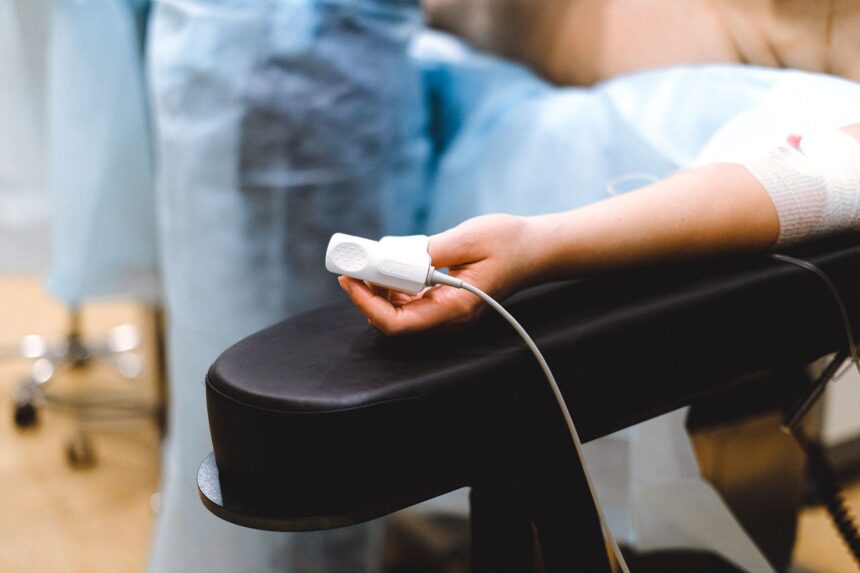
Illustration of endometriosis diagnostic pathways in primary care settingsIllustrative image · Photo by Anna Shvets on Pexels (Pexels License)
Two new non-invasive tests available in primary care are being proposed to accelerate endometriosis diagnosis, responding to urgent calls from patient advocacy groups to reduce diagnostic delays that can extend years from symptom onset. — Photo by Anna Shvets on Pexels (Pexels License)
SHARE
🎧 Listen to this article5:55 min · 835 words · GMJ Audio
4 min read|835 words
✓ Reviewed by GMJ News Editorial Team

Endometriosis patient advocacy groups are calling for urgent action to reduce diagnostic delays, citing the availability of two new non-invasive tests that could be deployed in primary care settings. According to BBC News reporting on endometriosis diagnostic pathways, these screening tools represent a significant shift toward earlier detection without requiring invasive surgical confirmation.

Contents
    • Key takeaways
      • Barriers to Endometriosis Diagnosis: Patient Experience
  • The Diagnosis Crisis in Endometriosis Care
  • Two Non-Invasive Tests: What Changes in Primary Care
  • Implementation Challenges and Next Steps
    • What this means
  • Frequently asked questions
    • What are the two new non-invasive tests for endometriosis?
    • Why do endometriosis patient groups emphasise faster diagnosis?
    • How will GPs use these tests in routine practice?

Key takeaways

  • Two new non-invasive tests are now available for general practitioners to screen for endometriosis
  • Patient advocacy groups report prolonged diagnostic delays as a critical barrier to treatment access
  • Early detection through primary care screening could reduce the burden of advanced-stage disease diagnosis
  • Implementation in general practice could shift endometriosis management from specialist-dependent to accessible frontline care
2
non-invasive diagnostic tests now available for deployment in primary care settings to accelerate endometriosis diagnosis

Barriers to Endometriosis Diagnosis: Patient Experience

Reported diagnostic challenges as cited in endometriosis advocacy calls for healthcare reform

Prolonged diagnostic delays
Primary concern
Limited GP awareness of screening tools
Implementation gap
Dependency on specialist referral

Access barrier

Source: Endometriosis patient advocacy reporting | BBC News | GMJ News

The Diagnosis Crisis in Endometriosis Care

Endometriosis, a chronic condition affecting the reproductive system, has long been characterised by diagnostic delays that extend years from symptom onset to confirmed diagnosis. Patient advocacy groups are now calling out what they describe as unacceptable delays in diagnosis, with the emergence of two new non-invasive screening tests offering a potential pathway to expedited detection in primary care.

Submit Your Paper
GMJ_Submit_Banner

The diagnostic bottleneck has historically required specialist referral and, in many cases, surgical confirmation via laparoscopy to establish a definitive diagnosis. This model leaves patients in diagnostic limbo during the interval between symptom presentation and specialist assessment, delaying access to medical management options.

🎙️ Related Podcast Episodes
🎧 #43 | GMJ Podcast | Cardiovascular Screening in Pediatric Athletes — Risk Stratification and Public Health Implications · 20m
🎧 #40 | GMJ Podcast | [Insert Article Title] — Evidence, Clinical Implications, and Public Health Perspective · 16m
🎧 #35 | GMJ Podcast | Lung Adenocarcinoma and Tuberculous Lymphadenitis — Diagnostic Challenges in a Rare Case · 19m
🎧 #25 | WHO Warns: Childhood Hearing Loss Must Be Addressed Early · 19m
🎧 #23 | WHO: Next-Generation Influenza Vaccines Could Save Millions of Lives · 18m

Two Non-Invasive Tests: What Changes in Primary Care

The two newly available non-invasive tests represent a paradigm shift toward accessible, frontline screening. These tools, deployable by general practitioners without requiring specialist infrastructure, could theoretically reduce the time from symptom recognition to diagnosis by enabling earlier screening within the primary care pathway.

According to the BBC’s reporting on the new diagnostic options, these tests offer general practitioners a validated, non-surgical method to assess for endometriosis. The clinical implication is that GPs could identify patients requiring specialist evaluation more rapidly, streamlining onward referral pathways.

Two new non-invasive tests are now available for deployment in general practice, directly addressing endometriosis patient groups’ calls to accelerate diagnostic timelines and reduce the burden of delayed diagnosis.

— Endometriosis patient advocacy groups, as reported by BBC News

Implementation Challenges and Next Steps

While the availability of these tests is significant, their translation into clinical practice requires coordinated implementation across primary care networks. Patient advocacy groups emphasise that awareness, training, and integration into primary care protocols remain critical next steps to realise the potential of faster diagnosis.

Healthcare systems must consider how to disseminate knowledge of these tests to GPs, establish protocols for appropriate referral following positive screening, and ensure that diagnostic pathways are equipped to manage an anticipated increase in identified cases. Without coordinated implementation, even validated tests risk remaining underutilised in clinical practice.

What this means

For patients: Access to non-invasive screening in primary care could dramatically reduce time from symptom onset to diagnosis, enabling earlier treatment initiation and reducing the psychological burden of diagnostic delay.
For clinicians: GPs gain a validated tool to screen for endometriosis without referral to specialist imaging or laparoscopy, enabling risk stratification and more efficient specialist referral patterns.
For policymakers: Deployment of these tests in primary care represents a cost-effective pathway to earlier diagnosis, potentially reducing specialist capacity pressure and enabling earlier access to medical management across the population.

Frequently asked questions

What are the two new non-invasive tests for endometriosis?

According to BBC reporting on endometriosis diagnostics, two new non-invasive tests are now available for general practitioners to screen for endometriosis in primary care settings. These replace or supplement the historical reliance on specialist imaging and surgical confirmation via laparoscopy.

Why do endometriosis patient groups emphasise faster diagnosis?

Diagnostic delay in endometriosis is associated with prolonged suffering, delayed treatment initiation, and preventable progression of disease. Patient advocacy groups argue that years-long diagnostic delays represent a failure of early healthcare recognition and underscore the urgent need for accessible frontline screening tools.

How will GPs use these tests in routine practice?

The tests are designed to be deployable in primary care without requiring specialist imaging infrastructure. GPs can use them to screen symptomatic patients, stratify risk, and refer appropriately to specialists for confirmation and treatment planning, streamlining the diagnostic pathway.

The availability of two non-invasive tests for endometriosis diagnosis represents a significant opportunity to address a long-standing healthcare access gap. However, translating these tools from availability to widespread clinical use requires coordinated implementation, GP education, and integration into primary care protocols. Health systems that successfully embed these tests into routine practice may achieve meaningful reductions in diagnostic delay—a priority that endometriosis advocacy groups have long emphasised as essential to improving patient outcomes. Read more on clinical updates and diagnostic innovations in primary care on GMJ News.

Source: Endometriosis groups ‘crying out’ for cut in diagnosis time

Was this article helpful?

Disclaimer. This article is health journalism intended for general information and education. It is not medical advice and is not a substitute for professional diagnosis or treatment. Always consult a qualified healthcare provider about your individual circumstances. Full disclaimer →

Related Coverage

A 68-Year-Old Man With Chest Pain: Diagnosing Descending Thoracic Aortic AneurysmOct 3, 2026
Blood Pressure Drug Telmisartan Shown to Enhance Cancer Therapy Efficacy in Early TrialsOct 3, 2026
Serotonin and Heart Valve Disease: Columbia Study Links SSRIs to Accelerated Mitral RegurgitationOct 3, 2026
Digital Therapy Platform Cuts Depression and Anxiety in Dementia Caregivers by Six MonthsOct 3, 2026
Explore more on this topic:🧭 Sexually Transmitted Infections hub🧭 Women's Health hub🧭 Endometriosis hub
🔥 Most read this week
1Animal Protein’s Muscle-Building Edge Disappears When Measured Over Days, Not Hours
2Animal Protein Produces 47% Larger Muscle Protein Synthesis Spike Than Plant Sources, New Research Shows
3Resistance Training Linked to 27% Reduction in Early Death Risk, Large-Scale Review Finds
4High-Intensity Interval Training Alone Preserves Muscle While Reducing Fat in Older Adults
Related reference
  • Endometriosis · Condition

Find certified Georgian healthcare providers at sheniekimi.ge/jandacvis-ruka/

PG
Editorial oversight
Prof. Giorgi Pkhakadze, MD, MPH, PhD
Editor-in-Chief, GMJ News
Full profile →  ·  ORCID 0000-0001-7609-4515
Medical disclaimer. This article is health journalism intended for general information. It is not medical advice and is not a substitute for consultation with a qualified healthcare professional. Always seek your physician's advice regarding any medical condition.
Editorial standards. This article was produced under the GMJ News editorial process, with oversight by the GMJ Editorial Board. Our editorial process. Spotted an error? Contact the editorial team.

📬 GMJ Health Digest
Evidence-based medical news, once a week. Free, no spam, unsubscribe anytime.
TAGGED:diagnosisdiagnostic-delayendometriosisnon-invasive-testingprimary care
Share This Article
Facebook Whatsapp Whatsapp LinkedIn Telegram Bluesky Copy Link Print
GMJ
ByGMJ Practice Desk
Follow:
GMJ Practice Desk is part of GMJ News, the newsroom of the Georgian Medical Journal (gmj.ge), published by the Public Health Institute of Georgia. Every article is editorially reviewed before publication.
Leave a Comment Leave a Comment

Leave a Reply Cancel reply

Your email address will not be published. Required fields are marked *

Submit Your Paper →

Georgia's peer-reviewed open-access medical journal. No APC until January 2027.
Submit Manuscript →
A 68-Year-Old Man With Chest Pain: Diagnosing Descending Thoracic Aortic Aneurysm

A teaching case in The New England Journal of Medicine describes diagnostic…

Blood Pressure Drug Telmisartan Shown to Enhance Cancer Therapy Efficacy in Early Trials

Preclinical research reveals that telmisartan, a widely prescribed blood pressure medication, significantly…

Yale researchers identify protein pathways driving Parkinson’s disease spread in the brain

Yale researchers have identified two neuron surface proteins that mediate the spread…

Submit Your Paper to GMJ

No APC until January 2027.
Submit Manuscript →

You Might Also Like

Georgian ResearchGMJ ArticlesNew StudiesPracticeVol. 1 Issue 2 (2026)

Beyond Painkillers: A Complete Framework for Treating Osteoarthritis

By
GMJ Research Desk
28/08/2026
Brain lipid profiles in women and men with and without Alzheimer's diseaseIllustrative image · Photo by ready made on Pexels (Pexels License)
Clinical UpdatesNew StudiesPracticeResearch Digest

Why women’s brains lose omega-3 protection: new insights from European Alzheimer’s study

By
GMJ Practice Desk
25/07/2026
Advanced PET imaging system providing real-time surgical guidance for osteosarcoma tumor resection
Clinical UpdatesNew StudiesPracticeResearch Digest

New PET Imaging Platform Transforms Real-Time Surgical Margin Assessment in Osteosarcoma

By
GMJ Practice Desk
06/06/2026
Older adult consulting with healthcare provider about bone health supplementation and fracture prevention strategiesIllustrative image · "500 mg calcium supplements with vitamin D" by Ragesoss is licensed under CC BY-SA 4.0. To view a copy of this license, visit https://creativecommons.org/licenses/by-sa/4.0/. (CC BY-SA 4.0)
Clinical UpdatesNew StudiesPracticeResearch Digest

Calcium and Vitamin D Supplements Show Limited Benefit for Fracture Prevention in Older Adults, Major Review Finds

By
GMJ Practice Desk
11/07/2026
Facebook Twitter Youtube Instagram
Company
  • Privacy Policy
  • Accreditation Canada in Georgia
  • GMJ Journal
  • Submit Manuscript
  • Editorial Team
  • Register at GMJ

Subscribe to GMJ News — Click here

Join Community
© 2026 Georgian Medical Journal (GMJ). Published by the Public Health Institute of Georgia (PHIG). All rights reserved.
Welcome Back!

Sign in to your account

Username or Email Address
Password

Lost your password?